


General Insurance Blogs, Articles & Updates by - Magma Insurance
Have us call you
- RENEW YOUR POLICY
- BUY NEW POLICY

GENERAL INSURANCE BLOG
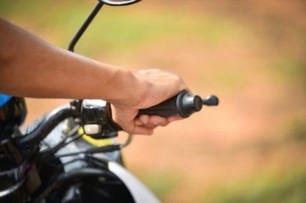
Why does the motorcycle engine feel smooth and throttle response crisp in the morning
The feeling of riding a motorcycle in the morning is otherworldly. But it's not only the early morning atmosphere that gives this ethereal feeling to the rider. It's also the smooth functioning of the engine and the swift and excellent acceleration of the motorbike in the morning. Many people experience this but do not pay much heed to why this happens.
This blog aims to make this phenomenon more understandable for curious bike fanatics.
1. Reduced friction:
The smooth ride that the engine provides in the morning and the minimum noise directly result from the engine's internal temperature. However, other parts of the engine maintain their temperature even when kept at rest throughout the night. Due to the thermal expansion of metals, there needs to be a proper gap between various working parts of the engine.
For example, to permit the expansion of the piston, there is a gap within the block of the engine. There is less friction, resulting in less noise in the morning due to this gap between the piston and the cylinder wall in the morning. This occurrence applies to almost every moving part of the engine.
2. Viscosity:
Another reason the engine feels smooth in the morning is the oil's viscosity. Viscosity is inversely proportional to temperature. In the early morning, the engine oil is cold, making it denser in volume. This higher viscosity accounts for maximum lubrication in the engine, which results in the smooth running of the bike.
3. Fuel management systems:
As far as better crisp acceleration in the morning is concerned, the fuel management system of the bike is the most responsible. The bike's fueling is divided into two- either fuel and air can be mixed proportionally by a carburettor, or the fuel is atomised at high pressure, mixed with clean air, eventually entering the engine's combustion chamber.
Carburettors give you a crisper throttle response due to the richer mixture between fuel and air. But nowadays, these are slowly being phased out due to the increasing pollution by carburettors.
So, do you really need to warm the bike up before starting it? This is another question that greatly puzzles bike enthusiasts.
There's no real need to warm up an engine for more than a minute before starting it. For a long time, all bikes used a carburettor for combustion. This type of engine tends to run poorly until appropriately warmed.
So, there is still a misconception that you must let the engine warm up before you start riding it. But it would be best if you were careful about hammering the throttle before the engine has gotten all nice and warm.
Riding a motorcycle gently for the first few miles is a good idea because putting the engine under extreme pressure while still cold increases the chances of damage and breakdown.
This damage is dangerous and can result in the maintenance fees burning a hole in your pocket. The best solution to counter this is investing in a good bike insurance that pays great dividends.
Click HERE to know more about bike insurance plans.
Disclaimer: The information provided above is for illustrative purposes only. To get more details, please refer to policy wordings and prospectus before purchasing a policy.
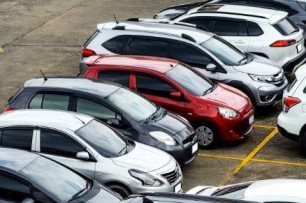
What factors influence car insurance premiums for SUVs and sedans
Driving a car without insurance is considered illegal in India. Automobile owners weigh the pros and cons of different options available in the policy market. Before buying car insurance, people consider various factors such as covers, add-ons, services, premiums, etc. In this article, we will be talking about premiums and how they can vary depending upon the kind and size of your car.
What is a premium?
A premium is an amount you pay your insurer to keep your policy valid. The duration of payment can vary from monthly to quarterly to annual payments.
What factors affect the premium?
1. Model and make of your vehicle
2. Engine capacity
3. The driving experience of the policyholder
4. Age
5. Location
Besides the points mentioned above, previous claims and traffic violations can also affect your insurance premium.
We better understand what premium is and how they can be affected. Let's look at premiums for SUVs and sedans.
1. The make and model:
Car insurance can vary significantly depending upon your car's size, make, and model. If you intend to buy an SUV or a sedan, remember that these models are charged the highest premiums. Putting in ample research into the car model and the respective insurance premium is essential.
2. Driving record:
Another crucial factor that decides the total cost of your premium is the driving experience. If you have no records of accidents, then the premium rates can be significantly lower. Even a minor skip such as running a red light or speeding ticket can affect the premium rates too. Insurance companies analyse your driving records to understand the risk associated with your driving and how likely you are to get into accidents. The more the chances of accidents, the higher the premium rates.
3. Location:
If you live in an area with high crime rates, the insurers tend to charge higher premiums.
The premium amounts can be excessive if your locality is prone to crime and vandalism.
4. Coverage and add-ons:
Coverage and add-ons are the services insurance companies provide when you buy an insurance policy from them. If you opt for the basic package and maintain a good driving record, the insurer will likely settle for a lower premium.
5. Age of the vehicle:
The age of your vehicle is another factor that insurance providers consider when offering insurance. The depreciation value of your vehicle increases with time. Adding to that is the wear and tear that the vehicle went through over the years, reducing the value of the car. Therefore, older cars will have a lesser premium.
6. Engine capacity:
The CC or the engine capacity affects the premium and higher the CC, higher the premium. And since SUVs and sedans have higher CC, their premiums are also higher.
7. Engine type:
Cars running on petrol have lesser premiums than cars running on diesel. A vehicle running on CNG has a higher premium than diesel engines. If you intend on adding a CNG unit to your sedan or SUV, keep in mind that the premium costs will increase significantly.
8. Modifications:
Modifications that alter the look or performance of your car will have a higher market value. This, in turn, will increase the cost of the premium on the vehicle. The look and feel of the car is a lesser talked about factor when it comes to insurance prices.
These are some factors that affect the premium of your insurance coverage. Irrespective of the kind of vehicle you buy, the points mentioned above determine the overall cost of your insurance. Before finalising your car insurance renewal, do not forget to look through various insurance providers and their services for a price best suited for your needs.
Click HERE to know more about car insurance renewal.
Disclaimer: The information provided above is for illustrative purposes only. To get more details, please refer to policy wordings and prospectus before purchasing a policy.

Explained: Zone-wise Co-pay Waiver, the new optional cover in Magma HDI’s OneHealth insurance
OneHealth, Magma HDI’s flagship health insurance is an all-encompassing solution with five plans tailormade to suit a customer’s needs. With state-of-the-art features and a bucket of add-ons, OneHealth provides a solid financial shield in case of a health exigency.
What is zone-wise pricing in health insurance?
Insurers offer zone-wise pricing to strike a fair balance in health insurance premiums, especially for customers in smaller cities. Hence, it may so happen that premium for a similar health plan differs as per cities, especially between metros and non-metros. There can be multiple reasons for this.
a) Hospitalization costs are relatively lower in smaller cities vis-à-vis metros
b) In most instances, the insured will opt for treatment only in their home city / town
c) Moreover, it may be assumed that people living in metros or tier 1 cities could be more susceptible to lifestyle diseases, and thus the higher premium
Hence, insurers try to pass on the benefit of lower cost of hospitalization to customers hailing from smaller cities. Having said that, most of the insurers offering zone-wise premiums have a co-pay clause for policyholders who want to avail treatment from a higher zone, which they bear during their claim settlement.
Zone-wise Co-pay Waiver Optional Cover
In Magma HDI’s OneHealth insurance, the zones are classified into Zone 1, 2 and 3:
- Zone 1: Delhi including National Capital Region, Mumbai including Thane, Navi Mumbai, Vasai-Virar, Bangalore, and Gujarat
- Zone 2: Coimbatore, Pune, Hyderabad, Chandigarh, Chennai, Kolkata, and Kerala
- Zone 3: Rest of India
One of the latest optional covers added in OneHealth is the Zone-wise Co-pay Waiver. As mentioned above, the premium rates of a health insurance product are fixed as per the zone opted for in the policy (Zone 1, 2 or 3). Zone 1 calls for the highest premium, followed by Zone 2 and Zone 3. If the insured undergoes a treatment in a zone higher than the one opted for in the policy, he must pay an additional co-pay amount which is charged as a fixed percentage of the claim amount. The existing OneHealth insurance plan has the following co-pay:
| Premium paid as per zone | Zone where treatment is taken | Co-pay |
|---|---|---|
| Zone 2 | Zone 1 | 25% |
| Zone 3 | Zone 2 | 20% |
| Zone 3 | Zone 1 | 35% |
Now, with the Zone-wise Co-pay Waiver Optional Cover, the insured can get this co-pay amount waived off if their treatment occurs in a zone higher than the one opted for in the policy. The cover is available across all plans and sum insureds.
Let us understand with an example.
• Mr. Parag, a 40-year-old from Amritsar plans to buy the OneHealth Secure plan for himself, his wife and two children, with a sum insured of INR 10 lakh.
• As Amritsar falls in Zone 3, Mr. Parag would have to pay INR 12,997 + GST as premium but would have to bear 35% co-pay on his claim amount if he ever gets a medical treatment done in Delhi (which falls in Zone 1).
• To avoid this, Mr. Parag can also opt for a Zone 1 premium i.e., INR 16,154 + GST for any eventuality. However, even this is 24% higher than the Zone 3 premium.
• Thanks to the Zone-wise Co-pay Waiver optional cover, Mr. Parag would only have to pay INR 14,362 + GST and get a Pan India coverage.
| Premium Amount | Additional Amount | |
|---|---|---|
| Premium paid on buying policy in Amritsar (Zone 3) | INR 12,997 + GST | 35% Co-pay levied on claim amount if treatment taken in Zone 1 areas |
| If opted for Zone 1 premium | INR 16,154 + GST | 24% higher premium |
| If opted for Zone-wise Co-pay Waiver Optional Cover | INR 14,362 + GST | Only 11% higher premium, and 0% Co-pay levied |
An insured can also opt for this optional cover at the time of renewal. However, a waiting period of 1 year shall be applicable for renewed policies. No waiting period is applicable for this optional cover, if opted while buying OneHealth for the first time as fresh or portability policy. In case this cover is discontinued by the customer, and again opted for subsequently, the 1-year waiting period shall start afresh.
Know more about Magma HDI’s OneHealth on WWW.MAGMAHDI.COM/ONEHEALTH-INSURANCE
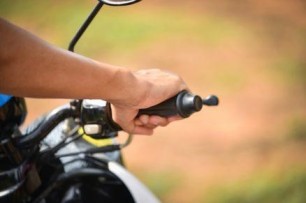
Why does the motorcycle engine feel smooth and throttle response crisp in the morning
The feeling of riding a motorcycle in the morning is otherworldly. But it's not only the early morning atmosphere that gives this ethereal feeling to the rider. It's also the smooth functioning of the engine and the swift and excellent acceleration of the motorbike in the morning. Many people experience this but do not pay much heed to why this happens.
This blog aims to make this phenomenon more understandable for curious bike fanatics.
1. Reduced friction:
The smooth ride that the engine provides in the morning and the minimum noise directly result from the engine's internal temperature. However, other parts of the engine maintain their temperature even when kept at rest throughout the night. Due to the thermal expansion of metals, there needs to be a proper gap between various working parts of the engine.
For example, to permit the expansion of the piston, there is a gap within the block of the engine. There is less friction, resulting in less noise in the morning due to this gap between the piston and the cylinder wall in the morning. This occurrence applies to almost every moving part of the engine.
2. Viscosity:
Another reason the engine feels smooth in the morning is the oil's viscosity. Viscosity is inversely proportional to temperature. In the early morning, the engine oil is cold, making it denser in volume. This higher viscosity accounts for maximum lubrication in the engine, which results in the smooth running of the bike.
3. Fuel management systems:
As far as better crisp acceleration in the morning is concerned, the fuel management system of the bike is the most responsible. The bike's fueling is divided into two- either fuel and air can be mixed proportionally by a carburettor, or the fuel is atomised at high pressure, mixed with clean air, eventually entering the engine's combustion chamber.
Carburettors give you a crisper throttle response due to the richer mixture between fuel and air. But nowadays, these are slowly being phased out due to the increasing pollution by carburettors.
So, do you really need to warm the bike up before starting it? This is another question that greatly puzzles bike enthusiasts.
There's no real need to warm up an engine for more than a minute before starting it. For a long time, all bikes used a carburettor for combustion. This type of engine tends to run poorly until appropriately warmed.
So, there is still a misconception that you must let the engine warm up before you start riding it. But it would be best if you were careful about hammering the throttle before the engine has gotten all nice and warm.
Riding a motorcycle gently for the first few miles is a good idea because putting the engine under extreme pressure while still cold increases the chances of damage and breakdown.
This damage is dangerous and can result in the maintenance fees burning a hole in your pocket. The best solution to counter this is investing in a good bike insurance that pays great dividends.
Click HERE to know more about bike insurance plans.
Disclaimer: The information provided above is for illustrative purposes only. To get more details, please refer to policy wordings and prospectus before purchasing a policy.

Car insurance background check in India: Why & How
Insurance is proof of verifying your track record, living and financial status, assets, etc. And if you own a car, having car insurance in India is mandatory. The main reason is to fulfil the interests of your vehicle and how you can safeguard it in case of any accidents or damages. But while this is a consumer-oriented measure that provides financial protection against car damages, the motor insurance company takes stringent background checks before allowing the customer to proceed with the process.
Are you looking for answers as to why and how these insurers perform such checks on potential customers? This blog will answer all your queries and decode the details one by one.
• Insurance companies want to be aware of their customers, their identities, and mandatory details about them to serve their consumers in the best way possible. This also helps them improve their services, which is why they conduct background checks on their customers when required.
• Confirming the consumer’s identity is essential to ensure they are claiming their real identification. This will assure the insurance providers that they are not creating a profile and selling the car insurance to a fake name.
• We all see how scammers these days are getting ahead of the intelligence agencies and finding their way out to fraud people and steal their money, identities, etc. This is why background checks of consumers are essential to verify all their information through government-attested documents. Insurance companies have reported that they receive fake claims for third-party insurance and background checks provide a solution to this issue.
• One of the reasons for conducting background checks is to ensure that their policyholders’ identities have not been stolen through other means such as phone insurance, where the consumers have been scammed into revealing their identities to third parties, which eventually use the information to accomplish malicious tasks and activities.
• The insurance companies must abide by the “know your customer” and local and international anti-money laundering rules and regulations as per government standards. To follow these rules, they need factual information about no criminal activities and involvement, financial scams, money laundering, etc., associated with their customers.
• The background check also involves checking your credit score reports. A good score reflects that you have a good financial status and can repay your bills on time. This acts as proof of your spending habits, money-saving capabilities, etc.
• While issuing car insurance, your motor insurance company looks at your driving history and evaluate your driving record and its details. This assures them that you are a responsible driver and avoid any brazen or rash activities on the road. Such activities might endanger other people’s lives and vehicles on the road and put the road safety protocols at risk.
We hope these factors will help you understand car insurance and insurance companies’ protocols in a better way. Speaking of car insurance, have you considered getting online car insurance? Buying online is the smartest way of investing in insurance. Purchasing a policy from a reputed motor insurance company promises several benefits that protect your car against any damages and prevent you from venting your pockets.
Click HERE to know more about online car insurance.
Disclaimer: The information provided above is for illustrative purposes only. To get more details, please refer to policy wordings and prospectus before purchasing a policy.
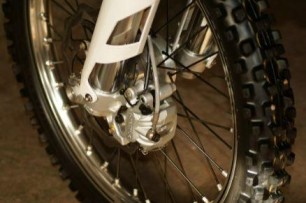
Let's understand the advantages of lightweight wheels
When you consider a bike's performance, many factors such as top speed, acceleration, engine capacity and power, mileage, accessibility of spare parts, servicing and maintenance, braking system, etc., contribute to a good outcome. Adding to this list are the wheels of your bike.
The wheels hold the tyres tightly to create a good balance and help steer the bike according to your driving directions and intensity. If you have a bike or are a bike lover, you would know that wheels come in different types, mainly lightweight and heavyweight. While each of these wheels has its pros and cons, how would we know which one is suitable for your bike?
This blog will discuss the benefits of lightweight wheels and how they add the "zing" to your motorcycle, giving it the winning edge.
So, let's understand the advantages of lightweight wheels to help you conclude which one you should choose and why.
1. We need to understand why weight matters:
To begin with, it is crucial to understand why the weight of the wheels matter. We can apply the fundamental theory of physics here. If anything is light and has lesser rotational mass (the level of resistance required to change its position or state), moving it forward is much easier. This is why it is convenient and requires less power from your bike's engine to move the lightweight wheels than the heavy ones.
2. Fuel consumption:
We all must opt for techniques to conserve fuel and make our vehicles more fuel-efficient. Lightweight wheels provide a way for your vehicle to use less power. So lesser the amount of power required to move the wheels, the less fuel consumed by the engine. There will be a minimal strain on the engine leading to minimising fuel usage.
3. Smooth movement:
Lightweight wheels, as already proved, are comparatively easier to move. In addition to the easy movement, lightweight wheels aid smooth turning and respond quickly, specifically in the corners. The smooth steering is a huge plus and excitement factor for bike enthusiasts. Besides improving gas mileage, lightweight wheels provide comfortable driving and a quality ride.
4. Need for speed:
Lightweight wheels are your best bet if you wish to achieve high speed while riding. They provide the comfort, quality and top performance of your bike. They show the immediate effect on the speed as you accelerate, thus achieving top speeds in a matter of seconds.
Get that adventure you seek by choosing the lighter wheels. But make sure you handle your motorcycle well, as lighter vehicles tend to be a little less stable. Safety is a huge concern, and you must adhere to all safety regulations. Gear up properly before you take your bike out for a ride.
We have already looked into how you need to be careful no matter the wheels you choose, and it is not always possible to anticipate any accidents or injuries you might end up in. Therefore, you must invest in bike insurance to safeguard it against the damages. You can browse all your options and deals before buying bike insurance. Select a comprehensive plan that offers the best coverage to your bike and comes with a reasonable premium.
Click HERE to know more about the benefits of bike insurance.
Disclaimer: The information provided above is for illustrative purposes only. To get more details, please refer to policy wordings and prospectus before purchasing a policy.
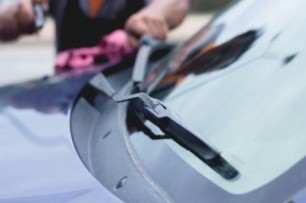
Here's how to stop your car's wipers from squeaking
The rains might not dampen your spirits on a long road trip, but the high-pitched jarring sound from the wiper blades will definitely. The peaceful sound of the rain, the music coming from the sound system, or the lovely conversations are drowned out by the annoying and shrill sound of the wiper blades, enough to ruin the mood. Not only does it affect the driver’s everyone's spirits, but it also affects the driver's concentration while driving.
Wiper blades can become noisy under several conditions, but the most common is dirt between the windscreen and the blade. A dirty windscreen will hinder the ease with which the blade glides over the screen, thus producing squeaking sounds. Another reason can be a mismatch in the blade's speed and the rain's intensity. If it's not raining heavily, and your wiper blade is set to high speed, it prompts the wiper to repeatedly go over the dry screen, resulting in unpleasant sounds. Squeaking wipers can also indicate worn-out and old wipers, and you must consider investing in a new one.
In this article, we will address some of these problems and a few ways in which you can stop your car's wipers from squeaking.
1. Dirty windscreen:
A dirty windscreen can be a driving hazard. Light refraction, obscured vision, and distracting squeaky wipers can hinder the driving experience. Maintaining your windscreen is imperative for a comfortable and safe ride.
You can avoid dirt and dust from accumulating on your windscreen by washing it with a good quality windscreen cleaner and a sponge. Before taking out your car to drive, ensure that your vision is not compromised.
2. Improper installation:
If your windscreen was recently adjusted or installed and you hear squeaky noises, then most likely, the setup wasn't correctly installed. You might need to remove and reinstall the wiper to rectify the issue. If you are unsure how to set the wiper properly, it is best to consult a mechanic at a trusted service centre.
3. Improper use:
It can become fragile if the wiper is not used correctly or overused. A broken wiper is of no use. Hence it is better to change and optimally use the wiper in the future.
4. Unclean wiper:
Wipers are often neglected when it comes to cleaning and care. It is a relatively straightforward process to clean the wiper blades. Some water, sponge, and soap are all you need to clean the wipers. Remember not to overdo it as fibres or cloth particles may be left behind, which can cause friction, further worsening the situation.
5. Wiper rubber blades:
Wiper rubber blades can go through wear and tear over time, and you should regularly inspect them for any damage. You can change the rubber blades once a year or whenever necessary.
These were a list of things you need to take care of if you hear squeaking or shrill sounds from your wiper blades. Remember that the tiniest discrepancies in seemingly small parts of your vehicle can cause serious driving hazards and even result in fatal accidents if not given timely care.
Regular maintenance and timely change of parts are essential to keep your vehicle working efficiently. Take that extra step towards the safety of your car and invest in car insurance. Buy car insurance online and get a value-added advantage to prevent additional expenses you might incur in damages and repairs.
Click HERE to buy car insurance online.
Disclaimer: The information provided above is for illustrative purposes only. To get more details, please refer to policy wordings and prospectus before purchasing a policy.

Did you know about these side effects of excessive water consumption
Water is the solution to all problems, according to most people. And no doubt, it is indeed one of the most potent ingredients for a healthy life. Good skin, weight loss, better hair, or even mild headache, water is a cure for all. It is an essential resource for life to exist and flourish. However, excess of anything is poison. Similarly, excessive consumption of water can have several complications and side effects.
Surprising, isn’t it? This article is just for you if you want to know how overhydration can harm you. We will look at all the side effects that excessive water consumption can cause. Let’s take a look at different kinds of overhydration and their causes.
1. Overdrinking:
Overdrinking is a condition that happens when you drink too much water and your kidneys fail to flush out as much urine. This leads to water accumulating in your bloodstream, causing the dilution of essential substances.
2. Water retention:
This situation arises when the body cannot flush the water correctly due to various medical conditions. Several heart diseases and liver and kidney problems may cause water retention in your body.
The colour of the urine is a good indicator of water levels in your body. Pale yellow colour urine indicates the optimal amount of water in your body, while darker colour urine indicates dehydration. If, however, your urine is transparent, that is a clear indication of overhydration.
Now let’s take a look at the effects of overhydration:
1. Water intoxication:
When you consume more than five to six litres of water daily, you may start seeing symptoms of water intoxication. Some minor symptoms include headaches, cramps, spasms, vomiting, and fatigue. The more severe consequences of water intoxication can be seizures or blackouts.
If you start noticing symptoms like those mentioned above, rush to the nearest hospital. The excess amount of water in your body can lead to fluid build-ups in the cells leading to swelling. Swelling can lead to coma and seizures and can even be fatal if not given immediate medical attention.
2. Nausea or vomiting:
The symptoms of dehydration and overhydration are almost interchangeable. Since too much water is accumulated in the system, the body rejects the excess. This leads to diarrhoea or vomiting.
3. Headaches:
As the body’s salt levels deteriorate significantly, the cells swell. The swelling causes pressure inside the brain cells, causing severe headaches. Sometimes it can lead to clotting and troubled breathing as well.
4. Weakness and lethargy:
Like salt, the electrolytes dilute due to excess water in the body. Electrolytes are crucial when it comes to maintaining energy levels in your body. An imbalance in the electrolyte levels can lead to fatigue and weakness.
It can also cause muscle cramps and spasms. Your kidneys are working extra to flush out the unwanted water. This creates a hormonal reaction leading to drowsiness and feeling less energetic.
5. Swollen body parts:
Due to an increase in the water retention in your body, and the electrolyte imbalance, you may notice swelling in different parts of your body, such as the legs, lips and fingers. You may also notice a discolouration resulting due to hormonal changes caused by excessive water.
These are a few side effects of excessive water consumption. Excess water in your body can bring about various hormonal and other significant changes. Treatment for these should be taken under the guidance of a medical practitioner to avoid further complications. However, an immediate remedy to overhydration is the consumption of salts or electrolytes. Regaining the concentration of salt and electrolytes in your body can be a temporary cure.
Just like overhydration, there might be other issues in your body that you might not be aware of. Get an expert opinion to recognise any underlying issues and address them with proper and timely medication. Many online health insurance companies provide comprehensive coverage on all such check-ups and treatments that you might want to look into. Take advantage of this feature and benefit yourself and your loved ones.
Click HERE to know more about online health insurance companies.
Disclaimer: The information provided above is for illustrative purposes only. To get more details, please refer to policy wordings and prospectus before purchasing a policy.
Hi there! 👋 Need help with a policy, claim, or renewal? Chat with us instantly on WhatsApp.
Start chat →