


General Insurance Blogs, Articles & Updates by - Magma Insurance
Have us call you
- RENEW YOUR POLICY
- BUY NEW POLICY

GENERAL INSURANCE BLOG

What are the current deductibles in car insurance you must know about
Whether a two-wheeler or a four-wheeler, owning a vehicle is a matter of pride and sheer joy. When choosing your vehicle, the engine capacity, mileage, pickup, and colour are some of the few factors you consider. One lesser talked about or thought about aspect is your motor insurance. Choosing the best motor insurance company in India should be your next priority after finalising the car because your dearest asset needs a reliable safety shield.
There are various hidden conditions and additional costs associated with insurance. It may be in the form of add-ons or premiums, but more often than not, we are confused about the final payments and all the benefits of getting motor insurance.
In today's article, we will talk about deductibles in car insurance and all you need to know about it.
What are deductibles?
An amount you are liable to pay from the total claim amount is known as deductibles in car insurance. Typically, if the repair costs you twenty thousand and the deductible is two thousand, you will have to pay two thousand, and the insurer pays the remaining eighteen thousand.
The higher the deductible amount, the lower your overall premium amount will be. Although promising a higher deductible would mean you will have to spend money from your pocket. Hence, analysing your monetary situation and the ability to pay the deductible is crucial to understanding the amount you might have to pay in case of accidents or damages.
Types of deductibles.
There are two types of deductibles from which you can opt from:
1. Voluntary deductible set by yourself
2. Compulsory deductible levied by the insurer
What is a voluntary deductible?
The amount you decide to pay from your pockets, depending upon the total insurance amount, is a voluntary deductible. As the risk that the insurer will take is lower, voluntary deductibles are a great way to get your premium lowered. Opting for a higher deductible will bring down the value of your insurance premium amount.
Before finalising your policy paper, deciding on a deductible amount you will pay yourself in case of any damages is imperative. This deductible is applied to every claim made after activation of the insurance.
What are compulsory deductibles?
The policyholder is not the one making decisions on these deductibles. The insurance board of India has set a value based on the engine's power or CC in these vehicles. It can vary from anywhere between one thousand to two thousand rupees. The premium amount stays unaffected irrespective of the compulsory deductibles.
When buying car insurance, two costs primarily add up. The first is the premium amount you have to pay at the beginning of the policy renewal, and the second is the compulsory deductibles you pay for every claim as a deductible.
Why is it essential to levy deductibles?
Many people partake in fraudulent activities to skip maintenance costs and reap maximum benefits from insurance companies. Manipulating evidence or staging accidents are part of moral hazards. Such situations can be avoided if a deductible is charged per claim.
Another reason insurance companies practice using deductibles is to provide a buffer between actual accidents and minor damages. Insurance providers offer financial support to people when they claim an accident or theft. However, the compulsory deductibles provide a cushion against unnecessary claims and financial stress for an insurer. Deductibles are used to protect them from such overwhelming situations.
These points are sure to help you understand deductibles and insurance policies better. Do thorough research before you buy your insurance policy. Choose the best motor insurance company in India and add value to your prized possession. Time invested in buying reliable insurance will bring you the best returns during tough times.
Click HERE to know more about the best motor insurance company in India.
Disclaimer: The information provided above is for illustrative purposes only. To get more details, please refer to policy wordings and prospectus before purchasing a policy.
How many car insurance claims can be made every year
Accidents never come with a warning. And in such cases, having car insurance is a considerable relief. Otherwise, you will have to bear all the financial costs and suffer through the stress, which will never help the problem.
It is always advisable that before buying an insurance policy, you should know all the details and information. And to get the complete information, you need to ask all the right questions to your designated insurance provider. This helps you to know about the benefits you can avail and the steps to take in case you get into trouble.
Listing down all these things has us sweating. All these unforeseeable circumstances sound so taxing, don’t they? This blog has all the information you need regarding these crucial questions.
1. The number of insurance claims you can make:
It’s a mix and match. The higher the number of insurance claims you make in a year, your insurance premiums will increase. Most of the time, the number of insurance claims is not limited and mentioned in your car insurance policy. Your “no claim bonus” provided by your designated insurance provider reduces if you file a claim during a year. It is optional, so you are allowed to forfeit it. It would be best if you were mindful of your zero depreciation cover and other add-on benefits, as some insurance provider companies have a limitation on the number of claims in such covers.
2. Is there any particular number:
There is no particular answer to the question, “how many car insurance claims can be made every year.” It ultimately depends on the type of damage, the grade of damage, the type of policy cover you have under the insurance, and your insurance provider’s norms and regulations.
Although, it is advisable to save your insurance claims for damages that would cause you some financial stress. Do not file insurance claims in case of minor damages that bear low costs, and you can easily afford to get it sorted.
3. What happens if you file several claims:
Suppose you end up filing multiple claims. Are you worried about the consequences and what sort of situations might arise regarding your car insurance? We have discussed the no-claim bonus. Your rates will lower if you do not file any claims in a particular insurance period or year. You will have to bid farewell to your no-claim bonus if you file too many claims.
So, it is advised to only file claims if they are way beyond your affordability or more than your no-claim bonus. Filing too many claims will not only make you devoid of no claim bonus but also affect your premium rates which will skyrocket in case of multiple claims. This happens as these claims make you appear on a riskier end for your designated insurers.
Other consequences include the depreciation rate not being taken into account by the insurance company in case of zero percent depreciation coverage. Don’t file a claim if your repair charges are lesser than the deductibles.
That was all about how insurance claims you can make in a year. We hope this blog has provided the best insights. We suggest an essential tip for buying online motor insurance for first-time buyers. As there are plenty of options to explore, you can conveniently purchase a plan that best suits your requirements and budget.
Click HERE to know more about online motor insurance.
Disclaimer: The information provided above is for illustrative purposes only. To get more details, please refer to policy wordings and prospectus before purchasing a policy.

Most answered FAQs for motor insurance policies
Insurance policies are supposed to be understood thoroughly before you purchase them. Their purpose is how they would protect you and your assets against financial damage and decide on premiums and claims. Insurance companies conduct detailed background checks of their policyholders to ensure that they have authentic identities, are not involved in any criminal activities, money laundering, or financial scams, are not victims of identity theft, have a good credit score, are reliable drivers and law-abiding citizens of the country and much more.
Are you someone looking to understand the basics yet the most critical questions that would help you purchase motor insurance? We are here with all you need. In this space, we will discuss the most answered FAQs for motor insurance policies. This information will provide essential pointers you will need to understand if you are new to the insurance world.
1. What does third-party risk policy mean:
Third-party risk policies are necessary insurance policies that would protect the owner against the risks mentioned in the act. The third-party insurance policies compensate for the damages caused to the assets of the third parties or during deaths or accidents of the third parties.
2. Validity of your motor insurance:
You must know about the validity of your motor insurance so you can avail of the benefits on time. Always be up to date with your premiums and renew them to avoid putting your vehicle at risk. This way, you avoid financial burdens in case of unfortunate circumstances. The period of motor insurance from the day it begins is up to a year. This will be displayed in your insurance policy's schedule. Do not forget to read the documents and the listed terms and conditions carefully.
3 . Making claims:
Evaluate and estimate the cost of your damages. In many cases, raising small claims might not be a good idea if the damage costs you a small amount that you can easily bear. Keeping your claims for the future can help you avail them whenever there is a dire need in case of a substantial financial burden. Check the no claim bonus, which comes under your vehicle insurance. Follow through with the estimates and what you might have to forfeit under the bonus. Evaluate carefully and make the decision.
4. What happens during an accident:
If it were being driven by someone else, your car or motor insurance would still be valid to use, given that the person driving your vehicle was granted permission by you for the same. You can use your insurance policy to ensure you do not incur enormous costs for repairing the damages.
Also, vehicles are liabilities too. So, the individual's (the person driving your car) liability insurance can be a huge help in paying for the damages if your motor insurance exhausts its limits during the complete servicing and repairing process. Be mindful of your insurance limits.
5. Selling your vehicle:
If you decide to sell your vehicle, you can hand over the authority of the motor insurance to the new buyer. You must make sure that you apply for an insurance transfer with the designated insurance organisation within fourteen days of your car's transfer date under the buyer's name and ownership. You need to pay the endorsement premium before transferring the insurance policy.
Well, these were the most answered FAQs for motor insurance policies. We hope that this information proves helpful to you in understanding a little deeper about motor insurance and the fundamentals you must be aware of to ask the right questions to your insurance provider companies and officials. Also, explore all your options and get the best motor insurance India. List down your requirements and accordingly plan the estimated premium. Make practical decisions and see the results doing wonders for you!
Click HERE to know more about the benefits of buying the best motor insurance India.
Disclaimer: The information provided above is for illustrative purposes only. To get more details, please refer to policy wordings and prospectus before purchasing a policy.
Here's what you need to know about adding a nominee to car insurance
As thrilling as owning a car, there are undoubtedly various risks associated with the same. With the number of accidents increasing daily, it is essential to look out for your family and loved ones. One way of ensuring that is by investing in a good car insurance policy. Another way to ensure that your family stays safe even after your death is by adding them as nominees to your car insurance.
Wondering who a nominee is and the benefits of adding a nominee to your car insurance? Then, this article will tell you everything you need to know about nominees and how to add them to your car insurance.
What is a nominee?
In case of the policyholder's death, a nominee is a person that the policyholder nominated at the time of signing the insurance and will be getting the insurance policy's proceeds. The insurance must also cover personal accidents along with the base plan to provide extended coverage. The personal accident cover will ensure that the nominee gets the insurance benefits even in the absence of the policyholder.
Indian law states that a nominee is responsible for the custody of money or property after the policyholder's death. In some cases, a nominee is responsible for distributing the money and other profits to the legal heirs or the spouse as stated by the policyholder.
Who can be a nominee?
There are no set rules as to who can be your nominee, but the practice is to keep the spouse, parents, or children as the nominee.
How to add a nominee?
Much like every other process, technology has recently made adding a nominee easy. The majority of the work can be done online. Websites and mobile apps have made changing or adding a nominee more straightforward and hassle-free. All you need to do is access your policy account and add the nominee to your selected policy. You will need to give details of the nominee, such as name, date of birth, relation to the nominee, etc. Keeping these documents handy would make the process simpler.
If you want to change your nominee, you can follow the same steps mentioned above and edit the choice of the nominee in your policy portal.
Why should you choose a nominee beforehand?
If an accident or any mishap happens, the legal heir is the lawful beneficiary of the insurance claim benefits. However, verifying and validating the identity can be long and tiring if not explicitly mentioned as a nominee. Choosing and naming a nominee when buying new car insurance or at the time of car insurance renewal is crucial.
What are the benefits of choosing a nominee?
1. In case of the policyholder's death, the personal accident cover provides financial coverage to the family. The claim is not limited to the death of the policyholder. You can make this claim even in the case of temporary or permanent disability caused by an accident.
2. If a person dies after a claim is made, the compensation and benefits will be diverted toward their nominee.
How to withdraw money as a nominee?
Since a nominee is not the owner of the assets, it is essential to prove to the authorities that the policyholder is deceased. You will also need to establish your relationship with the policyholder to the insurance company. The policy holder's death certificate, policy papers, nominee's birth certificate, and a certificate stating the relationship between the policyholder and the nominee are some documents you might need to provide to the insurance company to avail the benefits.
Some policies provide the option to choose multiple nominees, and the benefits and compensation can be shared amongst the nominees as per the policyholder's decision. You can change your nominee mid-tenure. You can either talk to your insurance provider or manually adjust it through mobile applications or websites.
To ensure your family's safety and protection, do not forget to add on personal accident cover in your next car insurance renewal.
Click HERE to find out more about car insurance renewal.
Disclaimer: The information provided above is for illustrative purposes only. To get more details, please refer to policy wordings and prospectus before purchasing a policy.

Here's how you can personalise two-wheeler insurance
If you enjoy riding your motorbike and spend time getting it customised with modifications and accessories, this blog is for you. Personalisation is now becoming the backbone of many industries. People want things they consume or use to be altered to cater to their tastes. And a little personal touch makes the consumers feel cared for and appreciated to be loyal to a company or a brand. Did you know that you can now personalise your two-wheeler insurance?
You can alter and add several benefits according to your requirements to your two-wheeler insurance. Curious about how you can get additional benefits that would satisfy your necessities? This blog will discuss all the information about insurance policies and how you can adjust them a little to fit your interests.
While we would be talking about how personalisation is a part of insurance, you must remember that this can only occur if you have valid insurance to drive around your bike. Do make sure that you have legitimate and valid two-wheeler insurance.
So, here's how you can personalise two-wheeler insurance.
1. There are various types of insurance covers:
Various insurance covers here include comprehensive insurance cover, third-party cover, additional riders, etc. Under comprehensive insurance cover, you get benefits that would protect you against all damages caused to your vehicle, third-party property, or person. It provides you with full coverage. Due to the extravagant benefits, comprehensive insurance is costlier than a third-party cover.
The third-party cover is a compulsory policy that protects the policyholder against any damage or risk to third party-persons or property. This cover is limited to damage caused only to the third party by your vehicle. And it is mandatory for everyone who has bike insurance. The limitations of the third-party cover are solved by comprehensive coverage insurance. You can opt for an additional rider cover as a part of your insurance benefits. In doing so, you will be required to pay an extra amount or a premium. The details of the additional riders can be included during the registration and the beginning of the insurance policy coverage of the primary policyholder. You can also have the extra rider cover during the whole renewal procedure of your two-wheeler insurance. These riders will be eligible to get similar benefits as the primary policyholder. They will receive emergency or round-the-clock roadside assistance from the insurance company.
This assistance and the additional riders cover any loss or damage caused or if your bike got towed or in case of any repairs. The various issues this extra rider's insurance cover would easily handle are duplicating keys and the related problems like changing the tyre, and empty fuel tank, among many other benefits.
2. Protecting your engine:
The engine protection insurance covers you in case of engine damage, gearbox issues or damage, leakage of the lubricant, heating up of the engine, engine failure, and much more.
3. EMI protection option:
Some other benefits include EMI protection, where in case of any damages, the designated insurance company will pay for the EMIs of the two-wheeler as directed in the EMI bike insurance and protection cover. This will apply only if the service centres or the garages are certified and approved.
Other benefits or additional riders include coverage for vehicle-related expenditures like motor vehicle oil, coolants, refrigerants, nuts, screws, etc. Then there is a pillion rider's cover to protect the rider with you against any accidents and body injuries. This insurance add-on benefit also covers any medical costs incurred during accidents for the pillion rider.
So, here's how you can personalise two-wheeler insurance. There are several options to buy the best two wheeler insurance India and customise it your way. Reap the benefits of hassle-free insurance claims and valuable financial support during an emergency.
Click HERE to know more about the benefits of purchasing two wheeler insurance India.
Disclaimer: The information provided above is for illustrative purposes only. To get more details, please refer to policy wordings and prospectus before purchasing a policy.

Here's all you need to know about the driver and passenger cover in car insurance
Road trips with family members, friends, or companions are a pleasant experience to enjoy. You are jamming to your favourite songs, catching updates about one another's personal life, enjoying the views of the route, and are just taking a much-needed break from your hectic work life. All this sounds amazing, comfortable, and convenient. But what would happen if something suddenly goes downhill and you land in a chaotic situation you did not expect?
You must know and be aware of the practical solutions before you end up in a chaotic situation. This blog will discuss the driver and the co-passenger aspects of car insurance. So, here's all you need to know about car insurance's driver and passenger cover. Let's get started!
1. In accidents, passengers get severely injured along with the drivers. As a mitigation measure to avoid financial stress during unfortunate circumstances, getting a passenger's insurance would help to protect their life.
2. The policy covers up to two lacs of hospital and medical bills and permanent or short-term disability liability. In case of the passenger's death, the financial support will go to the nominees or the person to whom the policyholder assigned the money and the responsibility.
3. Personal accident insurance is mandatory for the owner and the driver of the designated vehicle. Passenger insurance is separately entitled insurance unrelated to personal accident insurance. Although, do not mistakenly assume that the lack of enforcement to get a passenger's insurance is something you can be careless about. Secure everyone's lives-whoever is travelling in your car.
4. There are various types of car insurance coverages for both the drivers and the passengers. These include (owner-driver) personal accident insurance, paid drivers' accident coverage, and unnamed passenger personal accident insurance, to name a few. The paid drivers' personal accident coverage ensures that whoever you hire to drive your car is enlisted in that insurance as a paid driver. You can get this add-on benefit in exchange for a small amount. This tends to be a massive plus in the long run, especially during sudden accidents or risks. The individual registered under the title of the paid driver is only eligible for the amount the insurance is supposed to cover.
Unnamed passenger personal accident insurance can be bought as an add-on to protect the life of the passengers travelling in your insured car. You can select the add-ons according to the number of passengers your vehicle can have. And it is mandatory that during sudden situations where you might land in an accident, or something unfortunate happens, this benefit will be only applicable if there are not more than the legally permitted number of passengers (according to your car model and government and companies' instructions).
As the owner of the car and someone who owns a driving licence, you must have owner-driver personal accident insurance under your auto insurance. The insurance amount would be passed on to your legal and enlisted heirs in case of physical disabilities or death due to a vehicle under your name.
5. The owner-driver and the passenger cover under auto insurance act as a secondary safety net for you and your fellow passengers. Usually, standard insurance policies do not offer you such benefits. In the case of the owner-driver personal accident insurance, the insurance company will ensure that the amount reaches the nominee of your insurance in case of any death or tragic circumstances.
As we are already discussing insurance, you must also consider your car's security. Your car is your asset, and you must protect it under comprehensive car insurance. You can also save a considerable cost by avoiding intermediaries' involvement. Buy online car insurance and eliminate the unnecessary stress of the cumbersome process, long waiting time, and commissions to agents.
Click HERE to know more about online car insurance.
Disclaimer: The information provided above is for illustrative purposes only. To get more details, please refer to policy wordings and prospectus before purchasing a policy.

A complete guide to motorcycle headlights up-gradation
As someone who owns a motorcycle, you will know the thrill of long road trips with friends or the calm of solitary rides at night. A bike can give you many new adventures, all of which you must experience in your lifetime. Owning a motorcycle is a matter of pride and honour. Still, it also brings many responsibilities like regular maintenance, proper servicing, and owning the best 2 wheeler insurance. However, this article will discuss another safety feature, i.e., headlights.
If you are looking to upgrade your headlights, or want to know the nitty-gritty of the kinds of headlights, then look no further. This article is here to help you understand all your motorcycle headlight-related needs.
Before looking at the types of headlights, let's understand why it is essential to have a fully functioning and a good-quality headlight on our motor vehicles.
1. Safety:
We have heard of accidents on the roads and highways at night. In most cases, the driver is incapable of navigating dark streets due to a lack of visibility. It is imperative to have a good headlight, to keep yourself and others safe on the road. Not only does it help you in seeing others, but it also allows others to notice you.
2. Driving through fog or rain:
Your vision is significantly compromised when you drive through dense fogs or heavy rains. A good quality headlight can pierce through rains and fog and help you with better visibility.
Now, let's understand the different types of headlights that are available in the market for you.
1. Halogen:
The most commonly available lighting in headlights is the halogen reflectors or filaments. These lights share the same characteristics as the yellow-hued filament bulb used in houses. These bulbs are cheaper and easily accessible by consumers; however, these lights are not as bright as the others available in the market.
2. Xenon bulbs:
These are produced majorly for projectors and other directional purposes of light. They give out a very sharp, bright light stream that can easily cut through the darkness and give better visibility of the road ahead. However, one con of these bulbs is that since they are intense beams of light, they tend to reflect from surfaces. So, while driving, you might not be able to see the directions and street signs, as these lights can reflect strongly into your eyes.
3. LEDs:
The light-emitting diode or the LED emits bright white light and is primarily found in newer models. They consume less energy and have high efficiency. They are also safe and durable and emit a bright stream of light that can easily cut through dense fogs and rains.
These are some of the significant kinds of bulbs used in your headlights. It is crucial to keep your bike and its parts working to ensure the safety of yourself and others. Besides the headlights, it is a good practice to take note of your vehicle's tail lights, turn signals, brake lights, and fog lights to ensure maximum safety.
Before upgrading to a newer headlight, it would be wise to check if the bike's battery can handle the extra load from a new headlight. If the batteries fail to handle the change, your bike can stop working. To bypass this issue, it is best to talk to a mechanic who will be able to guide you with the battery requirements for your headlights. An upgraded battery and a headlight system would keep your bike and the new headlight safe.
An efficient headlight is paramount to driving safely on the roads, specifically at night. Always ride with proper safety gear, carry the essential documents, and keep your 2 wheeler insurance up-to-date. Ride with responsibility and stay safe on the road!
Click HERE to buy 2 wheeler insurance.
Disclaimer: The information provided above is for illustrative purposes only. To get more details, please refer to policy wordings and prospectus before purchasing a policy.
Does your car insurance policy cover damages due to vandalism
There are various covers that the insurance companies provide depending upon factors such as the location, the type of car, the engine model, the engine capacity, etc. These car insurance covers are provided for various situations such as natural calamities, theft, accident, etc. One such protection that always seems ambiguous is the insurance against vandalism. If you are contemplating whether to take a vandalism cover or not, this article might help you by giving you a better insight into destruction, the claim, the benefits, and the demerits of the same.
The first thing to understand is that vandalism covers can be costly. As the severity of vandalism cannot be estimated beforehand, and the likeliness cannot be predicted, the covers can charge extra.
You can claim vandalism only if you have a comprehensive cover. Now, what is a comprehensive cover? Let’s understand the two main kinds of covers provided by insurance companies.
1. A third-party plan:
This policy is a safety net for the policyholder against any liabilities that may arise due to an accident or collision resulting in an accident of a third person or damage to their property.
If in case of death of the third person, the insurance company covers the compensation for the same. The premium on these is lower compared to a comprehensive car insurance plan.
2. A comprehensive plan:
Not only does it include third-party coverage, but it also takes care of personal damage. Comprehensive car insurance protects against any legal obligations arising from third-party interference and covers any damage caused to your car.
This cover also has the added covers on natural and human disasters such as riots and vandalism. With these things in mind, you can rest assured that your car will be fully taken care of by the insurance company.
Let’s first understand what vandalism is:
Vandalism is an act of destruction performed intentionally and with the intent of malice. In this case, we are talking about vandalism against vehicles, which can have different forms.
1. Damage to the car body:
Spray paint, scratches, and graffiti are a few ways to damage the car’s body that can be considered vandalism. More noticeable scratches and damage will require a new paint job and other repairs.
2. Broken parts:
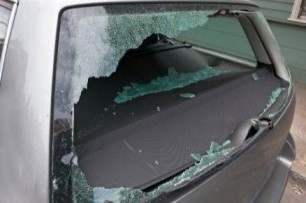
Broken windows, glass panels, or lights must be changed entirely, costing tens of thousands in damage.
3. Slashed tyres and stolen parts:
Parts of your car, such as the side-view mirror, company logo, tyres, wiper blades, etc., can cost significant money. People steal these and sell them for the original prices, which are relatively more expensive than the knock-off goods.
Vandalism claims can be time-consuming and challenging to process as there is rarely a proof. So, it is best to inform your insurers as soon as possible and start the process. But remember that vandalism claims are only valid if there were relevant covers in your policy.
As discussed above, car insurances pay for vandalism only if you have comprehensive coverage added to collision coverage. Comprehensive coverage does not include any stolen goods or personal items from within the car, but it can cover the expenses for the damages incurred.
Sometimes, a police intervention might be needed as vandalism is considered a crime. Filing a complaint with your insurer increases the chances of damage recovery through the claim. If a police officer does not visit the crime scene, then the chances are that they will call you to give a detailed report of the crime. Do not forget to miss out on any points, as the better the details of the crime; the better are your chances of claiming your insurance.
Now you know why investing in a comprehensive car insurance policy is best. You can get the best protection against calamities, human-induced hazards or otherwise.
Click HERE to find out more about comprehensive car insurance plans.
Disclaimer: The information provided above is for illustrative purposes only. To get more details, please refer to policy wordings and prospectus before purchasing a policy.