


General Insurance Blogs, Articles & Updates by - Magma Insurance
Have us call you
- RENEW YOUR POLICY
- BUY NEW POLICY

GENERAL INSURANCE BLOG
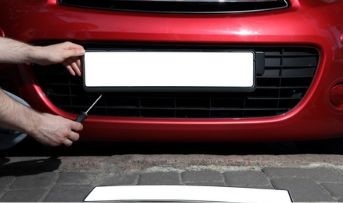
Why do different number plates have different colours?
Have you ever been stuck in traffic without recourse to pass your time? Most of the Indian population has experienced the same due to the ever-increasing number of cars on roads, poor driving etiquette, and ill-maintained roads. In such situations, looking around often helps find temporary things of interest.
In such situations, even mundane things can catch your eye. Have you noticed that some vehicles have different coloured number plates? However, if you have wondered why some vehicles have other coloured number plates and their significance, read on.
Understanding the layout of number plates
In FY 2019, India had 295 million registered vehicles. With a CAGR of 10% between 2007 and 2019, it is safe to assume that the pace of growth of registration has sustained, if not grown. Legal mandates have made it compulsory to buy motor insurance online and getting a vehicle registration number even before your car hits the road. To adhere to the process, knowing the layout of number plates is essential.
● The first two letters indicate the Union Territory or State where the vehicle is registered
● The following two digits denote the district RTO's sequential number
● The next section of up to 2 digits or letters reflects the series of numbers presently being allotted
● The last four digits are your car's unique registration number
You can find IND lasered under the Ashok Chakra emblem on the left. Underneath the number is a unique pin code for the number plate. The text is usually in black or white, depending on the plate's colour. This is the general format commonly used until the introduction of the BH series number plates.
Different number plate types and their meaning
1. White
This is the most prevalent type of number plate. You will be allotted a white number plate if you purchase a car for personal commute purposes. The numbers are lasered in black.
2. Yellow
Another common number plate colour is yellow, with the registration number etched in black. This indicates a commercial vehicle that may transport goods or ferry passengers. The regular documents required to be carried by drivers include motor insurance papers, a driver's licence, and a PUC certificate. Additionally, commercial drivers must have a permit that states their eligibility to carry out the same.
3. Green
The emergence of green number plates is a sign of shifting toward sustainability. These are assigned to electric vehicles of all kinds- two-wheelers, cars, buses, etc. The registration number is etched in white on these number plates. Unlike the distinction mentioned above regarding purpose, all-electric vehicles have green number plates irrespective of use.
4. Black
A black number plate indicates a vehicle has been registered for rental. Drivers do not require a commercial driving licence for these rented commercial vehicles.
5. Blue
Blue number plates with white lettering are rarely seen. They are used to indicate vehicles that belong to a foreign embassy or consulate. These are reserved for foreign diplomats and have unique registration numbers. Instead of the state code shown in the first two letters, the diplomat's country is displayed.
6. Red
Red number plates are for vehicles owned by the President or Governors of India. These number plates have a gold emblem of India instead of a registration number.
Vehicle registration is a mandatory process in India. Before you purchase a new vehicle, knowing what type of number plate to apply for is ideal. You may research more to get deeper insights and understand the colour system. Also, buy motor insurance online to keep your car safe from accidents. A comprehensive motor insurance acts as a safety net to avoid venting your pockets if your car demands repair and replacements.
Click HERE to buy motor insurance online.
Disclaimer: The information provided above is for illustrative purposes only. To get more details, please refer to policy wordings and prospectus before purchasing a policy.

With retro motorcycles trending, here are some classic features to look out for!
India is a country that has forever favoured 2-wheelers. With their cost-effectiveness, fuel efficiency, and ease of handling, the Indian 2-wheeler market will only grow multifold in the coming years! While manufacturers constantly launch new models that solve existing concerns in response to consumer feedback, what's classic never goes out of fashion.
One such model which is gaining popularity is Retro motorcycles. They are coming back in trend again! Apart from being a status symbol, various reasons have resulted in the popularity of retro bikes. They have been the favourite of Indians for many generations. People love riding these as they are classy, elegant, and highly durable.
Motorcycle enthusiasts prefer these retro motorcycles as they are suitable for varied terrains and long rides due to their sturdiness and comfort. Their additional safety features offer benefits similar to no other bike. Coupled with comprehensive bike insurance, you have a safe mode of a personal commute!
Despite the glitz around these classic bikes, buying your first retro bike as a beginner can be overwhelming. If you're confused about the features you should consider before purchasing a retro motorcycle, here's a quick guide to ease the process.
1. Longevity
Classic retro bikes are incredibly durable. Their quality justifies the hefty amount spent on these bikes. The vintage designs are built to last for years without hassles. Think of them as an investment in the long run, as they are heavy-duty and usually last for decades. Having a classy retro bike doubles the appeal of your parking area.
2. The comfort
These bikes come with comfy seats, an upright handlebar position for a straight riding posture, and uncluttered controls or switches. You can easily get the functions right and go along your way. They also have a high torque level and offer a pleasurable riding experience.
3. Improved engine
Engine power is essential to the biking experience. One of the greatest USPs of these bikes is their improved engines and loud revving thunder. You should always see if the bike you opt for has the latest engine and a high capacity. Also, look for shock absorbers and a secure braking system for efficient high-speed control and easy driving.
4. Practicality
Do not compromise on everyday functionality for the sake of aesthetics. Robust construction, wide tyres, and better ground clearance are required for multi-terrain use. Before purchasing a retro bike, you should keep these things in mind for the best motorcycling experience.
5. Colour options
Retro motorcycles are renowned for their classic designs and vibrant colours. Although it is a minor factor, it can contribute a lot to your style statement. You can either get them in monotone or dual shades.
Classic and retro motorcycles are incredibly well-known in India and beyond. Everyone loves owning one for themselves. It is a status symbol and a matter of pride for all. They appear vintage yet attract the youth! Hence, buying the best and most durable motorcycle for you is recommended. You can buy bike insurance for added protection to complement the safety it offers. This can protect you against the cost of damages from an accident and help preserve the value of your highly-valued retro motorbike.
Click HERE to buy bike insurance to safeguard your retro motorcycle.
Disclaimer: The information provided above is for illustrative purposes only. To get more details, please refer to policy wordings and prospectus before purchasing a policy.

How embedded insurance is set to accelerate the pace of insurance penetration
There are numerous general insurance companies in India offering multiple insurance products. However, most of the population is opposed to purchasing these insurance safety instruments despite the dire need for long-term stability. Recognising the slack in demand for purchasing specific policies, general insurance companies in India have developed a new way to make insurance products more accessible.
Embedded insurance, also known as bundling insurance, is the latest method of partnering with a third-party brand and offering consumers complimentary insurance or with a nominal fee over the transition cost. It helps make insurance accessible by bundling it for customers.
However, if you wonder how embedded insurance can expand opportunities and build strong customer journeys, read on.
What is embedded insurance?
Embedded insurance enables a third-party provider to introduce innovative insurance products for customers. It provides consumers with more affordable, personalised, and relevant insurance. It also allows general insurance companies in India to access underserved and untapped markets.
How embedded insurance helps increase insurance penetration in India? Insurance penetration is calculated as a percentage of total premiums collected relative to the country's GDP. According to the IRDAI, the country's general insurance penetration is about 1%. India's insurance penetration is lower than in developed countries.
However, we anticipate an increase in insurance penetration due to embedded insurance.
Here's how embedded insurance transforms the insurance sector and increases insurance penetration.
1. Charging the untapped markets
This insurance allows insurers to access a new market. With embedded insurance, general insurance companies in India can provide microfinance companies with policies like personal accident insurance and more to target a specific audience. Insurers and third parties can expand the insurance sector's reach in India's underdeveloped markets with the help of embedded insurance. It allows them to reach the untapped rural market, increasing insurance penetration deeper in the country.
2. Innovating product offerings
Insurers can construct personalised and more relevant insurance policies using consumer data that was not recorded or digitised. Customers can also change the insurance policy's features, coverage, cost, etc., and discontinue them if they are no longer reasonable.
3. Enhanced customer experience
Embedded insurance boosts customer satisfaction, resulting in greater opportunities for general insurance companies in India to market their services and products. It also provides more customised coverage, allowing customers to change plans and premiums according to their needs. This way, it offers more significant benefits and value to the customers.
4. Low client acquisition costs
General insurance companies in India spend roughly 20% of their income on advertising to new clients. Embedded insurance decreases the churn rate by engaging policyholders at the right time in their journey. Also, the effective cost of customer acquisition is lower than other insurance.
5. Streamlined onboarding
Many people consider insurance an inconvenient procedure requiring a series of steps. Embedded insurance gives customers a streamlined issuing process, making insurance simple and inexpensive. This applies to the claim procedure too. The smooth operations of embedded insurance is a boon for Indians to invest in insurance massively.
Embedded insurance has much potential, but businesses must balance the efficiency and speed of business operations, regulatory compliance, and customer protection for this model to succeed.
Many general insurance companies in India are now integrating the internet of things (IoT), artificial intelligence (AI), machine learning, big data analytics, and other technologies to transform the insurance industry and deliver a hassle-free customer experience. While it will require time for adoption, it is a welcome move to increase penetration rates. Insurers must use the momentum and improve their dependability to gain consumer trust.
Click HERE to invest in a reliable general insurance policy.
Disclaimer: The information provided above is for illustrative purposes only. To get more details, please refer to policy wordings and prospectus before purchasing a policy.
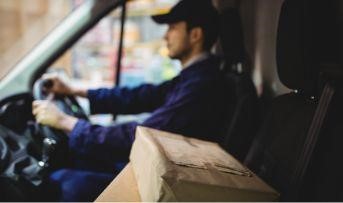
How to adjust the driver’s seat properly to ensure optimal posture and visibility
Driving is a highly responsible task that requires a lot of attention and focus. Even the slightest distraction can lead to an accident which could be extremely dangerous and fatal.
So, it is recommended to be familiar with all the functions of the vehicle and drive sensibly. But did you know that the position of your seat and posture also play a significant role in your driving? You should always adjust your driver's seat for the best driving visibility. It should also ensure a good posture to avoid fatigue later. A good posture also ensures you are saved from injuries in an accident.
If you are wondering how to get optimal driving posture, we have you covered. This article will list all the ways to help you achieve the best driving posture.
Also, you should get the online motor insurance renewal on time to have additional protection and avoid trouble for your vehicle later. It can save you time, energy, effort, and hassles
How to maintain the best posture while driving?
Whenever you start driving a car, you should adjust the driver's seat according to your comfort and convenience. If you're driving someone else's car, it becomes more important to adjust your seat. If you fail to do so, you can get musculoskeletal disorders (MSDs) due to bad posture. A good posture also ensures that you don't get exhausted while driving. To adjust the driver's seat, consider the following:
1. Adjust the height of the seat
The height of the driver's seat needs to be appropriately adjusted to increase visibility while you drive. You need to adjust the seat according to your height so that you do not bend over to get the view properly. Moreover, there should be a minimum gap of about five fingers between the head of the seat and the roof of the car.
2. Maintain seat distance
The distance between the seat and the steering wheel is of prime importance. You cannot see the view correctly if it is too far away and requires bending over to reach the steering wheel. The seat should be positioned in a way that you can reach the steering wheel and the pedals effortlessly. This reduces the reaction time and helps you navigate the road well.
3. Maintain the backrest of the seat
Although it may not seem important, the backrest plays an important role while adjusting your driver's seat. The backrest ensures optimal comfort while driving. The backrest should be as vertical as possible.
4. Adjust the headrest of the seat
The headrest can serve as a great safety tool while dealing with accidents. It provides more protection to the head and saves it from injuries. You need to adjust the position of the headrest in a way that it protects your head in case of a sudden impact. You can also position a bit above your head for more protection.
These are only some suggestions by which you can get the best out of your driving experience. Lack of proper road visibility while driving can make it difficult for the driver to get judgement while making turns. These small measures will help you maintain a good posture and see clearly on the road. Make these adjustments in your driver's seat and savour the joy of a comfortable car journey. You should also get online motor insurance renewal done regularly for added protection.
Click HERE to get online motor insurance renewal.
Disclaimer: The information provided above is for illustrative purposes only. To get more details, please refer to policy wordings and prospectus before purchasing a policy.
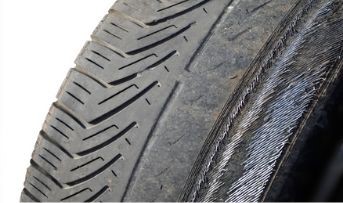
All you need to know about worn-out tyre treads
Tyres are crucial to forming a bond between the ground and the vehicle. They bear the brunt of weather conditions such as rain, heat, snow, etc. However, taking care of your vehicle's tyres is crucial for your safety and high performance. While purchasing motor insurance India provides a safety net in case of accidents, one must always prudently pay attention to the proper maintenance of essential components.
All you have to do is thoroughly check the physical conditions of the tyres to identify the issues. This comprehensive guide will help you examine your tyre treads and offer care tips.
What are tyre treads?
Tyre treads are a collection of grooves that run around the exterior. They help maintain a good grip on the road and to maximise traction on wet roads by dispersing water out of the way. Tyre grooves are essential for vehicle performance and safety.
Why do tyre treads wear out?
A tyre is made of rubber compounds that wear down with time. These include temperature, climate, the vehicle's mechanical condition, the road surface's roughness, tyre pressure, maintenance, etc. When the tyre wears down, it reduces the tread depth, resulting in a lack of grip. Thus, worn-out impressions are unsafe for driving, and you must replace them to reduce the risk of accidents.
Why are worn-out tyre treads dangerous?
Vehicle tyres wear out over time and with regular usage, resulting in losing tyre traction. However, nothing is riskier than driving with worn-out tyres. Here are some reasons to help you understand the risk associated with worn tyres.
1. High probability of puncture
When a tyre is half worn out, it can easily be eroded and cause a puncture anytime. This is a high-risk factor, especially when running your car over sharp-edged debris. An unexpected flat tyre in the middle of a journey can cause a single-vehicle collision. As a precaution and to avoid financial worries related to accidents, always purchase motor insurance India.
2. Tyres can overheat
Worn-out tyres have minimal tread left, causing relatively more heat build-up than a tyre with a good tread depth.
3. Increased risk of tyre burst
The risk of sudden blow-out increases while driving without adequate tread depth. Insufficient treads accumulate heat due to constant friction, causing them to burst.
4. Risk of hydroplaning
Tyre treads are well-developed to prevent hydroplaning. However, half-worn grooves make water shifting from under the tyre difficult. This can result in the vehicle sliding through water and losing its traction.
Ways to check the tyre treads
Checking your vehicle's tyres can eliminate road accidents. Here are some steps to inspect your tyres:
1. Examine tread depth
Every vehicle tyre has a certain amount of tread depth after regular usage. Over time, imprints wear down to a minimum acceptable level. When you lose that depth of the tread, its stability and grip get compromised. You must ensure the tread depth is above 1.6 mm for safe driving.
2. Examine sidewall
The sidewall of the tyre is adjacent to the treads. Bend down to check the cracks and cuts at the sidewalls. Check for any bulges. They can be a sign of internal damage, and if you find any, replace your tyre immediately.
3. Examine for uneven wear
Uneven tyres can occur for various reasons, including careless driving, imbalanced wheels, problematic suspensions, etc. You can prevent uneven wear by routinely checking the tyres. Do not overlook any signs. If you feel something off while driving, visit your car's service centre or a local garage.
Besides daily car use, adverse and harsh weather conditions can degrade the tyre's quality, affecting its safety and performance. You must repair or replace your tyre immediately if you spot any issues. Remember to buy the best motor insurance India policy to shield you from damages caused to the car if it encounters any accident.
Click HERE to buy the best motor insurance India policy.
Disclaimer: The information provided above is for illustrative purposes only. To get more details, please refer to policy wordings and prospectus before purchasing a policy.
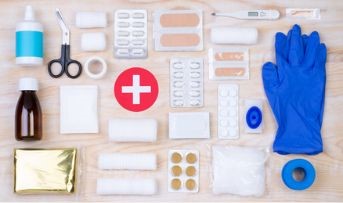
First-aid essentials you must take along on your biking escapades
Biking is a well-liked and entertaining pastime for people of all ages, but mishaps and injuries are not unheard of. It's crucial to include a first-aid kit on your biking excursions. You can manage minor injuries and crises and stop additional injuries with a well-stocked first-aid kit. Just like a first-aid kit significantly helps you after an accident, 2 wheeler insurance will protect your bike from unexpected damages.
Let's look at first-aid essentials you must take on your next biking escapades. These essential items can help with emergencies until help arrives.
1. Solution or antiseptic wipes
Minor scrapes are common incidents when biking. In case of intense terrains, you may suffer from deep gashes. Irrespective of the size, you will need to disinfect the injury site. Wounds can be cleaned using antiseptic wipes or a solution to prevent infection. Antiseptic wipes or a solution can help prevent disease and kill bacteria in the wound.
2. Bandages
Every first-aid kit should contain bandages. Bandages of all types, such as adhesive bandages, elastic bandages, and butterfly closures, should be included in your kit. Little cuts and scrapes benefit from adhesive bandages. Elastic bandages are better suited for extensive wounds. Butterfly closures help keep an injury closed and limit damage. Efficiently use bandages to prevent your injury from getting severe.
3. Tweezers
You may need tweezers to treat some wounds like splinters or shattered glass. You can clean any injured site with the aid of tweezers. Most first aid kits also come with cotton balls, wipes, gloves, gauze, and tweezers to assist in cleaning any wounds.
4. Pain relief medication
For minor injuries, painkillers like ibuprofen or acetaminophen can be helpful. Medication for pain relief can help you feel better and relaxed. Consult your doctor before consuming painkillers. Avoid immediately riding the bike after taking the pills. You need to take adequate rest before continuing the journey.
5. Disposable gloves
While treating wounds, disposable gloves are recommended since they can help prevent infection. Gloves can help stop bacterial contamination and protect the injured site.
6. Sterile gauze pads
You can cover more extensive wounds or abrasions with sterile gauze pads. A sanitary gauze pad can help absorb blood from more extensive injuries and keep the site clean.
7. Scissors
Scissors can be handy for slicing clothing, gauze, or tape to access wounds. You can use scissors to cut through clothing or bandages to prevent blood loss.
8. Private medication
Make sure you pack enough of any prescription medications you need to last the duration of your vacation. You must take all medications exactly as your doctor prescribes to maintain your health and safety.
9. CPR mask
There can be a situation where you'll have to treat another injured rider in case of an emergency. You can wear a CPR mask to perform emergency resuscitation in the event of such incidents. A CPR mask is an effective barrier between you and the injured person and a way to stop the transmission of bacteria.
10. Adhesive tape
Bandages can be secured with duct tape, and you can use them to fix equipment or your bike temporarily. The strong adhesive can also aid in mending a tyre, making it extremely useful.
Going on a biking adventure requires being ready for any situation. A well-stocked first-aid kit can significantly affect how accidents or injuries affect your motorcycling adventure. Bandages, gauze, antiseptic wipes, adhesive tape, pain medicines, and insect repellent are a few of the first-aid necessities you must pack for your riding adventures.
Everyone who intends to embark on a bike adventure should also think carefully about 2 wheeler insurance. Although it is not physically necessary for first aid, it offers financial security in case of an accident or injury while riding your bike.
Click HERE to buy 2 wheeler insurance.
Disclaimer: The information provided above is for illustrative purposes only. To get more details, please refer to policy wordings and prospectus before purchasing a policy.
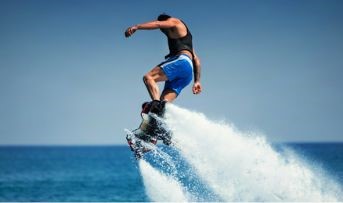
Flyboarding is an unmissable experience for adventure junkies!
Flyboarding is an enthralling water sport that uses a flyboard and a hydro-flighting device that allows you fly over the water. A personal watercraft is connected to the flyboard, which generates force through a connecting pipe to lift a person in the air on top of the water. The sport came into existence in 2012, to be precise. It is becoming popular in holiday destinations comprising sea beaches and water parks worldwide. We can also enjoy this sport in India at a few locations, such as Goa.
Flyboarding is an unmissable experience for adventure junkies. Let us know more about it.
How does it work?
The rider's feet are strapped to a flyboard, which is connected to a personal watercraft, providing the required force. You can ride the flyboard, similar to skating on the ground. It is simply a board you can tie to your feet and fly.
The operator may sit on the watercraft and control the throttle, while the rider can control their direction through the flyboard. Also, the rider may have the option to control both the throttle and the direction.
An impeller sucks in water from the source in large quantities where the watercraft is present and throws it out from other outlets. This generates tremendous force and mobilises the flyboard, with the rider on top.
Why is it becoming popular?
Flying on top of the water, with the ability to move up and down at a tremendous pace, can be a dream come true moment for any adventure junkie. This thrilling sport gives an adrenaline rush while providing an aerial view of the sea or water park.
There is no need for extensive professional training to perform this sport. Any person can do it after getting instructions from the trainer or operator. One must learn to maintain proper balance on and control the flyboard, which comes with practice. However, mastering the sport is tough and requires several hours of rigorous training and practice.
Flyboards are also safer and easy to use than a jet pack. All this makes flyboarding extremely popular and an unmissable experience for adventure lovers.
Points to take care of
Since it is a water sport, it can be dangerous for new learners and people with little or no swimming experience. Children below the age of twelve years should avoid doing it or only engage in it under strict parental supervision.
Riders should not look down below them once they are airborne. It can make them nervous, and they can lose their balance. They need to ensure that their feet point away from the personal watercraft, so they do not collide with it while plunging back toward the water. A collision can be fatal and cause serious injuries.
You should wear all the safety gear required for flyboarding before trying it. It will be suitable for your own safety.
Flyboarding can undoubtedly be a thrilling experience for any adventurer. Following a few safety precautions, understanding the sport well, and practicing a bit, you can experience it in water.
Despite the safety guidelines you follow for any sport, some risks always come with it. You should always go for a personal accident insurance policy for yourselves and your family, as accidents can happen anywhere without an announcement or warning. It will provide cover against accidental death, injury, or disability. The policy will cover all your expenses if you're hospitalised due to an accident and even reimburse you for your lost income due to hospitalisation or disability. Secure yourself financially, and choose the best personal accident insurance policy. Always check the terms and conditions of the best personal accident insurance policy before buying it.
Click HERE here to buy the best personal accident insurance policy.
Disclaimer: The information provided above is for illustrative purposes only. To get more details, please refer to policy wordings and prospectus before purchasing a policy.
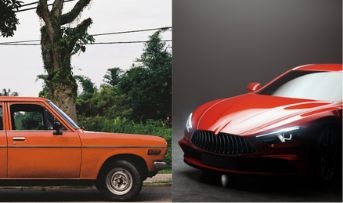
From classic to modern: The evolution of car body design
In the early 1800s, people used horse-drawn carriages as their primary mode of transportation. In 1885, a German mechanical engineer, Karl Benz, designed the world's first car using an internal combustion engine. Both carriages and automobiles have one thing in common: a chassis. However, car designs have become more innovative each year.
Car designs have evolved to answer the need for convenience, comfort, and safety to protect owners and passengers. Similarly, car insurance online India, with many add-ons, has also become a preventive safeguard for owners against liabilities arising from accidents.
If you are a car enthusiast interested in the evolution of cars, here you can look at car manufacturers' changes in body design decade by decade.
1. 1910s
In the past, only high-society people owned combustion-engine automobiles. But Henry Ford's concept of assembly line production facilitated the production of dependable and affordable vehicles. The Model T debuted in this era and offered several body styles, such as a two-seat runabout, a five-seat touring car, and more.
2. 1920s
The cars of this decade featured long 8- to 16-cylinder engines that needed long-nosed bodies. Also, the enamel details and elegant paint jobs became famous in the 20s.
3. 1930s
The vehicles of this era were lighter and easier to produce due to the invention of the monocoque. By the late 1930s, sleek-looking cars had gained immense popularity.
4. 1940s
World War II influenced commercial car production in the 40s and led to innovative design. The Ponton style, characterised by wide flat bodies like boats, became the trend in this era.
5. 1950s
Catering to the masses post-war was a challenging task for manufacturers. Neither could they compromise with quality nor raise or maintain price levels. In this era, car manufacturers started producing more economical and compact cars.
6. 1960s
In the 1960s, car manufacturing companies worldwide, such as in Japan, Europe, and more, abandoned the boat design for cars and developed smaller, less heavy designs. Also, the US designed new muscle cars with low-profile cabs at the same time.
7. 1970s
The American car companies abandoned the muscle car design and began producing compact cars. Using sharp edges and hard lines in car design became the norm worldwide.
8. 1980s
The people of this decade loved car designs that were boxy and generic. However, trends indicated greater concern about the fuel efficiency and safety of the car.
9. 1990s
In this era, the global auto industry decided to look back to the 30s and 60s when car design had elegant body lines. In the 90s, wedged-shaped sports cars gained a lot of popularity. Japanese makes have gained massive popularity.
10. 2000s
The 2000s revealed a mixed bag of car designs. Automobile companies developed various car designs with no general trend in colours and shapes.
11. 2010s
Car manufacturers focused on developing more environmentally friendly cars. The minimalistic trend was the focus of car design in this era.
12. 2020s
Modern car designs include various high-tech technologies like blindspot design systems, AI-powered systems, and more. The boxy-shaped cars have gained popularity recently. The emerging trends in the automobile sector include technological advancements, convenience, and sustainable fuel sources.
Apart from car design and styling, various car-related aspects have also evolved throughout the years. You can find many cars in different shapes, styles, designs, performances, and features. There are numerous options varying from SUVs, sedans, and hatchbacks to petrol, diesel, EV, and hybrid cars. The evolution of cars has been an inspiring journey catering to people of all classes, ages, and geographies.
Whenever we talk about cars, we must think about safety. Nowadays, car insurance has become essential immediately after purchasing a vehicle. We recommend you buy car insurance online India as it protects you and your car from various misfortunes and damages. Purchasing online can fetch you several benefits, including hassle-free claims, attractive premiums, and good customer service.
Click HERE to buy car insurance online India.
Disclaimer: The information provided above is for illustrative purposes only. To get more details, please refer to policy wordings and prospectus before purchasing a policy.
Hi there! 👋 Need help with a policy, claim, or renewal? Chat with us instantly on WhatsApp.
Start chat →