


General Insurance Blogs, Articles & Updates by - Magma Insurance
Have us call you
- RENEW YOUR POLICY
- BUY NEW POLICY

GENERAL INSURANCE BLOG
Incentives for policyholders may encourage safe driving on roads
The number of vehicles on Indian roads is witnessing an ever-increasing trend. This graph simultaneously shows a sharp rise in online motor insurance policyholders. This is primarily due to the increase in the disposable incomes of families and the changing lifestyle. However, this has also resulted in a drastic increase in road accidents and road rage cases.
It is the need of the hour to promote safe driving on the roads so that people feel protected while using the streets. Providing various incentives for policyholders by online motor insurance companies may encourage safe driving on the roads. Let us see how.
1. Telematics:
Driver telematics is gaining popularity and is an important tool to study and alter irresponsible driver behaviour on the roads. It can also be used as a data analysis tool to provide insights into driving behaviour and reward or penalise a driver.
Telematics in insurance can be app-based or black-box based. It can be useful in tracking driver behaviour, speed, acceleration style, clutch use, braking pattern, etc. Motor insurers can develop a point-based system and reward safe driving on roads with positive points. This means you will be rewarded with positive points if you maintain a good average speed, do not jump traffic signals, and are not involved in any accidents.
On the other hand, you can be penalised by providing negative points if you overspeed, jump traffic signals, or indulge in rash driving and accidents.
The drivers with positive points at the end of the insurance term get a discount on their renewal premium as an incentive. Drivers with net negative points at the end of the year will be charged a higher premium as a punishment. This can provide drivers, especially beginners, a great incentive to drive safely and responsibly to lower their premiums.
2. No-claim Bonus:
Most online motor insurance companies already provide a no-claim bonus or NCB to incentivise safe driving under a comprehensive car insurance policy. You get discounts of up to 50% of the insurance premium at the time of renewal if you have yet to make any claim throughout the year.
NCB is a great incentive for policyholders to encourage safe driving on roads. It encourages driving responsibly and safely, thereby preventing accidents. NCB ranges from a 20% discount in the first year of renewal to 50% for the fifth or higher claim-free year.
3. Damages and dents:
Motor insurance companies can provide incentives such as discounts on renewal premiums to the drivers to keep their cars free from scratches, external damages, and dents. They can check for such external damages during insurance renewal and reward the customers with minimal or nil external damage. This will motivate the drivers to drive safely on the roads so that they do not engage in any collision or accident with other vehicles or property.
Providing incentives for policyholders to encourage safe driving on the roads is paramount and the need of the hour. The number of accidents and loss of lives and property due to them will decrease significantly. Moreover, this will benefit online motor insurance companies, as safe driving will mean fewer claims resulting in higher profits.
Online motor insurance companies highlight the incentives they plan to provide on their websites and all the portals providing online motor insurance services. Potential policy buyers should go through these incentives and policy details to choose the best online motor insurance policy. Irrespective of the incentives and benefits, drivers must always have the mindset of safe driving.
Click HERE to buy online motor insurance.
Disclaimer: The information provided above is for illustrative purposes only. To get more details, please refer to policy wordings and prospectus before purchasing a policy.

If you’re in your 20s, this is the perfect time to buy health insurance
A person’s 20s are a hectic yet exciting part of life. Many gain financial freedom and start deciding how to spend their money wisely. The 20s are a time to be living it up, but it is highly sensible to shell out some money to invest in the best health insurance in India.
As you get older, getting health insurance becomes trickier and more expensive, and it is ideal for insuring yourself against the mounting healthcare costs early in your 20s.
This article gives insight into the benefits of getting insured in your 20s.
The waiting period will not affect you as much:
The waiting period in health insurance terms is when a policyholder cannot claim insurance for certain diseases, pre-existing ailments, etc. This is fine for a policyholder who takes their health insurance in their 20s. As the waiting period is spent in your 20s, when you have a lesser probability of getting diseases, you would be spending this waiting period at a time when you don’t need coverage.
As opposed to this, taking health insurance in your 40s or 50s is much more troublesome. You might have to compromise on getting the benefits of your health insurance and wait for 2 to 4 years before getting the disease-specific help you require.
1. Lesser premium:
Insurance providers assess the risk associated with a person before deciding the premium and the cover of a policy. Generally, a person in their 20s has a lower risk of needing the payout. Thus, the premium is much lower than a person in their 30s or 40s is paying for the insurance policy.
2. Tax benefits:
Health insurance plans provide another significant advantage in the form of tax deductions. Under the Income Tax Act 1961, one can avail of tax benefits if the policyholder pays out of pocket for the health insurance premium. You can avail of these benefits for yourself, your ageing parents, your spouse, and your dependents.
3. More comprehensive health insurance plans:
Being in your 20s makes you a suitable candidate for health insurance. This is because there is less possibility of pre-existing illnesses in these years. Your policy issuer automatically covers any new diseases that materialise after you’ve taken the insurance. Also, you can select a suitable plan according to your budget and requirements by researching the best health insurance in India
4. You can avail of no-claim bonuses for a long time:
No-claim bonuses are discounts on premiums given to policyholders when renewing their policy as a reward for not filing a claim within the policy tenure. The percentage of discount differs between companies. As there is a lower probability of filing a claim in your 20s, you can avail of your NCB for longer or transfer it during renewal.
5. Rejection rates are almost nil:
An insurance company may reject your application based on your medical history. As there are fewer chances of pre-existing illnesses among young individuals, there is less chance of rejection. Also, you may opt out of paying a copay in your health plans, which is impossible for aged policy seekers.
With the present trends of inflation, especially in the healthcare industry, it is prudent to purchase the best health insurance in India early to reap the benefits of protection for an extended period. Since the cost of living only increases as you rise in the ranks of your profession and earn more money, it is ideal to start investing in health insurance from an early age. We urge young professionals to consider investing in the best health insurance in India not just as a tax-deductible but to protect their present wealth and future earning capacity.
Click HERE to know more about the best health insurance in India.
Disclaimer: The information provided above is for illustrative purposes only. To get more details, please refer to policy wordings and prospectus before purchasing a policy.

Here are some bike puncture probabilities every rider must be aware of
While bikes are the most commonly preferred mode of personal transport used in all-terrain conditions, easy to manoeuvre, and convenient, their safety is often ignored. The government's strict move to mandate bike insurance makes it evident that the safety and protection of the rider are essential and can’t be compromised.
Besides bike insurance, you can also ensure safety through regular maintenance and preventive measures to avoid mishaps. Punctures are one such risk that you may encounter at any time. They can be frustrating but are unavoidable. Here are some factors riders should be aware of that could lead to a tyre puncture.
1. Old tyres:
As consumables, tyres must be replaced every 5 years or 30,000 to 40,000 kms, based on the riding style and road terrain. If you notice little surface rips, a large tear that may expose the tube, cracks, or other symptoms of wear down, the tyre has to be changed. Since they are your primary point of contact with the road, having new tyres will reduce the probability of having a puncture and improve the overall feel of your vehicle.
2. Sidewall cracks:
The lack of use of the vehicle, the environment, or parking the two-wheeler in direct sunlight can all cause tyre sidewall cracks. They might seem insignificant, but they can cause catastrophic air leaks over time.
3. Pinch flats:
Pinch flats can occur because the tube is forced against the wheel rim and either tear or explode on pumping. The incident occurs due to the hasty insertion of the tube and carelessness. Always partially inflate the tube before fitting it to prevent this from happening.
4. Increased tread wear:
Tyres include grooves known as treads for better traction and grip on the ground. The impression deteriorates due to use, making it difficult to manoeuvre the bike by decreasing traction and lengthening the time taken to brake. A tyre wear indicator is typically an arrow sign that shows the extent of wear and the point at which you should change your bike's tyres.
5. Ignoring tyre inspection:
Small, sharp objects pierce the rubber of the inner tube to cause a puncture. If the item remains lodged in the tyre unnoticed for a long period, it can cause the new inner tube to be punctured. Have a proper tyre inspection before replacing your tube to avoid such issues.
6. Wheel damage or bending:
The alloy wheel or steel wheel may break or bend from the area around the tyre bead if you ride over a large, deep pothole, collide with another vehicle, or have an accident. This may result in an air leak due to a puncture.
7. Improper tyre pressure:
Under-inflated tyres will bend in response to the slightest bump or obstruction, making them vulnerable to pinch flats when the tube can become wedged between the rim and the tyre. You risk hitting a pothole or other impediments with more force if you have too much pressure in your tyre, making it challenging to bend against any object and keep it rigid. Your weight, the breadth of your tyres, and the weather will all affect the proper tyre pressure.
8. Unusual deterioration pattern:
The tyre may show signs of wear and tear. It can be on the shoulder or in the middle of the tyre. Mechanical problems, such as worn-out shock absorbers or a problem with wheel alignment, are to blame. It's essential to replace the tyre if it shows evidence of abnormal wear and tear.
9. Valve stem damage:
The valve stem, located on the inner circle of both tube-type and tubeless tyres, is where you fill the tyres with air. The ability of the tyre to retain air decreases if that valve stem is damaged, whether by corrosion, blockage, or breaking.
Punctures are a constant worry, especially considering bikes' lack of sophisticated safety features. While you cannot prevent punctures, you can keep a look for signs of a possible puncture. We also recommend riders consider purchasing comprehensive bike insurance. This will shield you, your bike, and others from finances worries if your bike suffers severe damage.
Click HERE to purchase the best bike insurance to secure your assets and finances.
Disclaimer: The information provided above is for illustrative purposes only. To get more details, please refer to policy wordings and prospectus before purchasing a policy.
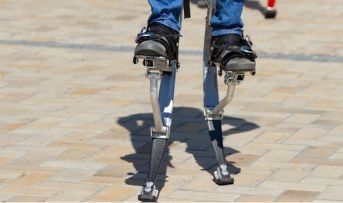
Experience the thrill of powerbocking
In the hustle and bustle of today’s modern world, youngsters are always looking for an adrenaline rush. This rush has made extreme sports increasingly popular in this day and age. Due to India’s wide geographical variety, many of these sports are offered in different corners. From exploring the mesmerising aquatic life and corals in Andaman to parasailing in Goa, these sports can push you physically and psychologically out of your comfort zone.
However, checking the coverage offered by your personal accident insurance policy before engaging in such sports is always recommended. This ensures that your insurer provides compensation in case of accidents while participating in adventure sports.
One such extreme sport that is getting increasingly popular among young Indians is powerbocking. This blog will introduce you to powerbocking and the thrill you’ll crave once you indulge in it!
What is powerbocking?
Powerbocking is an extreme sport where players wear jumping stilts and jump to great heights. Jumping stilts are specialised leg attachments containing springs to hoist the person into the air. Jump stilts are very exciting! They enhance your ability to do tricks and flips and help you take greater strides, which makes you run faster. These stilts are called powerbocks after the creator, Alexander Bock, a German inventor who first named them powerskip.
It is a popular sport in urban cities, and finding a surface on which you can go powerbocking is essential. Balance being one of the critical factors affecting this sport, it should not be done on grass or dirt, as the boots have a small surface area on the ground, which may lead to injury. Thus, jumping stilts should ideally be used on asphalt or cement. Since this can result in injury due to the hard nature of the surface, you should be equipped with a personal accident insurance policy that covers such accidents and injuries for your physical and financial safety.
While they may seem unfamiliar in Indian settings, they were recently used in an Indian sporting event. Different interesting videos on social media have always been creating a buzz regarding this sporting activity. With time, this event is expected to observe growth in India too.
● Benefits of powerbocking:
Powerbocking makes you feel superhuman without the same risks as other extreme sports. They are most suitable for people who want to feel like bionic humans from the future without any of the associated perils. It is an exciting offbeat adventure sport that one should surely try.
● Risks associated:
Despite being a reasonably harmless sport where the most significant injury is usually a knee scrape, some people have suffered severe injuries while seeking the thrill of jumping in these devices. For such misadventures, it is always advisable to take an extreme sports insurance policy or a personal accident insurance policy covering medical costs for such injuries.
● Powerbocking competitions:
When it comes to any sport, the main thrill of it is the competition. They bring out the competitiveness of the best players in the world and are incredibly engaging to see. As this is a niche adventure sport, there are fewer worldwide competitions, and the most famous ones are in France. The Riser Winter Cup, held each year in Lille, France is one of the most sought-after competitions for powerbockers.
Have you ever watched videos of Kangaroos jumping and wished you could jump that high or take such great strides? Then powerbocking is the perfect sport for you. Just make sure to take the proper precautions before undertaking this sport. And the first step to your security begins with purchasing personal accident insurance policy.
Click HERE to know more about personal accident insurance policy.
Disclaimer: The information provided above is for illustrative purposes only. To get more details, please refer to policy wordings and prospectus before purchasing a policy.

Worried about driving alongside heavy vehicles? Here’s all you need to know
Driving is a tricky activity that requires extreme responsibility. One minor mistake can land you in serious trouble. It is always advisable to take extra precautions while driving. Be it a two-wheeler or four-wheeler, one should be cautious while driving, such as following all the traffic rules and being mindful of your surroundings.
Driving along heavy vehicles can be challenging, as they are different from other vehicles. They are so heavy that the controls are not always in the driver's arena. It can become dysfunctional and cause havoc on the road. Therefore, driving carefully around heavy vehicles is always recommended to avoid collisions.
Drivers of light vehicles must always be on high alert when around heavy vehicles. While collisions between vehicles of any size are disastrous and result in significant physical, mental, and financial damages, one between a heavy and light vehicle can be catastrophic.
Purchasing motor insurance from a reliable motor insurance company and following the below-stated tips can help you safely and confidently drive alongside heavy vehicles.
1. Always maintain distance:
Heavy vehicles can be intimidating to drive alongside, even as a beginner or an experienced driver. Crashes are common when other cars are driving too close to them. You need to maintain a safe distance from all heavy vehicles. Additionally, you should always maintain adequate distance from other cars as well. This will give you ample time to apply the brakes in an emergency.
2. Do not overtake:
Trucks or loading vehicles require a lot of space while turning on roads. It also prevents them from looking at the rear end of the truck. Your car can hence fall upon the blind spot. To prevent this, you should always give the heavy vehicle enough time to turn completely. Refrain from overtaking these vehicles or turning quickly in front of them. Slow down and wait for them to pass.
3. Have a firm grip on the steering wheel:
You must maintain your grip on the steering wheel. Air turbulence is created whenever a heavy vehicle is driving in front, which can be a problem for your car. Large vehicles can also throw loose gravel, dust, or snow that can hinder your vision. You need to be mindful and aware while driving behind them. Ensure that your windshield wipers are functioning properly to maintain proper visibility. Use horn, passing light, and indicators appropriately to ask for a side.
4. Be mindful of the lanes:
It is always recommended to follow the lane rule or discipline diligently while you drive on the road. This also means that you should not shift lanes hastily. It can lead to accidents sooner than later. It is because trucks take time to move and slow down. They may not see your vehicle approaching if you instinctively shift your lanes. As they will have no time to react, this can be dangerous for both vehicles.
5. Night time rules:
The night time is already tricky for driving, but heavy traffic makes it more challenging. With heavy vehicles in sight, the situation can get worse. Night time observes heavy truck traffic, making it daunting for cars and bikes to navigate. It is recommended not to use high-beam headlights at night. It can blind the vision of the truck drivers resulting in an accident.
You must follow these guidelines carefully while driving alongside a heavy vehicle. Although challenging, staying safe and sound while driving around them is possible. While a comprehensive car insurance policy from a motor insurance company protects you from the costs of an accident, it is better to be safe than sorry. Always follow safe driving practices irrespective of the time and ensure that your car insurance is active.
Click HERE to buy the best insurance from a reliable motor insurance company.
Disclaimer: The information provided above is for illustrative purposes only. To get more details, please refer to policy wordings and prospectus before purchasing a policy.

Material disclosures are key for a successful claim
Insurance policies can be tricky! You need to fully understand the policy terms & conditions before you sign the dotted lines. The government has set up many regulations to implement insurance rules in India efficiently.
Hence it becomes imperative to fill out the insurance policy papers yourself. If you do the formalities through an agent, you might face problems later. You need to know everything about the premium, risks, disclosures, etc. This can also cause the claim to be rejected in due time, which can be devastating, especially if you're in an emergency.
You should always be cautious about everything that you disclose to your insurer. This involves the disclosure of your materialistic goods, qualifications, medical history, income, bills, and so on. The more you disclose rightfully, the better. It is vital for all health and general insurance India. So, regardless of the insurance you're applying for, disclosure is essential.
Let's look at the things to disclose to your insurer while taking a policy or filling a claim, as they increase the chance of a successful claim.
1. Income:
It is one of the best things to be disclosed early on. Your income needs to be revealed whether you're employed permanently in a company or as a freelancer. The job designation, salary, and experience are also taken into consideration. The more experience one has, the greater their expertise. This also means that they are not eligible for hazardous work. All this contributes towards a successful claim.
2. Material possessions:
It is essential to disclose all the material assets that you have. From your house to your car, you need to declare them all. It also involves any land that you own. You should disclose anything materialistic as well as expensive at all times. Adding them later while raising a claim decreases your chance of getting a successful claim.
3. Occupation:
Your occupation directly correlates to occupational risk. It assesses the risk of accidents and even the wellness of an individual. The work done by the individuals is of prime importance. It helps in determining the claims as well. The risk assessment of a particular occupation also affects the premium paid by the individual for a health insurance policy.
4. Medical history:
Insurers give the medical history of the individual prime importance. It provides a brief insight into the history of illnesses an individual has suffered and the risk they bear. If it is more severe, the premium will go up significantly. Serious issues like heart disease, hypertension, and diabetes can increase the premium. They must be considered and disclosed to ensure you purchase the right policy with appropriate coverage that leads to successful claims in case of contingent events against which you are insured.
5. Family history:
This is an essential element that will determine the extent of the illnesses in individuals. If there are genetic disorders, it will also mean that the individual is at a greater risk of developing them. It can make the insurance company more cautious while assessing the individual's health or life insurance risk profile. Incorrect disclosure or misrepresentation of such facts leads to the rejection of claims.
You should reveal these critical elements to implement a successful claim. Material disclosures are of utmost importance as they determine the success of a claim. If not disclosed at the right time, they can cause problems later. You must follow these rules diligently while purchasing non-general and general insurance India. Good luck!
Click HERE to buy the best general insurance India.
Disclaimer: The information provided above is for illustrative purposes only. To get more details, please refer to policy wordings and prospectus before purchasing a policy.

What is constructive total loss in two-wheeler insurance.
Whether you own a two-wheeler or a car, you should always ensure that you know everything about its maintenance and insurance. Getting insurance for your vehicle is of utmost importance. It protects your vehicle from severe damages by giving you compensation and solves third-party disputes.
However, just getting insurance for your vehicle is not enough. You also need to check out the various additional services offered by the insurance. This way, you can choose the most comprehensive insurance for your 2 wheeler. You must also inquire about all the essential terms relevant to your insurance. One such term is a constructive total loss. Although the term sounds complicated, it is not.
This article will help you to understand various aspects of a constructive total loss.
What is a constructive total loss?
You will likely file a claim for your 2 wheeler insurance only when your vehicle has suffered severe damages. Once you have filed a claim, the insurance company will inspect all the damages and reimburse the amount accordingly. Either you will get cashless compensation or money for the repairs. The damage is assessed well, and only compensation for the damages is provided.
If the vehicle is in dire need of minor repairs or servicing, the insurance company will reimburse that. It can also refund the amount for the replacement of bike parts. However, reimbursement only occurs after all the deductibles are assessed carefully. No matter the damage's severity, you will only get compensation up to the Insured Declared Value or IDV. You will not get any claim money that exceeds the IDV value.
There is also a major catch here. For instance, your two-wheeler undergoes irreversible damage. In such a case, the bike will be beyond repair. The insurance company can then declare it as a total loss. In other words, if the repair cost for the vehicle far exceeds its value, it results in total loss.
It is said that when the repair cost is more than 75% of the IDV, it is impossible to reimburse it. The constructive total loss takes place here.
Let's assume that your two-wheeler gets stolen. Then what will happen? In such a case, your insurance company will reimburse you for the IDV of your vehicle. The claim for theft of your bike will be treated as a total loss claim. The reimbursement amount will be sans the deductibles and depreciation.
How do you apply for a constructive total loss claim?
Now that you are familiar with constructive total loss let's look at the various steps to file a claim. They are:
● Go to the official website of your insurance company
● Look for the claims process tab or page
● You will see blanks to fill in your information
● Provide all the necessary information carefully
● After that is done, verify the self-inspection of your bike through the link sent to your mobile number
● A surveyor or inspector may be sent to get your vehicle inspected. Cooperate with them
● Once everything is done, you can submit all the required documents and forms
These easy steps can get you a total claim from the comfort of your home. You need to keep all these things in mind before you file a claim for your 2 wheeler insurance under constructive total loss. Once you give the correct information and abide by the guidelines, you can access the claim amount.
Click HERE to buy 2 wheeler insurance to protect your motorcycle from unexpected damages.
Disclaimer: The information provided above is for illustrative purposes only. To get more details, please refer to policy wordings and prospectus before purchasing a policy.

Simplifying commonly used insurance jargon
While checking any insurance plan, you most likely come across terms like deductibles, premiums, adjuster, etc. If you're unfamiliar with them, you may be confused and make wrong financial decisions.
It is now a given that everyone needs to have basic knowledge of terms relevant to general insurance. If not, you will find it daunting to buy insurance or apply for one. In such a case, it is extremely easy to get tricked. You will likely fall into the trap of fraudsters who can get more money from your lack of awareness and appropriate knowledge. Not knowing things can make the job easier for them.
If you need help understanding a few commonly used insurance jargon, this article is for you. This article will walk you through the various essential terms related to insurance. Prepare to dive into the world of simplified general insurance jargon that aids in making better financial decisions and equips you to help your peers and share your knowledge!
1. Claim:
This is one of the most important terms related to insurance used in all policies, including non-general and general insurance. A claim refers to the compensation or coverage of an incurred loss. It is a request to the insurance company to compensate you in cash or in kind for the loss you have encountered. It can be filed in case of a road accident, robbery, or even a natural disaster.
2. Adjuster:
An insurance company employs an adjuster to settle various claims. They investigate, examine, and evaluate before finalising any claim. The adjuster investigates all the crucial concerns. Be it the cause of loss, insurance coverage, the value of the loss, the amount of loss, and so on. Only after the adjuster adequately investigates everything the insurance company settles the claim.
3. Peril:
As the name suggests, this refers to a potential threat or danger that puts the insured at risk. It can also put an insured item or property at risk. It can be due to any irreversible causes and out of control. For instance, theft, fire, floods, and so on.
4. Deductibles:
This refers to the money to be paid by the insured for insurance coverage before the insurance company starts paying for the insurance policy. This amount is generally deducted from the claim before it is handed over to the insured.
5. Premium:
This refers to the amount paid to the insurance company to secure you against any damages or losses. It is a variable amount that depends on many factors while buying insurance.
6. Liability coverage:
As the name suggests, it protects the insured against any claim raised towards the damages and injuries caused to third parties or property.
7. Nominee:
This refers to a person entitled to receive the insurance claim if the insured dies. The insurance company redirects the claim to the rightful nominee declared by the insured as per the terms and conditions of the policy. They are generally the dependent, your spouse, child, parents, etc.
8. Waiting period:
This is the time that a policyholder has to wait before applying for a claim. Depending on various factors, the policy's terms & conditions, it can range from a few months to a few years.
With general insurance becoming necessary to protect your highly-valued assets and your finances, everyone must understand basic insurance jargon before evaluating and comparing policies. Only when you are aware of the basic terms can you buy the best insurance for yourself! Keep yourself aligned with the advancements of the insurance sector and buy general insurance online to get better offers and attractive premiums that account for efficient coverage.
Click HERE to buy general insurance online.
Disclaimer: The information provided above is for illustrative purposes only. To get more details, please refer to policy wordings and prospectus before purchasing a policy.
Hi there! 👋 Need help with a policy, claim, or renewal? Chat with us instantly on WhatsApp.
Start chat →