


General Insurance Blogs, Articles & Updates by - Magma Insurance
Have us call you
- RENEW YOUR POLICY
- BUY NEW POLICY

GENERAL INSURANCE BLOG

Know about these ten tips to deal with hand numbness while riding
Hand numbness affects all bikers, from beginners to professionals. A few hours into riding a bike, you may begin to feel tingling in your palms and fingers. The stinging sensation is caused by compressed nerves in the shoulder, elbow, or wrist and might last several hours.
You shake it off in the hopes of alleviating the dull ache, but it doesn't seem to work. So, what is the solution? Even if these techniques do not eliminate the condition, they can at least assist in easing or lessening the numbness while riding.
1. Wear protective gloves:
Vibration stresses the nerves and forces you to hold more tightly than usual. Wearing padded gloves might assist but make sure they're not too tight since this can complicate the issue.
2. Alter your arm position:
Keep changing your grip on the handlebar throughout the journey to prevent exerting the same persistent strain on your wrists.
3. Loosen up the elbows:
Relaxing your elbows engages your torso muscles, relieving strain from your hands. Let your elbows rest in all situations to allow you to soak vibrations from the road.
4. Maintain body balance:
Don't forget about your core. Maintaining your body's balance while riding may dramatically reduce the amount of pressure on your hands.
5. Tune-up your bike:
Ensure that the bike's suspension is correctly tuned and the tyre pressure is perfect before every ride. Decreasing the vibration is crucial to experience a smooth ride.
6. Get your bike altered to fit:
Bike fitting suggests moving the seat rearward, lowering it, adjusting the tilt, and elevating the bar. This will distribute your weight back and away from your hands.
7. Have a hold:
Consider adopting thicker, softer, and sticky grips so you don't have to grasp the handlebars as tightly. Another alternative is to use ergonomic grips. They're designed to assist you in positioning your hands correctly and relieving pressure spots.
8. Utilize your core:
Take note of your general position and the amount of involvement of your back and core muscles when riding. By focusing your conscious attention on your body's mechanics, you'll be able to make real-time modifications to ease the pressure on your arms and hands.
9. Physiotherapy:
If the numbness in your hands worsens or persists, you should seek medical advice from a physical therapist. They will determine the treatment by assessing the problem's root cause.
10. Stretching:
A few minutes of full body stretching before each trip will also reduce your muscles' numbness and strain. Basic stretching and strengthening exercises for your hands, wrists, and forearms will help prevent hand numbness.
It's common to exert strain on your arms and shoulders while biking. This usually happens unintentionally when you are in an unwanted environment, such as a traffic jam. Even if we take it easy and try to let go of the pressure, our hands and shoulders still tense up. As a result, discomfort and continuing difficulties in the muscles of the upper back result from this circumstance.
It's not just you who faces problems due to excessive riding, your bike also suffers through wear and tear and may eventually get damaged. Be prepared for this by looking up appropriate 2 wheeler insurance online that offers you the best-suited benefits for your needs and ensures the safety of your possession.
To get 2 wheeler insurance online, click HERE .
Disclaimer: The information provided above is for illustrative purposes only. To get more details, please refer to policy wordings and prospectus before purchasing a policy.
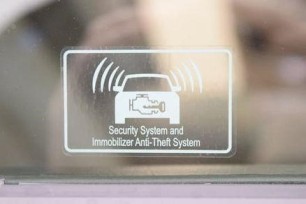
Here are a few anti-theft devices and how they can impact your motor insurance
Automobile theft instances have increased drastically throughout the country. In older times, thieves used to steal a less guarded motor vehicle using standard keys. To counteract this, automobile manufacturers designed the keyless remote system, prompting thieves to become more tech-savvy. As a result, thieves began stealing automobiles by employing black market gadgets that could delete data and even replicate the signalling of the keyless remote.
As a result of all this, owners have started installing anti-theft devices in their motor vehicles. These gadgets serve as an alert system and help save money on auto insurance rates.
How exactly do these devices affect the insurance premium?
Your insurer is responsible for compensation if your automobile is stolen. Automobile insurance providers recommend anti-theft systems to prevent criminals from taking your vehicle and, as a result, avoid paying the expense of your loss. If your car has a lower chance of getting stolen, the insurer will also benefit from it. Thus, every motor insurance company in India will provide discounts on the amount you pay to insure your vehicle.
Now, let us talk about some anti-theft devices that you might want to check for your motor vehicle too.
1. Alarms:
When the alarm system detects an unwelcome touch, it makes a loud noise. A burglar is likely to ignore your automobile if you have an alarm system because it attracts attention.
2. G.P.S. trackers:
You can track your automobile while it's moving when the G.P.S. technology is installed. Some versions even allow you to get warnings by push notifications and text messages on your phone.
3. Remote Disabling System:
These are some of the latest developments in anti-theft technologies. These gadgets link to your smartphone and allow you to brake, downshift, or decelerate. A con about these devices is that they are a bit expensive and hence seen less in passenger vehicles.
4. Kill Switches:
It's a switch attached to one of the automobile's critical starting components to inhibit the electric flow to that component when it is turned on. When the switch is toggled off, the connection to the component is restored, allowing the automobile to start normally.
You must conceal the switch in an unnoticeable location so that no one who accesses your vehicle knows its location.
5. Mechanical Immobilizers:
These are the most affordable anti-theft solutions in the market. These include steering locks, tire locks, bonnet locks, gear locks. While they prevent a vehicle from moving, there is a possibility that thieves can carry your vehicle away by towing it and later remove the immobilizers forcefully. Therefore, it's better to pair these devices with additional anti-theft devices.
A vehicle is like a partner, and buying one comes with specific responsibilities. Besides maintaining and servicing your automobile, you also need to prioritize its security. Always install anti-theft devices and give your vehicle the benefits of a double layer of protection with full motor insurance. Remember, your insurer evaluates the safety standards maintained by your vehicle. Therefore, installing security gadgets in the car can reduce the premiums offered by your motor insurance company in India.
Click HERE to learn more about our motor insurance plans.
Disclaimer: The information provided above is for illustrative purposes only. To get more details, please refer to policy wordings and prospectus before purchasing a policy.
Here are a few lesser-known bike insurance add-ons you must know about
If you own a 2-wheeler, you might know that it is compulsory to possess bike insurance. Having standard bike insurance on your side forms a layer of protection against all the unanticipated damages. But, there are still some aspects that your standard bike insurance does not cover. So, here are some add-ons you need for your bike to enjoy additional benefits.
1. Roadside assistance:
The roadside assistance cover ensures that you get technical help if your bike faces a mechanical breakdown. You can call for this service whenever and wherever you need it. This add-on insurance can be beneficial for riders who do not carry any mechanical tools or those who drive in remote areas with little to no mechanical support.
Moreover, along with this insurance, there are other benefits that you can avail too. These include facilities such as on-spot repairing, gasoline delivery, towing your bike to the nearest service garage, and even alternate travel allowances.
2. Return-to-invoice (RTI) cover:
Besides getting caught in an accident, there is also a probability of your bike being stolen. In this scenario, if you possess bike insurance and return-to-invoice insurance, you would be entitled to get an insured value of the vehicle if the police fail to find it. The cops would then issue an RTI to get the total compensation for your stolen bike.
Furthermore, if your motorcycle is involved in a crash and is destroyed over and above repair, insurance carriers will reimburse the total value shown on the vehicle's bill. Just remember that certain companies offer return-to-invoice coverage in the comprehensive package.
3. Engine and Gear cover:
This is just another hidden gem that many people tend to miss. The engine is the heart of your bike, and if anything happens to it, your bike will not even move an inch from its initial position. Unfortunately, as you might have noticed, the insurance claim does not include any damage protection against the engine and gearbox whenever you sign up for bike insurance. So to get protection for your bike's engine and gearbox, this add-on is required.
4. Consumable items cover:
The consumable items may include nuts, bolts, extensions, wires, motor oils, brakes fluids, etc. Usually, conventional insurance will never compensate for all of these bills. These things add up to your final bill making it a big one. However, you can save some extra bucks by getting the cost of a consumable add-on with your bike insurance.
All the 2-wheeler owners get conventional bike insurance and believe it will care for all the damages and protect their vehicle. But in reality, it is not the case. It would be best to get these add-ons and make your bike insurance have an actual vehicle coverage claim. Give your bike the advantage of receiving complete security, thereby adding value to its life.
Click HERE to understand more about bike insurance benefits.
Disclaimer: The information provided above is for illustrative purposes only. To get more details, please refer to policy wordings and prospectus before purchasing a policy.

Here are a few safety measures that parents should ensure when sending their kids back to school
With the COVID-19 situation getting relaxed, the world is returning to the way it used to be. As per the recent orders from several State Governments, schools have been granted permission to reopen and function regularly. It means your child’s back-to-school days are here again after a long pause. But things are not the same as they were before COVID-19. Here we have compiled a quick list of important safety measures to ensure when you are sending your kids back to school.
1. Make sure school staff are fully vaccinated:
Before sending your child to school, ensure that the school follows the COVID-19 protocols and that all the school staff are fully vaccinated. If not done, we recommend that you avoid sending your child to school. As a parent, you should ensure that the school staff and the authorities are vaccinated and show no flu or cold symptoms. Always check this with the authorities before sending your kid to school.
2. Educate your child about the safety norms:
Before you send your child out in any public space, give them enough information about the hygiene and safety measures they must follow. Sit with your child and explain the infection and how it affects health. Teach your children how to maintain the appropriate Covid behaviour in school. For example, they should know how to wash their hands properly with soap, responsibly use sanitisers, and maintain a safe physical distance from others.
3. Prepare a kit for your child:
With the pandemic situation being so uncertain, it is suggested that you are ready for what is to come. So, for this, make sure that you provide your child with all the safe belongings they will need while going to school. Prepare a kit for them, including a sanitiser, 3-4 disposable masks, an antiseptic soap bar, a spray sanitiser for benches and tables, and a pair of surgical gloves. While preparing a safety kit, make them aware of how and when to use it and dispose of the used masks or gloves.
4. Get in touch with school authorities:
Before you start planning to send your child to school, you must first ensure that the school authorities have taken strict cleanliness drives and only call the fully vaccinated staff. As a parent, you have to confirm that they have proper standard operating procedures for sanitation purposes and the campus is clean and hygienic. After questioning the school authorities, if you find that they do not have these guidelines in place, you should consider not sending your child to the school until they do so.
As a parent, sending your kid back to school after the pandemic brings a lot of fear. You never know where your kid is touching, sitting, or who they are getting in contact with. Therefore, take adequate safety measures to ensure your child stays healthy. Moreover, to secure your children’s health during the crucial pandemic, you must have reliable health insurance. Investing in online health insurance provides you with premium benefits to cover the medical bills. As the saying goes, precaution is always better than cure. Take the precaution today!
Click HERE to get the best deals on online health insurance.
Disclaimer: The information provided above is for illustrative purposes only. To get more details, please refer to policy wordings and prospectus before purchasing a policy.

Top seven scenic driving routes of India to experience a memorable road trip
With the huge influence of Bollywood films, the idea of road trips has prompted strongly among India's youth. Air and train travel just cannot justify the excitement and adventure of road travel. They are a fantastic way to treasure the journey over the destination.
We all saw our share of the unpredictability of life during this pandemic time. Now that the economies have finally opened and the nation breathes, a road trip is an excellent idea to heal your soul. A road trip allows you to tailor your itinerary as per your preferences.
India has numerous picturesque highways where you can roll down the windows, blast the speakers and sing your favourite songs with your friends and family. We’ve put down seven handpicked routes in India to take your four-wheeled companion on an adventure of a lifetime.
1. Bangalore to Ooty:
An escape from Bangalore to Ooty will surely lift your spirits if you are a nature lover who enjoys long drives. The trip is both adventurous and scenically pleasing. You'll come across misty waterfalls, quiet creeks, and rolling green hills as you travel through this route.
2. Chennai to Munnar:
From woodlands brimming with exotic biodiversity, tea and rice plantations to villages and towns bursting with all the hues of life. And the magnificent temples give an excellent example of India's rich architectural past that has been there for many centuries. Chennai to Munnar is a route to look forward to.
3. Manali to Leh:
Famously referred to as Mecca of bikers. This route is also great for driving. It takes you through the beautiful valleys of Himachal Pradesh. You’ll come across a lot of lakes and monasteries along the way as well.
4. Delhi to Nainital:
From the capital of India to the valley of lakes! The treasures of beauty on this route are many and varied. You name anything, and you'll find it here, from exquisite natural beauty to ancient relics. This road trip will surely feed the adventurer inside you.
5. Mumbai to Goa:
The ‘Dil Chahta Hai’ route! Nothing compares to travelling from Mumbai to Goa via the Western Ghats if you enjoy driving. Within a few hundred kilometres, the scenery changes from skyscrapers to shades of green. This route is a visual treat, with blankets of verdant and countless rivers, creeks, dams, and waterfalls dotting the landscape. Coconut trees will start multiplying as you draw close to the state of Goa once you're there. And, you know what to do because what happens in Goa stays in Goa!
6. Darjeeling to Pelling:
On this route, rich tea plantations, beautiful mountains, and gorgeous views on all sides are a treat to the eyes. Visit a tea garden and drink a fresh brew for an instant caffeine boost. The highway is well maintained, providing a pleasant ride altogether, and is lined with various eateries that serve delicious food.
7. Chennai to Pondicherry:
This route, also known as the East Coast Road, is another mesmerising road that should be on your bucket list. This route is one of the finest road journeys in India and is worth checking out for its beaches and lakes. It has 14 hairpin bends, each named after a famous Tamil poet. The track is made even more beautiful by the superb road upkeep and the stunning surroundings.
Give yourself a break from the daily hustle and discover the joy of hidden pleasures through travelling. Through these different routes, we get a chance to explore the best of our nation, right from vibrant culture to the variety of food. But, it is essential to have an ideal car insurance plan and check for your car insurance renewal before heading off on any road trip. Car insurance renewal is a financial duty, and keeping it up-to-date can provide several benefits to you and your valuable possession.
Click HERE to get the best deals on car insurance.
Disclaimer: The information provided above is for illustrative purposes only. To get more details, please refer to policy wordings and prospectus before purchasing a policy.
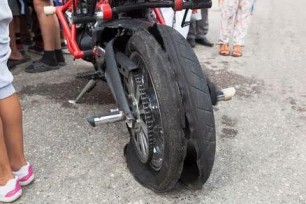
Know how to control your bike after a tyre burst
When you go out for a drive, hearing your tyre burst is the last thing you want. It can lead to a deadly accident. Many companies have now introduced tubeless tyres to reduce the chances of a blowout. However, there is very minimal time to control your bike if one does happen.
Since time is of the essence in such emergencies, it is important to know exactly what you need to do. So before going on your next ride, make sure you go through the following tips on controlling your bike after a tyre burst.
1. Do not hit the brakes instantly:
Whenever something goes wrong while driving or when we sense an emergency on the road, our natural instinct is to hit the brakes. However, this is not the universal solution to all emergencies. When you press the brakes suddenly, you may be thrown off your bike into the oncoming traffic.
If you are travelling at high speeds, more than 90 kmph, applying brakes suddenly can result in dangerous situations. Pressing brakes at high speeds can make the vehicle wobble, causing you to lose control of it. Instead, you should try rolling on the bike without using the brakes at all.
2. Maintain appropriate speed:
Speeding is one of the leading causes of accidents occurring on the road. When you go over the speed, say, more than 100 kmph, you are more likely to face a nasty collision in case of a tyre burst.
The chances of safely coming to a halt on time are much higher when travelling at slow/safe speeds. On the other hand, speeding will make your bike uncontrollable during a tyre burst and reduce or eliminate the chances of recovery afterwards.
3. Use engine braking:
If you have a bike with good engine braking, you can use that to slow down your vehicle instead of hitting the brakes. When your bike suffers a tyre burst, shift down the gears and accelerate using engine braking to slow down gradually. By this method, your bike will not suffer from the shock of sudden braking, and the chances of losing control of your bike will reduce significantly.
4. Keep your bike straight:
When experiencing a tyre burst, there isn't much time to avoid an accident or think about directions. However, to save yourself, you should try to keep your bike straight and steady. Turning the motorcycle or veering can worsen the situation.
Of course, if there is a danger zone in front of you, making a turn is the only choice. However, do this with acute linearity because a sudden directional change can unbalance the bike and result in a mishap.
Accidents are unpredictable and can happen when we least expect them. Keeping a check on your bike and conducting regular maintenance can prevent an unexpected tyre burst. In addition to it, secure yourself and bike in such uncertain times through individual accident insurance. Ride safe so that you enjoy riding your bike again!
Click HERE to buy the best individual accident insurance.
Disclaimer: The information provided above is for illustrative purposes only. To get more details, please refer to policy wordings and prospectus before purchasing a policy.
Eight best tips to help you pass your driving test
A driving test can be one of the biggest challenges for many. The exam can elevate multiple emotions and increase your stress about the final results. However, getting your driver’s licence and getting out on the road is a joyful feeling.
To help you pass the test with ease, here are a few tips that will come in handy.
1. Stay calm and do not panic:
It is normal to feel anxious and worried about the driving test. There are high chances of messing up when you are stressed. Therefore, avoid panicking during the exam and plan out your approach with a calm mind.
2. Get experience:
Practice and experience are two essential elements of passing the test. And both these elements complement each other. Without proper practice, you won’t be able to gain the experience that you might need. Get to know all the rules and regulations, and have an experienced driver to guide you on the dos and don’ts of driving.
3. Take the car that is familiar to you:
One of the critical tips to pass the driving test is to take your car with you. An unfamiliar vehicle can make giving the exam challenging. For example, if it rains, you will be comfortable handling your car’s controls rather than searching for the controls in a vehicle that is new to you. Another benefit of taking your car is that you will be familiar with the car’s judgment, and the test will go easier.
4. Use both hands for steering the wheel:
For a positive result and better judgment, use both your hands to get the grip of your steering wheel. Using only one hand may create difficulties in driving, resulting in a failed driving test.
5. Learn to drive in different conditions:
Weather is unpredictable. Hence, you must learn how to drive in different weather conditions, so you are always prepared in case of any sudden weather changes. Furthermore, practising driving in various weather conditions will help you be on the safer side.
6. Keep your basics right:
It is common for people to forget the basics while they are tense. Due to nervousness, standard rules such as checking mirrors can slip from the mind. Avoid making common mistakes like not checking the surroundings, lack of focus while reverse parking, and more. Keeping your basics right will help ease the burden and ensure a favourable outcome from your driving exam.
7. Do not hesitate to ask questions to the examiner:
Often, people feel scared to ask questions to the examiner in a fear that they will sound stupid or what the examiner might think. If you are unclear about what the examiner asked you to perform, do not hesitate to ask them to repeat what they said. Open communication is the key to passing your driving test without messing up.
8. Arrive at least 30 minutes before the given time:
Do not panic and rush to the location at the last hour. Doing so will create unnecessary stress and put you in a panic mode, affecting your driving exam. Therefore, get there 30 minutes before the scheduled test to get an idea about the surroundings.
Driving tests can be cleared quickly with a calm mind and following the tips mentioned above. Once you pass the tests, ensure that you follow all the traffic rules. Always carry essential documents with you, such as your driving licence, PUC, online car insurance details, so that you will be all clear even if the traffic police stops and question you.
Click HERE to know more about online car insurance plans best suited for your car.
Disclaimer: The information provided above is for illustrative purposes only. To get more details, please refer to policy wordings and prospectus before purchasing a policy.

Here are ten reasons why motor insurance claims get rejected
We all know motor insurance has been made mandatory in our country. The purpose of purchasing car insurance coverage is to assure financial protection for the vehicle if it is involved in an accident.
When you file a claim with your insurer for automobile damage, you expect them to reimburse you as soon as possible. There are three possibilities in that situation: your claim gets granted, your insurance company may request further information, or your claim gets denied. And often, motor owners fail to get their car insurance claims resolved to their satisfaction.
If you’re facing a similar circumstance, you might want to investigate the following causes for claim denials.
1. Driving while intoxicated:
If the driver engages in driving under the influence of alcohol or other intoxicants, in that case, the insurer will deny the claim.
2. An unreal claim of the No Claim Bonus (NCB):
The insurer refuses any claim for NCB falsely declared and cancels any benefits under the policy’s damaged section.
3. Unidentified or unauthorized driver:
The claim gets rejected if the driver doesn’t possess a valid driver’s licence or if the permit is fraudulent, expired, or for a different vehicle class. This can also happen if someone besides the registered owner is driving it.
4. Delay in paying the premiums:
Go through your policy to find if it grants you a grace period to pay the premium beyond the deadline. Not paying premiums on time denies the claim and is one of the most common reasons. Avoid delays and buy motor insurance online for convenient paying options.
5. If there is no evidence to prove the crash happened:
Having no photos of the scene or any other documentation of the collision or car damage may force the insurer to deny your claim.
6. Claim of non-accidental loss:
The insurance doesn’t cover the wear and tear of your vehicle. Therefore claiming any damage that isn’t accidental might result in the claim getting rejected.
7. Confidentiality of information:
When you buy motor insurance online, you must provide the insurance company with every personal detail and update the same if required. This includes your name, address and any past car accidents. The insurer possesses the power to reject your claim due to non-disclosure.
8. Automobile not appropriately parked:
If your vehicle was not in a secure location during the time of theft or crash, your claim gets denied. Therefore, the insurer will always ask if you had parked your car correctly.
9. Missing monitor or safety device:
Claims get denied if you haven’t installed alarms, locks or tracking devices in your vehicle despite being mentioned.
10. Ongoing inspection:
Most insurers demand that your motor be examined before purchasing insurance. It lets them know of all harm that has already occurred. Insurers have the power to reject your claim at any point during the insurance claim procedure if you fail to follow this protocol.
After a vehicle accident, the last thing you want to deal with is an insurance claim denial. Repairing an automobile may burn a hole in your pocket without insurance plan coverage. Focus on the points mentioned earlier to reduce the risk of a rejected insurance claim. Check the reviews of other customers for their claim settlement experiences with insurance companies before you buy motor insurance online. So, follow the above tips to avoid the situation that leads to denial of your insurance claim.
To buy motor insurance online, click HERE .
Disclaimer: The information provided above is for illustrative purposes only. To get more details, please refer to policy wordings and prospectus before purchasing a policy.
Hi there! 👋 Need help with a policy, claim, or renewal? Chat with us instantly on WhatsApp.
Start chat →