


General Insurance Blogs, Articles & Updates by - Magma Insurance
Have us call you
- RENEW YOUR POLICY
- BUY NEW POLICY

GENERAL INSURANCE BLOG

Beginners guide to learn jumping rope at home
Physical exercise is one of the basic requirements for a healthy and functional body. A few minutes of physical exercise, when combined with a balanced lifestyle, can give tremendous results to keep your body in the best shape.
It would be best if you also take a balanced diet to maintain all the nutrients and vitamins in your body. Also, try practising mindful activities like yoga and meditation regularly can be a good booster for your mental health. Physical exercises can range from walking, swimming, jogging, and cycling, to trekking and even rope jumping.
Jumping rope is one of the easiest and most convenient ways to lose extra calories and stay physically active. If you're a beginner at jumping rope, this article is just for you. We will cover all the essential points that should be kept in mind before you start jumping rope at home. It is a brisk and healthy exercise for your mind and body.
Let's look at the basic requirements for jumping rope at home without further ado.
1. Choose the best rope:
You must choose a comfortable, lengthy, and sturdy rope for your exercise. For beginners, a light weighted rope with comfortable foam grips is highly durable and flexible.
2. Pick a suitable surface:
If you want a comfortable surface for jumping rope, you should choose a mat or a smooth indoor surface. If it still does not work for you, please go outdoors and find hardwood floors if possible.
3. Start with basic jumps:
Start by learning to hold the rope properly. Do not grip the rope too tightly. Make sure you hold it loosely with your fingers instead of your palms. With a loose grip, the rope will turn quickly and steadily without any extra effort from your side. Make sure to hold the rope close to your body for a rhythmic spin.
4. Focus on movements:
After you have mastered your grip, you should focus on the movements of your body. You can start by placing the rope behind you. Turn it over your head and catch it under your feet. Make sure that you practise it until you've mastered it. Keep pushing yourself till you perfect the skill.
5. Keep on practising:
Although it may look complex, you should take the first step and do it. Be very gentle with yourself. Do it slowly as you get a grip on the process. Start with five jumps and increase the counts every day. Try to beat your record every day and reward yourself with positive affirmations.
Mistakes to avoid.
The things that you should avoid when you jump rope are:
● Do not jump too high:
It is one of the most frequently committed mistakes by beginners. If you think jumping too high will reduce more calories, you're wrong. On the contrary, it puts you at risk of developing a sprain. You do not have to take giant leaps, but you can jump just some inch off the ground.
● Not jumping upright:
It is always recommended to jump upright or in an erect position. Do not jump with a hunched back. If you hunch your shoulders, the jump will not be proper, and you can also develop a bad body posture. Later, you may also experience back pain.
These things should be considered before you commit to jumping rope at home. It would help if you were very careful when starting a new physical exercise. Make sure that your body is comfortable with the exercise. Regardless, opt for the best personal accident insurance policy in India to avoid problems later.
Click HERE to purchase the best personal accident insurance policy in India.
Disclaimer: The information provided above is for illustrative purposes only. To get more details, please refer to policy wordings and prospectus before purchasing a policy.
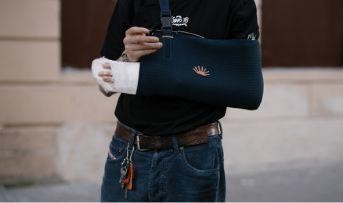
Best tips to do daily tasks with convenience after a fracture
A fracture brings pain and many inconveniences while performing your daily routine tasks. You have to start doing things differently and take help from others to finish your work. A fracture is different from a regular cold or fever, which is cured in just a few days. A normal fracture takes at least 20-25 days to heal, and more complex ones can take several months before you return to normal routine.
Hence, a fracture can be very troublesome if you do not handle it properly. Here are the best tips to do daily tasks conveniently after a fracture.
1. Simplify your daily tasks:
The first thing you should do after suffering from a fracture is to simplify your daily tasks. For example, cooking yourself may mean standing for long hours in the kitchen. It will put undue pressure on your broken bone and slow the healing process. Take help from other family members or your maid in cooking to ease the work. If you are the sole cook, you can start ordering more online for the first few days. You can also buy packed and frozen food and avoid cooking much for a few days.
Similarly, opt for a shower rather than using a bucket for taking a bath. You should use a non-slip mat in your bathroom to avoid slipping and hurting yourself again. You can use a bathing chair if it is comfortable for you. Buy a sponge with a long handle, so it becomes easy for you to scrub your feet and back.
2. Avoid driving:
Do not drive yourself, even if you can, as it will pressure your broken bone. Take a driver, go with a friend, or book a cab to your destination if it is important. Also, opt for “work from home” for a few days rather than going to your office.
3. Dressing-up:
Wear comfortable and loose clothes after a fracture so that it is convenient for you to dress up or change. You can get velcro stitched over the buttons of your shirt if you cannot open or close buttons with your fingers. Opt for elastic in your pants or jeans. Buy a shoehorn with a long handle so that you can wear your shoe without bending much. Also, do not wear heels or uncomfortable shoes to minimise the chances of falling over.
4. Declutter:
To make it convenient, you need to declutter your house and working area after a fracture. You can move furniture on the sides to get a wide walking area. This will help you move easily and also minimise the chances of accidents. Light up your house properly, so you do not trip over things in your way. Proper lighting is essential if you need to wake up at night and move around.
If possible, you can move to the ground floor for a few days to avoid climbing stairs. Do not sleep on a very low bed, as it can be uncomfortable for you to get into the bed. If your fracture takes a long time to heal, you can install handrails near your bed, bathroom, and stairs and hold them for added support.
A fracture is undoubtedly painful and causes a lot of inconvenience to you. It derails your daily life and makes you dependent upon others. Personal accident insurance is crucial for you in such situations. It will provide you with financial protection and security in case of injuries and partial or total disability arising due to accidents. Hence, go for the best personal accident insurance India and secure yourself and your dependents in case of any unfortunate event.
Click HERE to invest in the best personal accident insurance India.
Disclaimer: The information provided above is for illustrative purposes only. To get more details, please refer to policy wordings and prospectus before purchasing a policy.
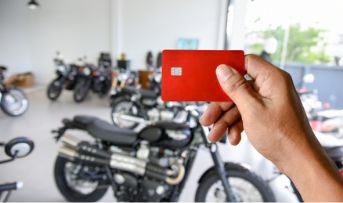
Buying a new two-wheeler? Here are the important documents that you will need
Given the crowded riding conditions and slow-moving traffic in Indian cities, two-wheelers have always emerged as the top choice for daily commuting. They are perfect for city travel because they are simple to navigate through traffic and take up much less space to park and promise better mileage.
In congested areas, riding a two-wheeler can significantly shorten your commute and help you reach your destination in time. From economical city bikes or scooters to attractive sports machines, two-wheelers have an exciting range of categories and myriad options. For every diverse taste and expectation of a rider, a two-wheeler is available in the market. All one needs to do is thorough research before making the final decision.
Buying the first bike or scooter is a dream for many, and in this blog, we will discuss how one can achieve this by understanding the complete buying process and the documents required to purchase your first two-wheeler.
Once you select your two-wheeler, the next crucial step is the paperwork. Be prepared to submit the required documents that will be needed by the dealer, the bank (if you're taking out a loan), and the two-wheeler insurance provider. The documents that you must submit are listed below.
Documents required for vehicle registration:
● Passport size photograph
● Attested copy of ID proof- Driving Licence or PAN Card
● Proof of Permanent Residence (attested copies) – Passport, Voter ID Card, copy of insurance policy.
If any of the documents mentioned above are unavailable, you may give any of the documents listed below. Don't forget that the documents need to be properly attested:
● Electricity bill
● Phone bill (BSNL Landline)
● Ration card
● House tax receipt from the corporation
These are the extra documents you must present if you buy a two-wheeler in a city other than your residence. All supplied documents must be properly attested:
● Copy of registered rent agreement
● Copy of your landlord's electricity bill
● Letter from your employer
● Original affidavit
Documents required to buy a two-wheeler on EMI:
If you are planning an EMI option for your vehicle, you can finance your bike up to 100% and pay the balance back in simple, flexible EMIs. Depending on the lender, the interest rate, processing fee, EMI bounce costs, etc., for these loans may change.
Depending on the facility provided by the lender, the term of these loans may range from 6 to 60 months. The paperwork you might require to purchase a new bike on an EMI is listed below.
Documents required by salaried individuals:
● Proof of identity: Aadhar Card/Pan Card/Passport/Driving Licence/Voter ID and passport-size photos
● Proof of address: Driving Licence/Passport/Voter ID/Aadhar card/Utility Bill/Bank statement
● Income proof: Bank statements of the last 3 months, salary slips of the last three months/salary certificate/Form 16
Documents required by self-employed individuals:
● Proof of identity: Aadhar Card/Pan Card/Passport/Driving Licence/Voter ID and passport-size photos
● Proof of address: Driving Licence/Passport/Voter ID/Aadhar card/Utility Bill/Bank statement
● Income proof: Income Tax Return (ITR), last 3 months' bank statements
To legally ride your two-wheeler on public highways in India, you must have two wheeler insurance India. In addition to ensuring that you comply with the law, insurance gives you financial security in case of an accident. When you purchase a new two-wheeler, make it a point that you buy a reliable two wheeler insurance India policy that offers an additional safety net to your two-wheeled friend.
Click HERE to buy the best two wheeler insurance India policy.
Disclaimer: The information provided above is for illustrative purposes only. To get more details, please refer to policy wordings and prospectus before purchasing a policy.

Hand care tips for guitar aspirants to avoid injuries
Indulging in leisurely activities is an overlooked aspect of today's hectic lifestyles. With building pressures of being competent and work stress while handling societal expectations, it is essential to explore and identify areas of interest outside conventional academics, careers, etc. With the early onset of mental struggles with issues like depression and burnout, research has shown that engaging in at least one activity outside your regular schedule that allows you to enjoy your personal space is beneficial.
Learning instruments is one of the most popular activities taken up as a hobby. Learning to play the guitar is the most popular activity on many people's to-do lists. It is a relatively inexpensive hobby that can be learnt without an expert's guidance and does not require years of practice to reach the beginner's level of playing. However, there is always a risk of injury, considering the small fretboard, metal strings and fast wrist movements that need to be mastered.
Multiple factors come into play relating to your posture, wrist placement, plucking, and supporting hand placement that may result in injuries if not done correctly. Here are some tips to prevent injuries while playing the guitar.
1. Long durations of playing the guitar without adequate breaks:
Over practice causes more significant harm than good. While it may seem exciting to display your determination to learn the guitar by playing continuously without taking breaks, it is best not to do so.
There is no fixed duration that you should practise and then take a break after, but it is best to limit a practice session to 30-45 minutes and then take a 10-minute break. It also helps prevent neck or back injuries from sitting in the same position for long durations.
2. No warmup:
It is common to be excited and skip the fundamentals to learn advanced techniques. No matter what level of expertise, it is necessary to warm up before each playing session. This involves regular stretching and practising finger exercises on the fretboard. Multiple online resources can help prevent discomfort and increase your fingers' agility and precision while shifting chords and fingerpicking.
3. Excessive pressure:
Often seen in the case of beginner acoustic guitar players, it may seem challenging to produce sound on metal strings. It is natural to use excessive pressure on the strings in such a case as you try to learn better. However, as you practise, you must find the ideal amount of force, just enough to produce sound.
Excessive pressure applied during regular playing damages the fretboard and may cause discomfort to your fingers. It may even lead to the tearing of the fingertips' skin. Understand that ideal pressure results in the formation of calluses, not injuries.
4. Proper posture:
Getting the basics right is the most important thing to understanding any skill. Sitting upright will allow you to keep your spine, neck, arms and wrist strain-free. If you feel any specific pain repetitively as you practise, it is best to get the guidance of an expert or stand before a mirror to identify and correct the issue.
In case you feel irregular pains in your wrist, it is best to get it checked by a doctor and use supporting devices like a wrist brace upon professional recommendation. Icing the wrist and regularly massaging the area can help significantly reduce inflammation and pain. Since one cannot eliminate injuries, taking preventive care and buying comprehensive personal accident insurance India is necessary to cover the financial burden.
Click HERE to buy reliable personal accident insurance India.
Disclaimer: The information provided above is for illustrative purposes only. To get more details, please refer to policy wordings and prospectus before purchasing a policy.