


General Insurance Blogs, Articles & Updates by - Magma Insurance
Have us call you
- RENEW YOUR POLICY
- BUY NEW POLICY

GENERAL INSURANCE BLOG

What is the no-objection certificate for bikes, and how to apply for it
Suppose a bike owner plans to sell his bike or move with the bike to a new city. In this case, a NOC, or no objection certificate, is required to avoid legal issues.
A letter known as a NOC, or No Objection Certificate, must be issued to sell your bike. Even if you are relocating to a new city, a NOC must be given to register your bike in the new location. The NOC is also required if a sold bike is to be registered in the name of the new owner.
How is NOC applied for a bike?
You must, under government regulation, receive a NOC from the RTO to validate your deregistration from that RTO. Without further ado, let's discuss the process for requesting a NOC certificate for a bike.
Here is a step-by-step instruction sheet for requesting a NOC for a bike when crossing state boundaries and intending to stay there for more than a year:
● To obtain a NOC, prepare an application and send it to the transport bureau in your area
● Fill up Forms 27 and 28 correctly, then submit them to the RTO
● If your vehicle was purchased using a loan or EMIs, get a NOC from the lender
You can expedite the procedure by obtaining NOC from the traffic department and your local police station in addition to following these steps.
You must submit an application letter explaining your relocation plans and supporting documentation to your financier or bank to get their no-objection certificate (NOC). These could be an appointment letter, a job transfer letter, housing documentation for the new location, etc.
What factors are to be considered while applying NOC for a bike?
For a hassle-free process, consider the following aspects before you apply for the NOC for your bike:
● Authenticate the copies of the insurance policy and registration document for the bike
● Verify that the road tax is fully paid
● Ensure all of your information is accurate, especially the information in the application, along with the updated address
● Submit all corroborating documentation
● Make sure you have the confirmation of payment for the NOC application cost received through the Vahan Citizen Services website
Documents required to get NOC for a bike.
The following list of documents must be sent to the RTO to obtain bike re-registration or transfer bike ownership:
● Motorcycle registration certificate
● Form 28
● Bike insurance copy
● Road tax receipt
● Certification for pollution control (PUC)
● Numbers for your bike's engine and chassis
● Signature recognition
The following documents are required if you want to obtain a NOC from the bank:
● The loan documents
● Bike registration document
● Other documents that the bank may request
The NOC is, therefore, a legally required document that must be obtained for various reasons when dealing with bikes. Along with the NOC, don't forget to buy bike insurance online to safeguard your valuable asset when you move to another state. Buying a robust insurance policy online will help you enjoy several features and financial benefits that can aid you in recovering from loss due to damages.
Click HERE to buy bike insurance online and get exciting benefits.
Disclaimer: The information provided above is for illustrative purposes only. To get more details, please refer to policy wordings and prospectus before purchasing a policy.

Can you claim your two-wheeler insurance twice a year
Insurance is an umbrella that protects you from the financial burden resulting in the aftermath of the event you are insured against. In recent times, the insurance penetration rate in India has significantly grown with the increasing base of new policyholders. This may be attributed to raising awareness, the increased purchasing power which has resulted in the improved ability to purchase policies, and the steadily growing inflation rates that increase the burden of such financial stress.
Over the years, motor insurance has become a popularised offering by insurance companies. If you are looking for the best two wheeler insurance in India, there are multiple options with various features and price ranges. However, it all boils down to the insurance claim settlement procedure. If the claim settlement is fair and speedy, it is the natural choice for consumers. It is also the most confusing part of insurance that you must consider before purchasing two-wheeler insurance.
How many times can you file a claim annually? What are the required documents? Read on to find the answers to questions similar to these related to two-wheeler insurance claims.
Can you file for a biannual two-wheeler insurance claim?
Yes! The paperwork does not restrict policyholders to specific maximum claims you can file annually. Therefore, you may apply for two or more claims in the same year.
Effect of raising multiple claims within the year.
While there are no restrictions on claim filing, it may not be a good idea to do so frequently for the reasons mentioned below:
1. No claim bonus:
This is an incentive provided by the insurer to the policyholder at the time of renewal in case no claim has been filed within the insured period. In case of multiple claims in the year, the discount rate, usually between 20-50%, is lost with each claim. Therefore, by making a claim, or multiple ones, the insured loses the benefit of a discount at the time of renewal.
2. Increased premiums:
Since the insured person files multiple claims, they are seen as a greater liability than an asset to the insurance company. Therefore, they charge a greater premium from the person when compared to other insured parties that file fewer or no claims at all.
3. Inadequate compensations:
In case of minor damages and losses, it may be best to avoid filing a claim. Deductible items are removed from the repairs bill to compute the allowed damages. If such an amount is minor, we recommend not filing a claim since the compensation will be inadequate and only result in the loss of the no-claim benefit.
4. Limitations on zero depreciation insurance add-on:
This is an add-on facility to a comprehensive two wheeler insurance policy that restricts the number of claims you may file.
Necessary documents to file a claim.
Irrespective of the result of your search for the best two wheeler insurance in India, most insurance companies ask for the following documents for filing a claim:
● Claim form
● Two-wheeler registration
● Tax receipt
● Owner’s driver’s licence
● Insurance proof
● Copy of FIR
With insurance companies striving to make claim filing simpler than before, it may seem logical to claim compensation for even the most minor damages. However, even with the best two wheeler insurance in India and requisite add-ons, that is not the case. You must purchase bike insurance and file claims only after careful consideration.
Click HERE to buy the best two wheeler insurance in India.
Disclaimer: The information provided above is for illustrative purposes only. To get more details, please refer to policy wordings and prospectus before purchasing a policy.
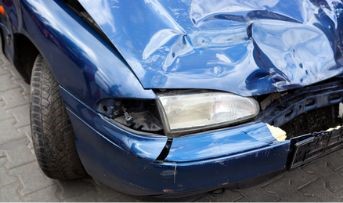
Complete guide on standalone damage car insurance
Standalone own-damage car insurance is optional, unlike third-party car insurance. However, you must buy your standalone damage car insurance since it will help you get coverage for damages to your car during an accident or a natural or man-made disaster like a fire outbreak, theft, flood, etc.
What is covered under standalone damage insurance?
By looking at what this policy covers, let's better understand how standalone car insurance functions. A typical own-damage policy will protect from the following:
● Accident-related damages or total loss
● Vehicle theft
● Damage that is beyond repair as a result of fire, lightning, explosion, or self-ignition
● Natural calamities such as landslides, earthquakes, or floods can cause damage
You can file a standalone damage car insurance claim with your car insurance provider if your vehicle is damaged as a result of one of these events. Nowadays, raising a standalone damage car insurance claim is simpler than ever before. You can visit the insurer's website, log in, complete a form, evaluate the damage to your automobile, and then make repairs after the claim is approved.
Factors that affect standalone car insurance premiums.
Your standalone car insurance premium can easily be impacted by a change in any of these variables.
1. Insured Declared Value:
Your car's IDV, or insured declared value, is its current market value and a key component in calculating its own-damage premium. If you decide to give your car a greater IDV, your standalone car insurance will be expensive.
2. Age of the vehicle:
Your vehicle depreciates with time and loses value. As a result, if your car is older, your car insurance premium will decrease.
3. Your location:
If you drive in an urban, congested area, such as a big city, your own-damage auto insurance rate will go up. This is because there is always a chance that the car will be stolen or damaged. The danger is also lower, and the premiums are lower in smaller towns and villages.
4. Car safety:
Installing safety features on your car reduces the possibility of damage. For instance, airbags reduce the likelihood of your vehicle sustaining damage, minimising car insurance premiums.
5. Model of the vehicle:
Any damage caused by an accident to a pricey or luxurious vehicle could be very costly. Due to the high risk associated with such a vehicle, the standalone insurance policy premium for own damage will also be expensive.
6. Engine cubic capacity:
Your car's engine cubic capacity significantly impacts your premiums. Compared to vehicles with engines under 1500cc, the damage premium for vehicles with an engine capacity beyond 1500cc will be higher.
7. No Claim Bonus:
When you renew the policy, your rates will be reduced if you haven't made any claims for auto-related damages during the policy year. As a result, avoiding these claims allows you to pay lesser premiums for your standalone own damage insurance.
Who should buy standalone damage insurance?
If you just have third-party auto insurance at the moment, it is advised that you purchase your standalone damage coverage. It increases the range of protection for your vehicle during emergencies like a car accident, a man-made disaster, or a natural disaster.
Here is the formula to calculate standalone damage car insurance premium:
You must know your car's Insured Declared Value (IDV). Using the formula below, you can easily determine your four-wheeler's IDV:
IDV= (showroom price - depreciation cost) + (cost of any car accessories - depreciation cost)
Once you know your car's IDV, you may use the following method to determine the cost of standalone own damage insurance:
Standalone Damage premium = IDV X (Premium Rate) + Add-on Covers - Policy Discounts and Benefits
Check for new car insurance rates before investing in standalone damage insurance. Contact your insurance provider to get the desired answers if you have any queries.
Click HERE to buy a car insurance policy.
Disclaimer: The information provided above is for illustrative purposes only. To get more details, please refer to policy wordings and prospectus before purchasing a policy.

Complete guide on passenger assistance cover in two-wheeler insurance
If you have ever randomly searched for road safety statistics relating to India, you would be concerned. According to data provided by many research firms, the road crash severity, i.e., the number of deaths per 100 road crashes, was 38.6. This implies that over a third of road accidents lead to fatalities. Our numbers are also the highest amongst all countries, making this an issue that requires immediate attention.
While infrastructure and planning of roads are partly to blame, so is driver negligence. Considering that over half the vehicles on roads are 2-wheelers, it becomes necessary to practise safe driving since 2-wheelers do not have the bare minimum safety that cars provide and lead to more significant damages if in an accident. With increased regulations, the demand for 2 wheeler insurance has risen steadily.
Still, riders continue to take unnecessary risks in the form of 3 or more riders, underage driving, and helmet-less pillion riders. While your 2 wheeler insurance covers the driver and vehicle, does it also cover pillion passengers? Read on to find out all about it.
Inclusion of a passenger in 2-wheeler insurance:
2 wheeler insurance is considered a comprehensive cover but is not in reality. By carefully reading the fine print, one can find multiple exclusions which can be added to the cover as an add-on facility. One such cover is to protect your passenger.
If you are considering whether or not to purchase the add-on, we strongly urge you to do so. Since two-wheelers are more vulnerable to accidents, minimal damage to the riders is inevitable. While your comprehensive plan covers you and your vehicle, buying an add-on will insure your pillion rider's life.
Inclusions of the add-on:
The add-on primarily lightens your moral responsibility towards your pillion passenger to keep them protected as long as you're responsible for their safety. In the following events, the insurance company approves the claims filed:
● Compensation for the death of the passenger to their legal heirs
● Payment in case of partial or permanent disability to the passenger
● Reimbursement of hospitalisation expenses incurred to treat the passenger
Who should consider buying the add-on:
While 2 wheeler insurance is mandatory for all, we recommend considering a pillion-passenger add-on as the same. However, suppose any of the following cases apply to you, then consider purchasing it at the earliest to minimise the extent of the financial burden you may have to face.
● If you regularly have a pillion passenger travelling along
● If your regular passenger happens to be a child or a senior citizen, it is best to cover for contingent mishaps
Exclusions to consider before filing claims:
This add-on is undoubtedly helpful in insuring your fellow rider’s life. However, before filing a claim, you must ensure that the following:
● The driver has a valid licence
● The driver was not under the influence of any substance
● The driver must be the owner of the vehicle and must purchase the policy and add-on in his name
● The accident must not be intended to be an act of self-injury by the driver
These are generally excluded conditions that reject a claim. Since making 2 wheeler insurance mandatory, its penetration has significantly increased. Authorities should also consider making policy equipped with comprehensive benefits to cover all related parties and ensure maximum protection of the riders and vehicle.
Click HERE to buy a reliable 2 wheeler insurance.
Disclaimer: The information provided above is for illustrative purposes only. To get more details, please refer to policy wordings and prospectus before purchasing a policy.