


General Insurance Blogs, Articles & Updates by - Magma Insurance
Have us call you
- RENEW YOUR POLICY
- BUY NEW POLICY

GENERAL INSURANCE BLOG
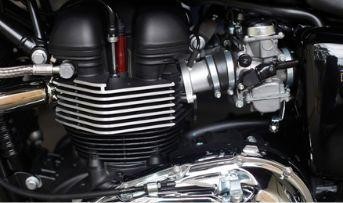
Your bike’s cubic capacity can directly impact its insurance premium, here’s all you need to know
Manufacturing date, location, vehicle model, claims history with add-ons, and optional deductibles are a few variables that could impact your bike insurance. However, some other aspects could also influence the cost of insurance.
An essential factor in calculating the insurance premium is the two-wheeler's cubic capacity (cc), also known as its engine capacity. Continue reading to learn how your bike's cubic capacity affects its insurance cost.
What is the cubic capacity of a bike?
The capacity of your bike's engine is measured by its cc i.e., cubic capacity. A bike's engine size is essential since it affects how much power it can produce. A two-wheeler is thought to be stronger if its chamber is larger. Similar to how a four-wheeler vehicle's engine capacity is expressed in litres, a bike's capacity is understood similarly.
Bikes with higher cubic capacity come equipped with large cylinders that can produce extensive power output from the engine. This results in low fuel efficiency as more consumption is observed to drive more engine power output per stroke.
Bikes with higher cubic capacities are expensive. This is because intense mechanical fitness and build are required for the bike to withstand tremendous torque and power. Higher cc bikes have premium quality brake pads, comfortable suspension, and excellent exhaust that can easily overcome the wear and tear that might result from high-speed riding.
What effect does your bike's cubic capacity have on policy premiums?
Your bike's engine power is critical in the premium fixing process. The engine's cubic capacity affects the cost of your motorcycle insurance. A 75 cc bike would be less expensive to insure than a 220 cc bike. Take proper care of your bike's engine to guarantee that it operates smoothly.
Higher cc bikes would cost more to insure because your insurance rate directly correlates to your engine's cubic capacity (cc). When determining the third-party insurance rate, the IRDAI primarily considers the cc of your bike.
A bike's cc majorly determines the on-road cost of the bike. Low-cc bikes are less expensive than high-cc ones. The insurance premium for expensive bikes is more, considering their superior build quality and use of costly parts.
Other elements that affect the insurance premium for bikes with the higher cubic capacity.
Here are the various factors that influence the premium of the higher cubic capacity bikes:
● Geographic location: Compared to Tier II cities or rural areas, the premium is more significant if you stay in a metropolitan metropolis. Compared to non-metro regions, urban areas have a higher risk factor.
● Year of production: The age of the vehicle directly affects the insured amount. The insurance sum will decrease as time goes on since the bike loses value.
● Make and model of the bike: Premiums for high-end/premium bikes are higher; premiums for entry-level bikes are lower.
● Add-ons: In return for a more premium for bikes with higher cubic capacity, add-ons safeguard you against situations that aren't covered by the basic program.
● Installation of security measures: Lowering the danger of theft and the likelihood of damage by installing anti-theft devices or other security measures reduces the insurance price. By installing security devices, you can get a reduction in insurance premiums for bikes with higher cubic capacity.
Every bike driven on the road must be covered by third-party insurance. Therefore, in addition to looking at the bike's qualities before buying one, you should also consider getting bike insurance. Shop around to buy motor insurance online that best suits your needs and expectations. You can reduce the cost of two-wheeler insurance while maintaining adequate coverage if you heed the above suggestions.
Click HERE to buy motor insurance online.
Disclaimer: The information provided above is for illustrative purposes only. To get more details, please refer to policy wordings and prospectus before purchasing a policy.
Wondering why your motor insurance premium is so high? Fuel may be the reason
While electric vehicles are capturing the vehicle market, petrol and diesel-based cars still need to be put in trend. Maximum Indian citizens today own fuel-based vehicles, be it two-wheeler or a four-wheeler. But these fuel-based cars also have a history of superseding one another. Petrol cars have always been the favoured alternative amongst fuel-based vehicles.
Initially, diesel usage focused on heavy vehicles operated for commercial purposes like duty trucks, etc. But with the advancement of technology today, diesel vehicles have become widely popular and opted for daily use vehicles like passenger cars.
But do you know that your motor insurance premium changes for the type of car you use? Fuel may be the reason. Want to know how? Without any further delay, let’s get started.
1. How much is your car’s price:
Diesel-powered and petrol-powered cars are priced differently in the Indian market. Usually, the price of vehicles that have diesel-powered engines is high when compared to their petrol-powered counterparts. A higher price directly reflects on the motor insurance and premium prices.
Therefore, the more expensive a car you have, the higher the motor insurance premium you have to pay. So, figure out the maintenance and premium charges you will have to pay in the future and create a budget in advance so that you do not get surprises of additional premiums like motor insurance.
2. Repair influences the premium charges:
Yes! Even the cost of repair influences the motor insurance premium prices. The repair charges for diesel-based vehicles are much higher than those for petrol-based cars. Therefore, the company charges high premiums for your motor insurance to help cover the claims if you make any in the future. Similarly, if your car has expensive spare parts or is priced in the high-end range, the companies will charge you high motor insurance premiums.
This proves that fuel has a massive impact on premium charges. Having this information before you make any purchase will help you put things into perspective, especially budget-wise. Many factors should be considered when someone decides to purchase a car, one of which is the motor insurance, its premium charges, claims, add-ons, and other features which vary from one insurance provider to another.
3. Is your car fuel efficient:
Fuel efficiency is another influencing factor that determines higher motor insurance premiums. While petrol-powered cars have great starting and ignition power, diesel-based cars are beneficial for vehicles purchased to last longer.
4. Let’s have a look at the engine:
The engine capacity of your petrol-powered car is lesser than that of diesel-based cars, thus raising the motor insurance premium prices for diesel-powered vehicles. The better the engine capacity, the higher the premium. Who knew that fuel could be such a powerful influencing factor in the premium prices of motor insurance?
5. Cannot miss IDV (Insurance Declared Value):
If the market value estimation is high, the IDV will be increased, directly impacting the premium. Usually, the IDV of diesel-based cars is high, which leads to a rise in premium prices.
We hope this blog gives you a crisp and clear idea about your motor insurance premium charges. This will help you arrive at a decision or educate you about motor insurance and what factors impact the premiums which will come out of your pocket. And there is no doubt about how crucial it is to purchase motor insurance to protect your car and yourself against the financial burden.
Click HERE to learn more about motor insurance.
Disclaimer: The information provided above is for illustrative purposes only. To get more details, please refer to policy wordings and prospectus before purchasing a policy.
Top reasons for receiving a partial settlement from a car insurance claim
Insurance is an effective mechanism that protects the insured from the financial loss incurred due to damage to an asset. The prudent instrument protects high-value assets like vehicles, in the absence of which the victim has to shell out large sums of money to compensate for the damages to own property and third-party damages.
Despite the safety provided by online car insurance and its allied merits, sometimes the insurer does not approve a complete settlement, leading to being partially compensated. With proper knowledge regarding the procedure, related proofs, and some tips to remember while making claims, it is possible to receive a complete car insurance settlement.
Reasons for partial settlement:
Comprehensive car insurance is the easiest way to ensure that the insured is covered for maximum damages and receives the entire claim amount. If you haven't purchased comprehensive car insurance, you may encounter only a partial settlement for the following cases.
1. Depreciation:
Loss of value of a car due to wear and tear and usage is an inevitable factor that is considered while paying out claims. Damages to parts, including fibre and glass parts, tubes, tyres, etc., are only settled after considering their depreciated value according to the fixed depreciation rates and the age of the vehicle. A zero depreciation cover can help supersede this clause, but several conditions must be considered to avail of its benefit.
2. Partial car insurance coverage:
A partial cover protects the insured from the financial burden of third-party damages and has fewer inclusions while being less expensive than the latter. The policy restricts customisations and is ideal for infrequently used or old vehicles. The policy excludes NCB and its own damages, limiting its scope and increasing the financial burden on the insured.
3. Policyholder negligence:
Negligence while driving is a major cause of accidents. Suppose your insurer suspects that the driver was under the influence, negligent of general driving safety norms, or holding an invalid driver's licence at the time of the accident. In that case, your claim may be rejected or partially settled, depending on the severity of the issue and the claim amount.
4. Lack of proof:
It is essential to submit valid proof of the accident while filing a claim. With inadequate evidence, the insurer may not process the whole claim amount. Pictures of the accident site, eyewitness testimonies, and immediate filing of an FIR are some of the required proofs asked for by the insurer.
5. The car is used for business purposes:
If the insurer discovers that your personal car was used for business or commercial purposes at the time of the accident, you might not get a 100% claim or even a denial of the claim by the insurer.
Tips to speed up the claim settlement process:
While there is no fixed way to guarantee complete settlement, by following the below stated steps, you can ensure the fulfilment of your responsibilities to ensure that you receive the highest amount of claim possible.
1. Initiate the settlement process immediately:
Starting the process immediately after the accident is vital to ensure a quick settlement. It is ideal for raising the claim within seven days of the accident.
2. Keep all the relevant paperwork ready:
Each payment processed to rectify the effects of the accident, including maintenance of the car or replacement of parts, medical bills, the FIR copy, etc., should be maintained and provided to the insurer as proof.
3. Negotiate your demands:
Before reaching the final settlement, which you must ensure is in writing from the insurer, recheck if the amount is justified. Do not refrain from negotiating the sum with adequate reasoning. Consider seeking the help of a legal professional to make the process faster and ensure that your demands are satisfied.
When purchasing conventional or online car insurance, it is critical to read the fine print to ensure awareness regarding all the inclusions so that you can raise proper claims appropriately to settle at the earliest.
Click HERE to buy online car insurance.
Disclaimer: The information provided above is for illustrative purposes only. To get more details, please refer to policy wordings and prospectus before purchasing a policy.
Things to remember while making endorsements that can save your car claim from rejection
Applying for a car insurance claim may be a stressful procedure, regardless of how well you may have painted the picture for yourself. However, not all insurance companies are trying to steal your hard-earned money. You can cope with any problems with car insurance claim settlement that may arise by just being informed of the specifics involved in the procedure.
Having a car insurance claim denied is common, though. There's a good chance that someone you know has experienced it. Additionally, it frequently occurs that the policyholder cannot understand why their car insurance claim was denied, which only heightens their frustration.
However, you need to know a few things concerning the rejection of a car insurance claim.
Reasons for denial of car insurance claims:
A typical car insurance coverage will often cover loss or damage brought on by theft, accidents, or other people. However, it would be absurd to assume that your car insurance company will pay for any losses or damages that result from the normal wear and tear the car experiences over time and with use.
What should you keep in mind to avoid your claim from getting denied?
1. Give accurate documentation, even when applying online:
Refrain from giving false or inaccurate documentation for insurance purposes, even if you are applying for a claim online. If you submit a claim and the insurer discovers that the supporting documents are incorrect, misleading, or even phony, your claim may be denied.
2. Read the policy document in its entirety:
Because they are more knowledgeable about the policy's terms and conditions, insurers can better find a point you ignored and use it to support their decision to deny your claim. To avoid this, policyholders are encouraged to carefully read their policy contracts to be informed of what will be covered and what won't. Feel free to seek assistance from someone knowledgeable in insurance jargon to clarify the policy and assist you if you are unsure of what it says.
3. Save every invoice and receipt:
It would be a good idea to have such accessories covered under an add-on cover if your car is equipped with anti-theft gadgets, an expensive radio system, or anything else that is not included in the car's standard equipment. The bills or receipts for purchasing those accessories must be presented, though, if you ever need to claim for the damage or loss of those items. The related invoices and receipts must be available. In every other case, the assertion is likely to be disproven.
4. Remain within the claim intimation time window:
Insurance companies typically stipulate that policyholders have 48 to 72 hours to notify the insurer of any incident or accident after it has happened. Always do so. However, this may only sometimes result in your claim being denied.
5. If a car is stolen, file an FIR right away:
You would be quite stressed if your car got stolen. To register a claim, particularly in the event of a theft, you must first file an FIR at your local police station. Take notice of this step. A claim's submission or approval could be complex without an FIR.
6. For co-passenger protection, take a separate cover:
Co-passenger insurance must be purchased separately for each passenger if you want to provide coverage for them while riding in your car. If you do not have adequate coverage for your fellow passengers, the insurance company may deny your claim for their injuries in the event of an accident.
You can conveniently buy online motor insurance policy, but getting a car insurance claim granted might be challenging. Nothing in this is set in stone, and you may always contact your insurance provider to figure out how to resolve a denied claim or learn the reasons for the denial of your claim. Invite those with knowledge of insurance issues to assist you.
Click HERE to buy online motor insurance.
Disclaimer: The information provided above is for illustrative purposes only. To get more details, please refer to policy wordings and prospectus before purchasing a policy.
Hi there! 👋 Need help with a policy, claim, or renewal? Chat with us instantly on WhatsApp.
Start chat →