


General Insurance Blogs, Articles & Updates by - Magma Insurance
Have us call you
- RENEW YOUR POLICY
- BUY NEW POLICY

GENERAL INSURANCE BLOG

Best tips to take care of your stitches to ensure a faster recovery
If you have recently operated on for surgery, you might be curious about how to recover quickly so you can return to your daily work routine. While you are in the hospital, your surgeon does his part, but once you are discharged, healing is your responsibility.
Also, remember a personal accident insurance policy offers comprehensive financial security to the insured against unforeseen events like accidental death, physical harm, partial or whole disability, and permanent and temporary disabilities brought on by accident.
Here are five tips to speed up your recovery so you can resume your life as soon as possible:
1. Prevent infection:
For your procedure to be successful, infection prevention is essential. One of the most specific and crucial rehabilitation activities is washing your hands before touching your wound or dressing your stitches.
Rare surgical site infections typically appear 30 days after surgery. Nevertheless, it is worthwhile to ask your doctor what you can do to keep your skin capable of preventing infection.
2. Give your body the necessary energy to heal:
Even if you don't feel like eating after surgery, giving your body the energy it needs to heal is vital. Selecting proteins such as chicken, eggs, and others is essential for healing. Fruits are a good source of vitamin C, which has also been proven to speed up recovery. Foods containing iron and B12, such as fish and eggs, aid in the body's production of the necessary new blood cells. Consume fibre and probiotics for the immune system to combat illness and restore your original health condition.
3. Verify your incision:
Even though it may not be your favourite activity, you must closely examine your incision multiple times a day. Is the wound red or pink? Are there any visible staples or stitches? These inquiries are crucial, and looking at your incision will allow you to ascertain whether or not your surgical site is still healing or has developed an infection.
4. Rise and shine:
When you can, get up and start moving. Moving encourages the flow of blood, which aids in the healing process. You can also prevent harmful blood clots by walking or getting the wounded body part moving. The likelihood of acquiring pneumonia is lowered by light activity. Once the doctor provides the go-ahead, begin the stretching and muscle-building therapy.
5. Observe the recommendations of your healthcare provider:
You will only make much progress if you hear this message. A postoperative patient should adhere to all the recommendations specified by their healthcare professionals.
Some guidelines may limit your freedom of movement, such as the recommendation to wait a few weeks following surgery before taking a bath, swimming, or lifting anything over 10 pounds.
6. Drinking and eating right:
After surgery, many people experience appetite loss. They might not feel hungry at all or feel queasy or constipated. Good nutrition and hydration can aid healing, reduce common risks, and help you recover fast.
7. Recognise when to visit the ER:
Call your doctor immediately if you're bleeding, having difficulties breathing, swallowing or drinking, urinating, or showing clear indications of infection. Your primary care physician or the emergency department should be your next port of call if you cannot reach your surgeon.
8. Inhale and exhale carefully:
Who knew that after some procedures, the way you've always coughed and sneezed wasn't the "correct way"? If you sneeze or cough improperly while wearing an abdominal incision, it can seriously damage your incision.
A new surgical incision can open up with a powerful sneeze. So, the incision must be braced while you sneeze or cough. You can accomplish this by covering the area with a cushion or using your hands.
Your post-surgery recovery depends on you adhering to the post-op instructions given by your doctor and showing up for your scheduled follow-up appointments. Additionally, taking care of your wound, eating healthfully to rebuild your strength, and managing your pain is crucial. Implement these top recommendations and invest in personal accident insurance online to help you completely focus on your recovery and not on medical expenses. Your accident policy will take care of all the finances and be a strong moral booster in the time of emergency.
Click HERE to buy personal accident insurance online.
Disclaimer: The information provided above is for illustrative purposes only. To get more details, please refer to policy wordings and prospectus before purchasing a policy.

Are you a student going to study abroad? Here are a few essential things you must know
Over time, the world has come together to become a global village. Travelling to foreign countries, experiencing their culture, and taking advantage of the best offerings of other nations is more accessible now than it has ever been before, making education and working abroad favourable and highly sought-after opportunities. Many Indian students leave the country to study at international universities and improve their career prospects.
However, changing one's environment and relocating to a new place is a challenging task that requires extensive planning and budgeting. You should also consider purchasing general insurance plans covering yourself against any mishaps that may occur abroad.
With proper research and following the below-stated tips, you can easily plan for relocation to a foreign university!
1. Prep your documents:
Studying abroad requires significant planning, starting with where you wish to learn - the country, the university, and the course. Based on this choice, you will need a valid passport, visa, I-20, Government-issued identity proof, authenticated mark sheets, and more. Initiate the time-intensive process well before your expected departure date from your home country.
2. Make your bookings in advance:
Flight tickets are invariably expensive unless the airlines offer tremendous seasonal discounts. Once your application to your preferred institute and visa is accepted, it is ideal for researching and booking your travel tickets to avail flexible and inexpensive rates about three months in advance. Ensure that you choose an arrival date a few days before the expected start date of your course to allow yourself time to acclimatise to your new surroundings. Similarly, book on or off-campus accommodation in advance to save on inflated prices.
3. Build a network of local students:
Before embarking on your educational journey abroad, look for fellow country students who have been admitted into nearby institutes or courses in the same institute as you. Your institute's office of international affairs can also help you understand the general experience of living in the country and what to expect so that you can plan better. It also helps establish a friendly community you can rely on when you feel homesick.
4. Research on the country's culture:
Arriving in the country without any prior research about its customs, culture, and community puts you on the spot without knowing what to expect and how to deal with situations. While making connections with fellow students can help, do your primary research on the country, its traditions, beliefs, language, cuisine, and attractions to prepare yourself for your upcoming journey.
5. Purchase relevant insurance covers:
While this may seem unrelated while preparing for your studies abroad, it is necessary to remember that most foreign countries have considerably high living costs—adding medical and other expenses that you may incur due to the lack of proper financial planning results in excessive expenditure. Therefore, purchasing travel, health, and relevant general insurance plans is ideal for protecting yourself in unfamiliar situations.
6. Pack appropriately:
Being away from home for extended periods requires adequate packing. However, excessive baggage only adds to your troubles. A quick online search will inform you about the weather to expect, according to which you can pack weather-appropriate garments and essentials. While it may be tempting to overpack, plan objectively to pack the necessities and rely on the local markets for other requirements.
7. Prepare to adapt:
New surroundings always present challenges that you must overcome with time and experience. Since you are stepping into a new place, begin making the preparatory changes required to adjust. Mentally making currency exchange conversions, setting up an international mobile plan, and acquainting yourself with emergency numbers are basic tasks you should fulfil in advance to take on immersive experiences in foreign settings confidently.
New changes bring along thrilling opportunities. Once selected for an overseas university, focus on preparing the essentials like visa application, passport, general insurance plans, etc. Instead of second-guessing your decisions, prepare yourself to discover unique learning experiences overseas.
Click HERE to buy the best general insurance plans before you go abroad for your higher studies.
Disclaimer: The information provided above is for illustrative purposes only. To get more details, please refer to policy wordings and prospectus before purchasing a policy.

Here are the top tips for buying the cheapest two wheeler insurance in 2023
In 2023, one must gather basic information before getting a two wheeler insurance plan. Various two wheeler insurance options are now available from numerous insurance firms. But they aren't all the same, so you should compare them carefully before spending your hard-earned money on insurance. Selecting the best two wheeler insurance plan offers financial protection from potential losses.
Which two-wheeler insurance policies are offered in India?
For owners of two-wheelers, insurance companies provide third-party and comprehensive insurance coverage. You should carefully consider the distinction between them. It will help buyers choose the right plan that best meets their needs.
In 2023, there are five things to think about when purchasing a two-wheeler insurance policy.
1. The necessity for coverage:
Before buying a two-wheeler insurance policy, it is crucial to understand the coverage requirements. With the right coverage, people who own two-wheelers can get the best protection against third-party liability and other losses.
2. Knowing the Insurance Declared Value (IDV):
You should be aware of the market value of a vehicle at the time of the insurance declaration (IDV). Customers should evaluate the same and not overestimate or underestimate it because it will affect an insurance plan's premium.
3. Examining add-ons to the insurance policy:
Additional features that serve to improve protection are referred to as "add-ons." One should consider these things to get the most out of a two-wheeler insurance policy.
4. Selecting an established insurer:
Choose a reputable insurer to buy the two-wheeler insurance policy, the best customer and service experience. It is because not all insurers are the same, and reputable insurance companies have higher claim settlement ratios.
5. Renewables:
When purchasing two-wheeler insurance coverage from an insurer, you should consider renewability. It's undoubtedly helpful to have a simple and efficient renewal procedure. The best way to get a two-wheeler insurance policy is online.
The following procedures should be followed by anyone looking to purchase a two-wheeler insurance plan online.
1. Talking to other people:
When purchasing a 2 wheeler insurance policy, you should speak with peers. It will help determine if you need a third-party or full-coverage insurance plan and decide whether a plan would work for you.
2. Looking at online reviews:
Customers should study online reviews before purchasing a 2 wheeler insurance policy. You should examine the reviews of many plans before choosing the one that best fits your needs and budget, rather than just looking for the cheapest 2 wheeler insurance option with no accurate benefits.
3. Analysing the terms and conditions:
Two-wheeler owners should carefully read legal documents to avoid disputes and other problems after buying the policies.
4. Having a conversation with a company representative:
Owners of two-wheelers should speak with a company representative to get more information before choosing the least expensive 2 wheeler insurance in India. Concentrating more on one's goals allows one to understand the best plans that give protection against potential threats.
5. Buying online insurance:
Buying 2 wheeler insurance online is more structured and easy to operate. It allows you cheaper premium options and makes online payments instant and convenient. The entire online process is fast and hassle-free for the users.
A 2 wheeler insurance plan purchase entails several steps to get the right advice. Many insurance providers offer free quotations when customers wish to buy a 2 wheeler insurance plan. A plan with an expected cost is helpful when choosing one.
With the help of experienced staff and individual research, customers can easily buy 2 wheeler insurance online and get better protection against risk. Customisations are also an added advantage that allows insurers to bring down the cost of the policy they wish to buy.
Click HERE to buy the best 2 wheeler insurance for your bike.
Disclaimer: The information provided above is for illustrative purposes only. To get more details, please refer to policy wordings and prospectus before purchasing a policy.
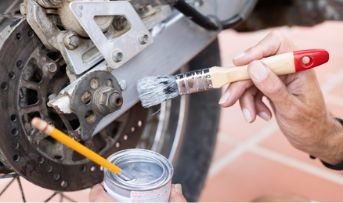
Here are the top things to consider before you buy a used motorcycle
The volatility of employment and predicting an incoming global economic recession are challenging. These make the consumers to save for tomorrow rather than spend on luxuries and comforts today. While motorcycles are cheaper than cars, they are by no means easy to afford with rising inflation, fuel costs, and other allied servicing costs.
This often leaves a majority of potential buyers to consider a second-hand motorcycle. While many have concerns about buying used motorcycles, by doing due diligence, inspecting the vehicle's mechanical condition, and purchasing two-wheeler insurance India, you can get your hands on a beneficial asset that can provide you with value for years to come!
Here is a checklist of bike parts and inspections to run through before purchasing a used motorcycle.
1. Engine:
The engine is the heart of any vehicle. To check the engine's condition, request the seller not to run the bike. A cold start is the best way to gauge the engine's usage and wear and tear. Look out for smoke from the exhaust pipe or any sputtering noises. Oil leaks are another sign to keep a watch for.
2. Drive chain and sprocket:
While these components may seem highly technical, they are readily identifiable parts in all two-wheelers. Simply put, it refers to the bike chain and the chain wheel, which facilitate gear engagement, acceleration, and power transmission.
Ideally, the chain should only have a slack of three-fourths of an inch to function appropriately and should not shift off the wheel when prodded. If the wheel displays signs of corrosion or wear and tear, it indicates a poorly-maintained bike. Ensure you list your dissatisfactions and factor them in when negotiating a fair price with the seller.
3. Tyres:
Well-maintained tyres are essential for a safe riding experience. Put the motorcycle on its centre stand and check its tread depths. Ensure that they are not too deep, which results in poor gripping and an excess risk of accidents. Cracks along the inner side or rubber toughening are signs of weathered tyres.
Also, check the wheel alignment by spinning the rear wheel. Any wobbling or creaking are indicators of weathered wheel bearings which require replacement. Ensure you check the tyres thoroughly to estimate the cost of repairs and acquisition of the used motorcycle.
4. Visible frame:
The motorcycle's frame can be challenging to inspect depending on the effort spent to spot the issues. Scratches and dents may be the signs of accidents that inevitably affect the overall functionality of the bike's components.
In case you purchase such bikes, even after buying two wheeler insurance India, you may not be able to claim the insurance amount due to the vehicle's poor condition before the accident.
5. Under-seat storage:
An often overlooked part, the under-seat storage locking mechanism, must be checked when purchasing the vehicle. Feel around the space underneath the seat to ensure that it is steady to fit your belongings.
6. Odometer:
Contrary to popular belief, it is easy to replace an odometer. Sellers of old vehicles can tamper with the odometer and try to sell off an old bike as a relatively new one. After inspecting the motorcycle as per the above checklist, check the odometer reading. Ensure that it is aligned with the condition of the vehicle.
While this is not a comprehensive list, it covers the essential things to check before purchasing a used motorcycle to protect yourself from misrepresentation and unfavourable deals. Additionally, since used bikes have a relatively unsafe perception, we recommend buying 2 wheeler insurance online to protect yourself from the risk of financial losses due to accidents.
Click HERE to buy a robust 2 wheeler insurance online for your motorcycle.
Disclaimer: The information provided above is for illustrative purposes only. To get more details, please refer to policy wordings and prospectus before purchasing a policy.