


General Insurance Blogs, Articles & Updates by - Magma Insurance
Have us call you
- RENEW YOUR POLICY
- BUY NEW POLICY

GENERAL INSURANCE BLOG
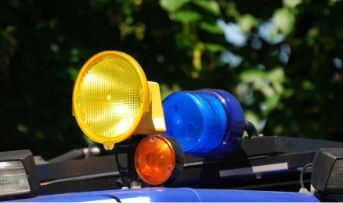
Understanding the use of reflectors for motor vehicles
Do you know that most vehicle accidents occur at night? As per research, it is found to be true that a large percentage of accidents occur after dark because of the reduced visibility on the roads. One of the primary factors contributing to this problem is that some people think light reflectors are unnecessary in the late evening and early morning.
While others do not show interest in installing reflectors, which can lead them into big trouble, in some countries, using reflectors in vehicles is also mandatory to receive complete motor insurance. Most countries have different rules stating the importance of installing reflective devices and rear marking tape to fulfill automotive standards.
What is a reflector for motor vehicles?
Reflective devices, although often confused with LED marker lights, operate differently. Rather than emitting light, reflectors shine the light back onto its source. Reflectors come in various colours and shapes, each designated for a specific location on a vehicle. Certain vehicles, like trailers, require specific reflector placement. Reflectors can be mounted by screwing or using a 3M adhesive strip. Retroreflectors are the types of reflectors that can be observed in traffic. These reflectors reflect light in the same direction from which it comes.
They are utilised to guarantee clear visibility in traffic. Safety reflectors aid in making vehicles visible while driving or parked on the street by reflecting light from the headlights of other vehicles. Reflectors prove to be extremely beneficial in areas without streetlights. They are installed near the vehicles' front and back (and on the sides), adjacent to the headlights and brake lights.
Is it necessary to install reflectors to receive motor insurance?
You do not have to install vehicle reflectors to receive motor insurance (for most cases). They are used to enhance visibility on the road to prevent accidents. However, it might be necessary for some countries or certain insurance companies. You might also get some extra discounts or incentives for doing so from some companies. Your insurance company might ask you to fit your vehicle's reflectors and other related components to increase safety.
Why is it important for motor vehicles to use reflectors?
The primary reason for installing reflectors in motor vehicles is to increase road safety, especially when parked on the roadside in the dark. You can prevent roadside accidents during nighttime and rough weather conditions by installing reflectors or glowing tape on the vehicles.
Reflectors possess several essential benefits that enhance road safety, including some benefits in motor insurance (as mentioned above). Initially, they boost the vehicle's visibility, making it visible to other drivers in low-light conditions. Furthermore, reflectors can prevent mishaps involving vehicles in such circumstances. By enhancing the vehicle's visibility, drivers can recognise its presence, providing adequate time to react and take necessary preventive measures.
Reflectors are a cost-effective way to increase the visibility of a vehicle. Unlike other pricey safety measures, such as blinking lights, reflectors are relatively inexpensive and easily accessible in many areas. They require a simple installation process, which can be achieved using premade affordable kits.
It is recommended to use reflectors as they can reduce road accidents to a great extent to ensure a safe driving experience. Equipping your motor vehicle with reflectors ensures it is visible during the dark. Thus, you can guarantee that your vehicle will stay safe, especially when parked on roadsides at night. In addition, they can also help you receive extra benefits with motor insurance.
Click HERE to buy the best motor insurance policy.
Disclaimer: The information provided above is for illustrative purposes only. To get more details, please refer to policy wordings and prospectus before purchasing a policy.

General insurance plans for high-risk activities: What you need to know
General insurance is any insurance other than life insurance. There are several types of general insurance, such as fire, marine, personal accident, travel insurance, etc. While defining their policy coverage, insurance companies often categorise a few activities as high-risk activities. They include car racing, bungee jumping, scuba diving, horse riding, construction work, mining, etc.
We usually don’t pay attention to insurance coverage when buying a new policy concerning such high-risk activities. We may get a costly treatment bill if we unknowingly engage in activities that make our insurance null and void. Let us know more about general insurance for high-risk activities.
1. Travel insurance
Travel insurance provides coverage against trip cancellation, baggage, and personal belonging protection, coverage for medical expenses, and accidental death. However, there are several high-risk activities that traditional travel insurance does not cover. They include risky adventure sports such as skydiving, hand-gliding, parachuting, cliff diving, mountain climbing and biking, scuba diving, racing, and base jumping. These activities may give us an adrenaline rush, but insurers usually do not cover them because of the high risk involved in conducting them.
Insurance companies may exclude coverage of accidents for the above high-risk activities and deny compensation when needed. However, a few insurance companies may provide due coverage for such accidents by adding a few riders, such as hazardous sports riders. They will look at several factors such as your age, frequency of indulging in such activity, level of experience, etc. They will calculate the premium accordingly, which will be higher than the regular policies. But it may be worth paying a higher premium for your policy in case you need it in the future.
2. Health insurance
Health insurance companies weigh the risk of providing you insurance coverage according to your occupation. Some occupations are considered highly risky, such as mining and construction. The probability of accidental death or injuries is very high in such professions. Hence, insurance companies may deny providing you coverage or may charge a high premium for issuing you a policy because of occupational hazards.
3. Workmen’s compensation insurance
Accidents at workplaces are inevitable and may result in bodily injuries, partial or permanent disability, or even the death of an employee. Some high-risk professions may cause dermatitis, respiratory illnesses, cancer, hearing or vision loss, stress, and mental disorders.
Employers have a legal liability to pay for the medical treatment expenses of their employees when workplace hazards have caused an illness or accident. Manufacturing, trading, and service setups can buy a workmen’s compensation policy that provides coverage against this liability. It covers the payment for legal compensation to the employees and their dependents when the employee suffers an injury or meets with an accident at the workplace.
Accidental death, permanent total disability, permanent partial disability, and temporary total disability are covered under such insurance policies. We can also buy several add-on covers such as medical extension, terrorism coverage, and subcontractor coverage.
General insurance plans are the solution to cover such risks. We should do thorough research about the general insurance plans that can provide us adequate coverage while we engage in any of the above high-risk activities and professions. Read all the terms and conditions properly, compare the various available options, and choose the general insurance plan that best suits your requirement.
Click HERE to browse different general insurance plans.
Disclaimer: The information provided above is for illustrative purposes only. To get more details, please refer to policy wordings and prospectus before purchasing a policy.

Is it safe to sleep in the car? And what measures to take for the safety and comfort
Getting ready for a long road trip? But the thought of continuous driving and exhaustion troubles you? During the long journey, you can pass out and nap briefly to reach your destination comfortably.
Taking a short nap demands you make a cozy bed inside your vehicle. However, it would help if you were sure your car offers enough comfort to sleep with the right air-conditioning system and ventilation.
As long as there are open windows, fresh oxygen will continue to enter the car, making it safe to sleep in a vehicle without the risk of feeling choked. If you're sleeping in a hotter or humid region, you should open a window just a little to let some cooler air in. Never leave the windows wide open while you sleep. Also, it is crucial to ensure that you halt at a well-lit place, preferably a parking area or in proximity to toll plazas on highways. Lock all your doors and keep the parking light on to signal passing vehicles.
While it may seem fascinating and unbelievable, comfort and safety are always concerns. This article presents some safety measures to take while planning to rest in the car.
1. Setting up the warm bed
The first thing is to convert your vehicle into a warm and cozy bed. One method to accomplish this is to flatten the front and back passenger seats and turn them into beds using a sleeping bag or a mattress. With this, you may sleep with your feet in the back of the vehicle and your head on the flattened front passenger seats. You can sleep across if you're tall.
2. Staying upright with a seatbelt
If you're a passenger and feel like sleeping in a moving car, then fasten your seatbelt and sleep in a straight posture for a better sleeping experience. If you're in the rear, it could be tempting to unbuckle your seatbelt and fall asleep on your side. Keep your seatbelt on and resist the urge to unbuckle it. In the same vein, don't let your seat recline. Keep it upright. In a collision, your seatbelt and airbags won't provide as much protection if you recline.
3. Turn off the engine
You might be tempted to leave the engine running on a chilly night to produce heat and keep you comfortable, but doing so could be harmful. The air will become contaminated with hazardous carbon monoxide if your car's engine is left running. Turning off the engine is very important for a safe sleeping experience.
4. Leave the window slightly open
People sleeping inside the car often face breathing problems due to a lack of ventilation. The solution is to keep the windows slightly open. Completely closing your window prevents airflow, which could make you feel uneasy the following morning.
5. Text your friends and family about your location
There are high chances of robbery or any misfortune you may face while sleeping in the car. When you plan to sleep in the car, send your location to your friends and family in an emergency. It will help them stay connected and receive updates.
Long road trips can result in fatigue and lethargy due to continuous driving. Above all, make sure your car has its insurance renewed. All these steps can help you enjoy a peaceful sleep in your car and allow your body to rest for a while before continuing the journey. After completing your sleep, you can do some basic body stretches and wash your face to feel fresher and more energetic. As we discussed, safety is paramount while driving a car, so it is advisable to invest in good car insurance. Also, a timely car insurance renewal can help avoid any claim rejection if there is any mishap in the car while you sleep.
Click HERE to get a car insurance renewal before leaving for a trip.
Disclaimer: The information provided above is for illustrative purposes only. To get more details, please refer to policy wordings and prospectus before purchasing a policy.
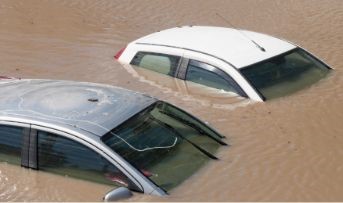
How to take care of your car during floods?
Floods are one example of a disastrous natural calamity that can severely harm people's homes, businesses, and vehicles. A flood can damage your car's body, electrical system, or engine. Debris, rocks, and other things may be present in floodwater that might scratch, dent, or even smash the windows of your car.
As a car owner, taking precautions to safeguard your vehicle from floods is imperative. Precautions should be taken before, during, and after a flood because repairing or replacing your vehicle can be expensive.
We'll provide detailed tips in this article on shielding your automobile from harm during floods. In addition to it, online car insurance can safeguard your vehicle from water damage and offer financial support in an accident.
Understanding how to protect your car during floods is crucial, whether you reside in a flood-prone area or are visiting one. These suggestions can help you keep your vehicle in good working order for years to come while protecting it against water damage.
1. Place your car in a secure area
Moving your car to higher ground, ideally in a secure area, is one of the most important things to do when a flood is about to occur. This can shield your automobile from floodwater and reduce the likelihood of severe damage. If possible, park your vehicle on a raised surface or in a garage. Avoid parking your car under a tree since the branches could fall and harm it.
2. Unplug the battery
Combining water and electricity can be fatal. To avoid electrical harm, it is important to disconnect your car's battery. If you need help disconnecting the battery, ask a qualified mechanic for help.
3. Lock the doors and windows of your car
Another crucial action you should take during a flood is to seal the windows and doors of your car. Close any cracks using duct tape to stop water from entering your automobile. Allow a tiny opening for air circulation to avoid a moisture build-up inside the vehicle.
4. Steer clear of flooded roads
Driving through floodwater is extremely risky and can seriously harm your vehicle. Your car's electrical system, gearbox, and engine can all be damaged by floodwater. Stay off flooded roads and, if feasible, take a different route.
5. Verify the air filter in your car
Check your car's air filter if you're travelling through flooded areas. Debris can clog your air filter and stop airflow to your engine. Your engine may slow down due to a blocked air filter and even sustain lasting harm.
6. Dry the interior of your car
It's crucial to dry your car's interior as quickly as possible if it is exposed to floodwater. After removing any standing water with a wet/dry vacuum, remove any moisture with a dehumidifier. Mould and mildew can develop due to moisture, which could damage the interior.
7. Have an expert inspect your vehicle
Having your car checked up by a qualified mechanic after a flood is essential. They can examine your car's bodywork, electrical system, and engine for any damage. Any issues should be discovered immediately to stop them from worsening.
In conclusion, caring for your car during floods is essential to prevent damage and keep it safe. Park your vehicle in a secure location, disconnect the battery, seal your car doors and windows, avoid driving through floodwater, check your car's air filter, dry your car's interior, inspect your vehicle with a professional, and consider online car insurance. These tips can help protect your vehicle from flood damage and keep it running smoothly for years.
Finally, it's crucial to have car insurance, especially during natural disasters like floods. Online car insurance can help you protect your car from damage and provide financial assistance in case of any mishaps. Make sure to choose an insurance policy that covers flood damage to your vehicle.
Click HERE to learn more about online car insurance and its advantages.
Disclaimer: The information provided above is for illustrative purposes only. To get more details, please refer to policy wordings and prospectus before purchasing a policy.