


General Insurance Blogs, Articles & Updates by - Magma Insurance
Have us call you
- RENEW YOUR POLICY
- BUY NEW POLICY

GENERAL INSURANCE BLOG

Are extreme sports covered under personal accident insurance
Insurance is a financial product like no other. Upon payment of a meagre premium amount, it protects the insured person or asset against a contingent event involving a risk to its present or future value. While general, health and life insurance are relatively common products with a higher penetration rate in India, personal accident insurance online lags far behind.
While this may be attributed to the lack of awareness, it is straightforward why the product is required. Accidents are uncertainties that can occur in any setting, whether travelling, commuting, or at work. Since you cannot eliminate the risk of accidents, purchasing personal accident insurance online is essential to protect yourself against hospitalisation costs and other expenses resulting from an accident.
The limited awareness regarding personal accident insurance is also only partially reliable due to the misconceptions surrounding the product. While its coverage to the extent of travel accidents is commonly known, there are several questions surrounding its scope of coverage for adventure sports.
Find out whether adventure sports are covered by personal accident insurance online.
Defining adventure sports.
Adventure sports are easy to define in lay terms but are described differently by every insurer. It includes sports that involve contact, extreme speed, technical gear, and extremely high levels of risk. As the name states, these sports have a considerably high-risk grade, making most insurers hesitant to cover them. Common extreme sports include skydiving, skiing, rappelling, mountaineering, etc.
Generally, irrespective of the type of insurance- general or non-general, most insurers do not offer coverage for adventure sports due to the intensity of the activities.
Why should you check for adventure sports inclusion before participating?
The thrill of adventure is second to none, and the addition of multiple uncontrollable factors only adds to the experience for those who seek an adrenaline rush. However, one must always ensure to protect themself from potential accidents before participating in such sports for the following reasons –
1. Hospitalisation coverage:
With medical inflation on the rise, covering any possible medical expenses, including those arising from adventure sports, is prudent. Considering the high-risk profile of these sports, it is always better to be ready for the worst and prepare a financial net that shoulders the burden of such costs.
2. Allied perks:
Personal accident insurance online offers related allowances such as a daily cash allowance, transportation, and more. This reduces the strain on your finances during your period of hospitalisation or any inactivity as an earning member.
3. Mental peace:
The most significant benefit of inclusion is the peace of mind to engage in activities of your choice. You don’t have to worry about the consequences due to the existence of a safety net for your finances.
Does personal accident insurance online cover extreme sports?
At face value, one may assume that personal accident insurance online would offer extreme sports coverage. Most insurers in India presently do not include accidents caused while engaging in such sports within the scope of the policy.
However, if you want coverage against such risks, some insurance companies offer comprehensive accidental coverage across all terrains and destinations. It may take additional effort to discover such insurers amid all those that exclude such accidents. Here are a few factors you should consider before purchasing a policy from such a provider:
1. The extent of sports covered- land, air, water, etc.
2. Provision of immediate medical assistance
3. Customisation of a plan as per your adventure needs
4. Active policy period
Despite the exclusion of extreme sports by most insurers, personal accident insurance online is an essential requirement that provides financial assistance when you are only partially covered by your term or health insurance policy alone. We encourage you to consider purchasing personal accident insurance online to cover the other form of accidents and your risk exposure.
Click HERE to buy personal accident insurance online.
Disclaimer: The information provided above is for illustrative purposes only. To get more details, please refer to policy wordings and prospectus before purchasing a policy.
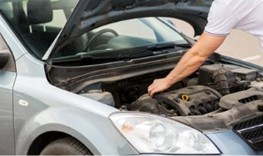
What's under a car’s bonnet? A basic guide for new drivers
Driving can be an overwhelming experience, at least when learning the basics of safe driving. While not difficult, it is a task that requires the presence of mind, effective judgement, and, most important of all, confidence. The more you know and the further you drive, the better driver you become.
Sitting in the driver's seat can be confusing initially, as various components are essential to the smooth functioning of a car, and it is impossible to know their importance and how to operate them instantly. While no manual can replace regular practice, you must brush up on the car's know-how to become a confident driver. Having complete knowledge of car features makes you enjoy driving your vehicle.
One such important section is the bonnet of your car. Located at the front of the car, lifting your bonnet will open up a whole new world. Most people need to learn about the components of a bonnet and the functioning of each part. While it may seem complicated, it is advised to know the basics of the workings of the machinery. Since breakdowns don't occur post-announcement, awareness of its working can resolve the breaking of your machinery.
You should also check under your bonnet regularly to avoid problems later. Also, you should buy car insurance in advance to avoid hassles later. Review the car insurance price in India before you invest in any.
For now, let's look at the basics of what lies under your bonnet.
1. Engine:
The engine is the most critical component located under your bonnet. The extensive working of the engine can be complicated. You don’t need to understand the work in detail. You just require to have a basic knowledge of the same. Here, the fuel consumed by your car is turned into power to run the vehicle. You should look for signs of wear and tear here. A professional inspection may help identify the same and point out any cause for concern. Frequently check for the level of different fluids like engine oil, coolant, etc., especially before planning a long trip.
2. Battery:
The batteries are surrounded by a protective shield and are easy to spot under your bonnet. The rectangular battery box has terminals on both ends, which are differently coloured. Red indicates a positive terminal, while black indicates a negative one.
3. Alternator:
Alternators are responsible for powering up the batteries, which keeps the car up and running. If it breaks down, it can lead to significant problems, including affecting the engine's functioning. The alternators resemble a wheel with slits on the side.
4. Radiator:
This is an essential component of the car that helps maintain the ideal temperature of the car engine. It regulates the temperature extensively. You should not interfere with the radiator much as it can be highly hazardous.
5. Engine coolant:
This fluid is responsible for keeping the engine's temperature in check and preventing it from overheating. You should check the fluid level regularly. It should lie between the minimum and maximum levels. You can easily spot the coolant tank upon opening the bonnet. The coolant should combine water and antifreeze.
Other important components that lie underneath include brake fluid, dipsticks, oil, crankshaft, belts, and cylinders. They have a distinct functioning of their own. You need to know the basics of the major components of your car's bonnet before you start driving a car. It always comes in handy, mainly when your car breaks down midway. You should also have suitable car insurance that protects it financially. However, before buying, you should know the car insurance price in India to understand various options and invest in the best one.
Click HERE to buy the best car insurance to protect your valuable asset.
Disclaimer: The information provided above is for illustrative purposes only. To get more details, please refer to policy wordings and prospectus before purchasing a policy.

What's making your car insurance premium costlier
Most of us have invested financially and emotionally in our automobiles, making them more than just a convenience. While cars are undoubtedly a long-term asset, the associated expenses can often amount to a large sum that many may hesitate to bear.
Apart from the regular fuel and maintenance, another necessary cost is your car insurance. Despite being mandated, many find loopholes to escape the law due to the rising cost of premiums annually. Instead of evading the process, find out why your car insurance premium is rising and whether you can manage it.
1. Vehicle inspection:
Your insurer may inspect the vehicle if there is a considerable lag between the policy expiry date and the intended policy renewal date, which may result in a higher insurance premium. You can prevent such costs by renewing your insurance on time as per the due date.
2. Brand and model:
The price of the car relies on its model, due to which different models have different premiums. A vehicle with a lower Insured Declared Value (IDV) will have a lower premium than one with a high IDV.
3. Advantage of NCB:
No-claim bonus is the primary element of a car insurance policy that lowers the premium and promotes careful driving. It rewards car owners for not filing a claim with a discount of up to 20% while renewing the policy. By applying the claims, you risk losing this advantage and could pay a more significant premium than necessary.
4. Driving habits:
Defaulting on laws, failing to use a seatbelt, etc., could get you into difficulty with law enforcement and your insurance company. If any traffic violation is made in your name, your premium will likely go up.
5. Purchasing insurance from the dealer in a hurry:
Explore various car insurance options and evaluate the offering, premium, and coverage to find the best option. A hastily purchased car insurance is a bigger expense than an asset. Additionally, dealers have a restricted area of competence, offer fewer options, and seek direct profits from the sale, so they may offer a policy that is more expensive than you need.
6. Claim history:
You may be a risky policyholder if you have a history of making frequent claims. Your profile might be deemed dangerous if your claim is denied due to factors like illegal vehicle use or involvement in filing fake insurance claims. As a result, you may be charged a more significant premium since the higher the risk, the higher the premium.
7. Vehicle and driver age:
The older the car and the younger the driver, the higher the premium. An older vehicle is more prone to wear and tear, and a novice or inexperienced driver needs to gain the knowledge of an experienced driver. You can lower your rate by choosing a zero Depreciation cover for your insurance plan.
8. Lack of awareness of deductible's effects:
An expense that the owner of the car bears when filing a claim is deductible or voluntary deduction. Making a proper deductible decision is crucial. If you are a seasoned driver who doesn't need to file claims frequently, you can select a greater deductible to lower your cost. However, if you leave it at zero, you will receive your entire claim payment but will have to pay a higher premium.
9. Locality analysis:
The insurer may raise the cost of insuring cars from a particular location if data indicates, for instance, that there has been a significant surge in flooding or car theft in your area.
A closer inspection is all it takes to identify why your car insurance premium increased, even if it may appear unclear initially. Some factors are uncontrollable, while others can be managed by a potential policyholder who has done his research. We encourage readers to check and compare car insurance prices online before purchasing a policy to avail themselves of the best offer.
Click HERE to buy reliable car insurance in India.
Disclaimer: The information provided above is for illustrative purposes only. To get more details, please refer to policy wordings and prospectus before purchasing a policy.
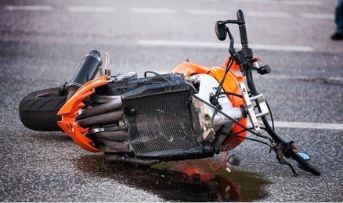
What is constructive total loss in two-wheeler insurance
Whether you own a two-wheeler or a car, you should always ensure that you know everything about its maintenance and insurance. Getting insurance for your vehicle is of utmost importance. It protects your vehicle from severe damages by giving you compensation and solves third-party disputes.
However, just getting insurance for your vehicle is not enough. You also need to check out the various additional services offered by the insurance. This way, you can choose the most comprehensive insurance for your 2 wheeler. You must also inquire about all the essential terms relevant to your insurance. One such term is a constructive total loss. Although the term sounds complicated, it is not.
This article will help you to understand various aspects of a constructive total loss.
What is a constructive total loss?
You will likely file a claim for your 2 wheeler insurance only when your vehicle has suffered severe damages. Once you have filed a claim, the insurance company will inspect all the damages and reimburse the amount accordingly. Either you will get cashless compensation or money for the repairs. The damage is assessed well, and only compensation for the damages is provided.
If the vehicle is in dire need of minor repairs or servicing, the insurance company will reimburse that. It can also refund the amount for the replacement of bike parts. However, reimbursement only occurs after all the deductibles are assessed carefully. No matter the damage's severity, you will only get compensation up to the Insured Declared Value or IDV. You will not get any claim money that exceeds the IDV value.
There is also a major catch here. For instance, your two-wheeler undergoes irreversible damage. In such a case, the bike will be beyond repair. The insurance company can then declare it as a total loss. In other words, if the repair cost for the vehicle far exceeds its value, it results in total loss.
It is said that when the repair cost is more than 75% of the IDV, it is impossible to reimburse it. The constructive total loss takes place here.
Let's assume that your two-wheeler gets stolen. Then what will happen? In such a case, your insurance company will reimburse you for the IDV of your vehicle. The claim for theft of your bike will be treated as a total loss claim. The reimbursement amount will be sans the deductibles and depreciation.
How do you apply for a constructive total loss claim?
Now that you are familiar with constructive total loss let's look at the various steps to file a claim. They are:
● Go to the official website of your insurance company
● Look for the claims process tab or page
● You will see blanks to fill in your information
● Provide all the necessary information carefully
● After that is done, verify the self-inspection of your bike through the link sent to your mobile number
● A surveyor or inspector may be sent to get your vehicle inspected. Cooperate with them
● Once everything is done, you can submit all the required documents and forms
These easy steps can get you a total claim from the comfort of your home. You need to keep all these things in mind before you file a claim for your 2 wheeler insurance under constructive total loss. Once you give the correct information and abide by the guidelines, you can access the claim amount.
Click HERE to buy 2 wheeler insurance to protect your motorcycle from unexpected damages.
Disclaimer: The information provided above is for illustrative purposes only. To get more details, please refer to policy wordings and prospectus before purchasing a policy.