


General Insurance Blogs, Articles & Updates by - Magma Insurance
Have us call you
- RENEW YOUR POLICY
- BUY NEW POLICY

GENERAL INSURANCE BLOG

Practise these habits to improve your cognitive skills
We have all heard the famous proverb, "a sound mind lives in a sound body". Both are integral parts that should be taken care of to lead a healthy life. In this blog, we will discuss some methods to sharpen your brain and polish your cognitive skills.
You can call your brain the control centre of your system since it processes all you see, hear, touch and think. Your brain perceives different sensations, sounds, images, etc., and conveys the signal to your whole body, signalling it to respond accordingly. Incredibly, this process happens within a matter of seconds.
It is crucial to take extra care of your brain's health and mental wellbeing. Dietary and lifestyle changes help combat cognitive-related issues such as mental health problems, anxiety and depression and help in enhancing creativity.
Here's how you can sharpen your cognitive abilities.
1. Relieve stress:
Develop a habit of taking walks daily and breathing in the fresh air. Other relaxing activities can include getting a massage, reading, meditation, etc. These activities help release the tension and stress from your body and lower your cortisol levels which tend to affect the memory sections of your brain.
2. Sleep well:
Sleeping at least eight hours a day is crucial to maintaining a sound mind. Quality sleep helps your mind commit things to memory and improve your brain's retention capacity.
3. Play:
Include games like crossword, sudoku, and puzzles in your daily schedule. These games intensify the usage of brain functions, thus helping in improving your reasoning and retention abilities.
4. Doodling:
Recent research has proven that doodling and colouring activate your brain's reasoning and problem-solving region. These activities enhance the blood supply to the prefrontal cortex and strengthen your mind's analytical and attention capabilities.
5. Dark chocolate:
Dark chocolate has been proven good for your physical and mental health. Studies have found that it contains flavanol, a substance that boosts your brain's memory retention, functioning, and processing abilities.
6. Reduce sugar consumption:
Consumption of carbohydrates and a sugar-rich diet can slow down your brain as your body takes time and energy to break down these substances. Consuming too much sugar also leads to depression and heart diseases, thus risking your physical and mental health.
7. Exercise:
Research has shown that lifting weights help in improving cognitive abilities. People who lift weights tend to increase their spatial memory. It helps in memorising the environments one is in at any given moment. Spatial memory enables you to remember layouts of a room or how you arrange things in your space. People who achieve their physical goals by walking strengthen their verbal memory.
These are some techniques that can help improve your cognitive skills. Apart from the above tips, you may even practise mindfulness by indulging yourself in daily yoga and meditation sessions. Yoga and meditation These healthy practices can keep your brain active and impact your productivity.
A wise option would be to protect your and your loved ones' health against unprecedented circumstances. To stay monetarily stress-free in health emergencies, explore multiple options and purchase the best health insurance policy in India.
Click HERE to know more about how you can buy the best health insurance policy in India.
Disclaimer: The information provided above is for illustrative purposes only. To get more details, please refer to policy wordings and prospectus before purchasing a policy.

Tips for finding a short circuit in your car's system
An automobile comprises interconnected mechanical elements and complicated electrical wiring technologies. While we may enjoy contemporary comforts such as stereos, interior lighting, and even hologram speedometer readings as long as the electrical systems function correctly, all systems and components come to a standstill on account of short circuits.
A short circuit is a wiring fault because of a loose or defective wire that shunts electricity between courses before it hits its target. Although the signs of a short circuit are similar to those of an open circuit, the diagnosis is somewhat different. A short circuit may happen in various ways, and it's not always straightforward to locate and fix.
However, to understand how to discover a short circuit, we must first grasp how a perfectly working circuit operates. So here are a few tips for locating a short circuit in your car.
1. Make a map of your vehicle's circuit:
Remove the wire harness from your vehicle and turn to your Early Warning Device (EWD) to start diagnosing the circuit. Identify the various cables and circuits you're inspecting so you know where to go next. Wire colours should match the colours specified in the EWD. However, this may differ based on where you obtained your EWD.
2. Examine any exposed wiring:
One may also save time and effort by inspecting any exposed wires first. You may find a damaged or chafed wire that you can immediately begin mending. However, since most automobiles' wiring is tightly wrapped, you'll almost certainly need to try a few boards to figure out where the issue is.
3. Inspect all wires for faults:
If you feel a specific wire causes the problem, you may detach its connection at either the sensing or loading ends. Check your test indicator to see if it fades out or your multimeter to check if it stops buzzing. Next, you may remove your car's panelling and inspect the wires to see if you can pinpoint the problem.
4. Testing the 5V circuit:
In case the short is a 5-volt circuit, the Engine Control Module utilises it to regulate the gearbox and engine. You may unplug the battery first, then the ECM. It'll also enable you to identify electrical oscillations and approximately pinpoint the location of the short circuit.
5. One-by-one assess all the fuses:
Check the fuses and look for any easy, quick short circuits. Take a fuse at random and attach your testing indicator to its socket terminals. If a current is detected, the test LED will light up. If the test light does not ignite, it may suggest that electricity is not flowing to that fuse. This indicates that the damaged wire is along that route.
Knowing how to detect a short circuit may save you a lot of time and money while ensuring that your car is safe and perfectly operational. While it might be time-consuming, utilising the approach mentioned above should provide you with the knowledge you need to detect and fix any short circuit in your vehicle.
However, if you still face difficulty identifying the origin of the short circuit, visit the nearest garage. It is ideal to have your vehicle backed by insurance for even minor expenses like these. Search for the best car insurance in India and get yours right away to cover your vehicle against damages caused due to unexpected short circuits.
Find the best car insurance India for your vehicle HERE .
Disclaimer: The information provided above is for illustrative purposes only. To get more details, please refer to policy wordings and prospectus before purchasing a policy.
Top car care tips during the summer season
Be it the summer season, winters, or heavy monsoon, you need to take care of a few things to ensure your car's proper functioning and longevity. While external servicing and maintenance of your car are crucial, some particular factors ensure that your vehicle is up and running.
The summer season brings in good weather. But the drastic temperature rise can harm your car. In this space, we will discuss tips for caring for your vehicle during the summer season to keep it in good condition.
1. Cooling your engine:
Engines getting heated due to high temperatures are one of the significant causes of car breakdowns in summers. You can cool off the engine by using cooling systems in your car as recommended by the manufacturer.
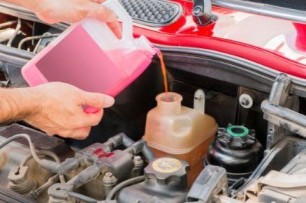
2. Coolant refill:
To keep your cooling system in excellent working condition, make sure to refill the coolant according to the overflow status. According to most manufacturers, the cooling liquid mixture usually contains a fifty-fifty water to coolant ratio.
3. Inspect your car:
Some parts of your car are susceptible to heat damage and may deteriorate in high temperatures. Examine your vehicle, and replace any wear and tear or other damages as soon as possible. Also, keep an eye on the coolant leakages due to fuel expansion in summers.
4. Tyres:
Take a close look at your tyres. If they appear to be more inflated than required, get them checked. It's necessary to regularly monitor the air pressure levels in your tyres during the summers.
Failing to do so might risk a tyre blowout which can be a considerable safety risk, especially if you're on the road, examine your car tyres for signs of wear and tear and replace them if you find any damages.
5. Corrosion:
Once your vehicle reaches a specific limit, it is recommended to check your ignition system. The electrodes might corrode or wear out, so replacing the spark plugs is the solution to combat any ignition issues.
6. Air conditioning:
Examine the air conditioning of your car, especially in the summer season. Any defects leading to the disruption of the air conditioner can cause massive discomfort during your travels in such rising temperatures. Also, ensure that you inspect the compressor clutch while checking the air conditioning system.
7. Wipers:
The wipers of your car play an integral role while you're driving. They clear the windshield, making it easier to see while you drive. Replacing the wipers for the summer season with new ones would prepare you for the storms or rainy downpours midseason.
These were a few expert car care tips you will need to take care of your vehicle during the summer season. Apart from these tips, consider protecting your car against unprecedented circumstances. Emergencies like road accidents or damages to different parts of your vehicle can lead to heavy monetary expenses. To avoid paying a massive sum of money in such unforeseeable situations, you can explore various options and purchase car insurance online in India.
Click HERE to know more about how you can get car insurance online in India.
Disclaimer: The information provided above is for illustrative purposes only. To get more details, please refer to policy wordings and prospectus before purchasing a policy.

These are the six best destinations to enjoy paragliding
Every one of us has once had a dream of flying. As kids, we have looked at birds and planes and wished for the ability to fly. Today, we have various ways to live this dream. Different adventure sports like sky diving, hang gliding, and paragliding have created opportunities where people can enjoy a safe yet thrilling experience of being in the air.
India proudly displays unique landforms, making it one of the most enjoyable places for such activities. Paragliders have referred to paragliding as one the most unforgettable experiences of their lives. Being up in the air and away from the ground is sure to be one of the most humbling experiences of your life.
Today we will look at a few places in India that offer this experience.
1. Bir Billing, Himachal Pradesh:
Situated near Kangra Valley, Bir is a beautiful village in Himachal Pradesh. It has over 11 paragliding options, giving it the name of the 'Paragliding capital of India'. Bir promises you the spectacular views of lush green mountains and the beautiful sunsets that paint the sky in all shades of orange.
2. Panchgani, Maharashtra:
Panchgani is a small hill station in Maharashtra that offers training as well as flying for all paragliding enthusiasts. The landscapes of Bilar, Khinger, and Tapola are arguably one of the best locations for flying. The best time to visit Panchgani is between November and February.
3. Arambol, Goa:
Goa is famous for its beaches, food, and party life. But Arambol promises priceless views of the Arabian Sea and beautiful arrays of palm trees. Choose the evenings for your paragliding adventure to watch the sunset while you sail over the blue waters reflecting its golden shine.
4. Nandi Hills, Karnataka:
Situated close to Bangalore, Nandi is the perfect place for adrenaline junkies, as many tourists choose it for camping, trekking, and paragliding. People here are mostly seen enjoying paragliding in the day and camping at night.
5. Gangtok, Sikkim:
The land of magic, monasteries, and mountains, Gangtok is a must-visit for anyone who wants to combine adventure and spirituality on their trip. Paragliding in Gangtok promises you a bird's eye view of the unexplored places in Sikkim and a beautiful view of the mighty Kanchenjunga.
6. Shillong, Meghalaya:
The Scotland of the east, Shillong, has a wide variety of flora and fauna. Paragliding here is sure to be a cathartic experience. Shillong is a canvas of dense, lush forests and beautiful waterfalls. Visit during the summer months to ensure the magnificent view that this palace has to offer.
These are a few of the best places in India that offer you a safe and fun paragliding experience. Over the years, adventure sports have become more prevalent in India. While well-trained and licensed professionals are always there to guide you through the process, invest a fair amount of time researching the best paragliders in the area to ensure maximum safety. Add to this a personal accident insurance policy to help you evade any expense that you might incur in case of an accident.
Click HERE to know more about personal accident insurance policy.
Disclaimer: The information provided above is for illustrative purposes only. To get more details, please refer to policy wordings and prospectus before purchasing a policy.