


General Insurance Blogs, Articles & Updates by - Magma Insurance
Have us call you
- RENEW YOUR POLICY
- BUY NEW POLICY

GENERAL INSURANCE BLOG

Let's understand the merits and demerits of 4-wheel drive cars
Cars are fantastic companions for commutation, whether you're cruising along highways, navigating busy roads, or going off-roading. On the other hand, the technology-driven components of the cars determine their performance in various conditions.
The variety of car features has significantly increased in recent times, and you now have more choices when selecting your next car than ever before. One such option is a four-wheel drive (4WD) car based on the drivetrain system you want to use.
A 4WD offers to maximise the effective usage of the vehicle on rough roads and rocky terrains. It is an exciting concept that has been introduced in the automobile sector but requires good knowledge to utilise it to its best potential.
You need to understand the merits and demerits of 4WD to make the right choice before buying one.
Advantages of 4WD:
1. A widespread myth is that you must always drive your car in 4WD mode. You have the option of switching between 4WD and 2WD at any time. Modern four-wheel-drive automobiles have a button that activates or disengages all four wheels. So, if you don't require all four wheels to work simultaneously, you may drive around with the 2WD system.
2. In hazardous driving situations such as snow, ice, mountain regions, and other scenarios where staying in control is challenging, 4WD enhances traction and control by engaging both sets of wheels.
3. The improved traction gets combined with the engine's enhanced power. It provides the extra boost 4WD vehicles require to climb over obstacles and up steep inclines. It is ideal for off-roading and mountainous terrain.
Disadvantages of 4WD:
1. The most significant downside of 4WD is the increased expense of acquisition, and maintenance. The extra equipment (transfer case, differentials, etc.) increases the vehicle's complexity and weight, increasing its original market value.
2. Furthermore, the additional weight of a 4WD system and the additional power generated result in lower fuel economy than 2WD systems. Driving your automobile with all four wheels producing power will burn more fuel.
3. Drivers that employ 4WD may grow overconfident, leading to more situations where they become stuck. Excessive confidence can even lead to dangerous accidents if the driver loses control over the vehicle and fails to manage the power that is being generated.
4. The 4WD system connects the front and back driveshafts, ensuring that all four wheels revolve at the same speed. It makes it harder to turn the car because the wheels must move at different rates to corner successfully. The inner wheel rotates slower than the outer wheel, which must traverse a greater distance in the same amount of time. As a result, the outer wheel will rotate quicker. You will damage the transfer case, gears, and drive shafts if you turn the car with 4WD activated. Hence, it's best to use 4WD only for off-roading.
A 4WD is a fantastic investment if you enjoy driving off-road or if you have to deal with difficult driving conditions regularly. But don't assume you need 4WD to get to and from work.
Whether it is a 2WD or 4WD, securing your car from damages is paramount. Accidents are unpredictable, but safety can be defined beforehand. Buy car insurance policy online to stay financially shielded and protect your car to get the best returns on your investment.
Click HERE to buy car insurance policy online.
Disclaimer: The information provided above is for illustrative purposes only. To get more details, please refer to policy wordings and prospectus before purchasing a policy.
Let's understand why bikes do not have diesel engines
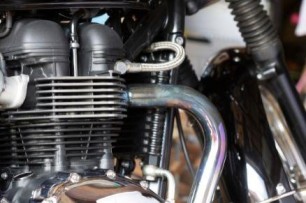
Diesel engines are commonly used in the automobile sector. Cars, trucks and other vehicles rely heavily on them. On the other hand, diesel-powered bikes are rarely seen. Have you ever wondered why? It's not like the industry hasn't seen diesel-powered motorcycles before. In India, only one diesel-powered bike has been introduced. But that is all.
If bikes can run on gas and petrol, why not diesel? With the petrol prices touching new highs every month, it only makes sense to have bikes with a diesel engine, right?
Although the idea is not bizarre, it isn't easy to execute. Keep reading to know why manufacturers do not use diesel engines in bikes. We have mentioned five reasons that will help you understand better.
1. Compression ratio:
The compression ratio of a diesel engine is 24:1, which is higher than a petrol engine's compression ratio of 11:1. The diesel engine must be bigger and heavier to accommodate such a high compression ratio. As a result, it is heavier than a gasoline engine, making it unsuitable for a small vehicle such as a motorbike.
The diesel-powered engine creates greater vibration and noise than the petrol-powered engine due to the higher compression ratio. A bike will not be able to sustain such high vibrations and noise levels.
2. Heating issues:
As compared to petrol engines, diesel-powered engines generate more heat. When diesel burns, it creates a lot of heat, harming the cylinder walls and other engine components like pistons and valves.
To lower the heat, manufacturers will need a larger surface area and a more effective cooling system which is inconvenient. On the other hand, petrol engines produce less energy per gallon. As a result, they stay significantly cooler and are less prone to harm the engine.
3. Price and Size:
The addition of a turbo compressor to push extra air into the cylinder increases the expense and size of a diesel engine. Moreover, injector technology is utilised to pump fuel into the combustion chamber, which is more costly than petrol engine spark plug technology.
A diesel engine is much larger than a petrol engine, and it requires a lot of force to start, making it unsuitable for motorcycles.
4. Greater torque but low speed:
Diesel engines generate greater torque. However, they have lower revolutions per minute (RPM) when compared to a petrol engine. Diesel isn't regarded as an ideal fuel since bikers' high-performance bikes demand greater RPMs.
5. Not so eco-friendly:
The amount of carbon dioxide produced by a diesel engine is around 13% more per gallon than a petrol-powered engine. Its usage is harmful to the environment, observing the average number of motorcycles used nationwide. This figure can be a significant threat to India's climate.
There you have it, all the key reasons why manufacturers won't produce diesel-powered bikes. Even if we look from a biker's perspective, no biker would want a bulky bike with more cons than pros. Although if the technology evolves in the future, we might have a diesel engine revolution. Until then, stick to your petrol-powered bike and insure it with the best two wheeler insurance in India. You can browse multiple options and choose one with the best premium and benefits.
Click HERE to buy the best two wheeler insurance in India.
Disclaimer: The information provided above is for illustrative purposes only. To get more details, please refer to policy wordings and prospectus before purchasing a policy.
How to improve the fuel efficiency of your car
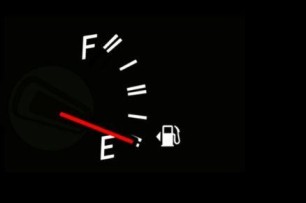
No matter how much we stress about the rising fuel prices, there isn't much we can do about them. Then how do we ensure we use our vehicle efficiently and stay stress-free about the condition of our car? Moreover, how do we compensate for the fuel prices we pay?
Do you know regular maintenance of your vehicle can save you up to thirty per cent of fuel consumption? And yet, a lot of car owners slack off on taking care of their vehicles. Some don't go for regular servicing, and others use cheap spare parts and end up damaging their car.
This blog is your guide on improving the fuel efficiency of your car. We will discuss various ways to attain maximum efficiency without widening the hole in your pocket created by the increasing petrol and diesel prices.
1. Avoid leaving the vehicle idle:
Leaving your vehicle in an idle state at traffic signals consumes almost a gallon of fuel and increases your carbon footprint by releasing unnecessary carbon dioxide into the air. Instead of leaving your car in an idle state, restart as per your necessity. This saves a lot of fuel and minimises carbon dioxide emissions into the atmosphere.
2. Warm-up:
Slowly and effectively heating your car's engine is a better choice than revving it. Unnecessary pressure will decrease the efficiency of your engine, and it will consume more fuel for power generation. After starting your vehicle, wait for thirty seconds to allow the engine to warm up properly at its own pace.
3. Say no to heavy braking:
Reduce the use of throttle and avoid applying unnecessary heavy brakes. This saves your vehicle from the possibility of wear and tear and decreases fuel wastage by almost thirty per cent, thus improving your car's fuel efficiency.
4. Don't rev your car:
Revving your engine causes wastage of fuel. It flushes down all the oil from the cylinder walls. The absence of oil could worsen the next time you start up your car. This will put pressure on the engine and result in excessive fuel consumption.
5. Multiple errands:
Planning your trip according to your errands can efficiently help you utilise the fuel. You can combine and run multiple errands and reduce the number of trips.
6. Alignment:
Check the alignment of the chassis parts and suspension. If the wheels are bent, or if there are broken springs, the drivetrain drag of your car will increase, resulting in increased fuel consumption. Defective parts and misalignment can also put your safety in danger and amplify the risks of accidents.
That's a wrap on how to improve your car's fuel efficiency. Using these tips, you can ensure maximum and optimum utilisation of the petrol and diesel you put in your vehicle. While fuel efficiency is an essential aspect of owning a car, ensuring your car's security is equally important. Invest in car insurance and protect your vehicle from any unfortunate incidents. To purchase insurance, explore the market, and browse through multiple deals to ensure that you get the best car insurance price in India.
Click HERE to know more about how you can get the best car insurance price in India.
Disclaimer: The information provided above is for illustrative purposes only. To get more details, please refer to policy wordings and prospectus before purchasing a policy.
Know more about the total loss car insurance claim process
Car insurance might include many technical languages that can be difficult to grasp or make sense of. One such concept that might perplex people is "total loss." If you are involved in an unfortunate event where your vehicle sustains significant damage, this is referred to as ‘Total Loss’ in insurance jargon.
This is a tragic situation, and you must follow particular procedures to submit an insurance claim. In case of a total loss, the cost of restoring and repairing your car exceeds 75% of the insured declared value (IDV). Let us learn more about this term, what it means, and some other areas of motor insurance linked to it.
Total loss in car insurance:
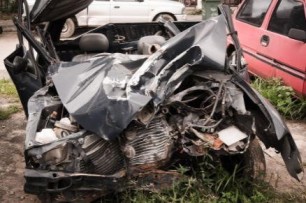
When the calculated cost of repairing a damaged vehicle exceeds the car's actual cash worth, the automobile is considered a "total loss." Such a claim differs from other small claims since it requires more work. When an automobile is deemed a total loss by its insurance company, it is referred to as a totalled car.
Total loss can be caused by two means:
• Car getting stolen
• Car getting wrecked beyond repair in an accident
Furthermore, a constructive total loss occurs when the anticipated cost to repair or replace the insured vehicle exceeds its real market worth. Constructive total loss is so severe that it is cheaper and wiser to purchase a new car instead. This is mainly because there is little likelihood of returning the vehicle to its previous condition.
What to do if you suffer a total loss?
You have the option of selling the remaining pieces of your wrecked vehicle to a scrap dealer. Some components are recyclable, while others are not. The scrap trader will separate these pieces and recycle them for other purposes.
The next important step is to cancel your RC certificate at your closest RTO office. It is your responsibility to comply within a 14-day grace time to submit a notification to the RTO office. When you cancel your registration, you provide a guarantee that the same registration will not go to anyone else.
The next move would be to submit a Total Loss claim. When you submit a claim, the insurance provider is only obligated to pay the IDV. If you already have the ‘Return to Invoice add-on’ on your coverage, the motor insurance provider is obligated to pay the entire amount of the car invoice. This add-on allows you to acquire the total value of the vehicle rather than just the insured declared value.
For those who are newly purchasing car insurance, do not sleep on the Return to Invoice add-on. This is something that will ultimately work in your favour. Things are always uncertain when you're on the road, so be responsible and do not travel without car insurance. Take serious responsibility for protecting your possessions and make wise investments in security that will reap you good benefits at the hour of need. Watch out for your car insurance renewal dates and always renew them beforehand.
To get a car insurance renewal, click HERE .
Disclaimer: The information provided above is for illustrative purposes only. To get more details, please refer to policy wordings and prospectus before purchasing a policy.
Hi there! 👋 Need help with a policy, claim, or renewal? Chat with us instantly on WhatsApp.
Start chat →