


General Insurance Blogs, Articles & Updates by - Magma Insurance
Have us call you
- RENEW YOUR POLICY
- BUY NEW POLICY

GENERAL INSURANCE BLOG
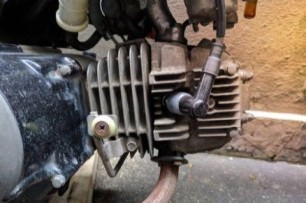
2-stroke or 4-stroke bike: Which is better for you
A wide range of motorcycles is available in the market today. Every model differs in several ways. So, when purchasing a bike, it is crucial to know its specific functions like its engine, mileage, and fuel economy.
Overall, a durable engine design is crucial for a good motorcycle. Even though two-wheeler engines and their mechanisms have transformed drastically over the years, the two primary gasoline-powered combustion engine designs are — 2-stroke engine and 4-stroke engine. And while you may secure your two-wheeler by purchasing reliable bike insurance, it is essential to know which kind of engine is best suited for you.
If you have done your research, you may be familiar with these two types of motorcycle engines. Although, if you're new to the field, here are some points to help you understand!
Let's understand more about a stroke engine:
To understand the functions of the engines, you must know about their combustion cycle. The engine's combustion cycle or revolution involves the piston's continuous up and down movement.
A stroke is the piston's movement from one position closest to the valve to another, which is furthest away from it. At the end of every stroke, a spark causes the gas and air mixture to ignite, which invariably helps the bike move forward.
So, what are the significant differences between a 2-stroke and a 4-stroke engine?
You may notice absolutely no difference between a 2-stroke and a 4-stroke engine on the first look. In line with its function, 2-stroke and 4-stroke bikes follow the equal gas-powered internal-combustion standards. However, the main distinction lies within the number of strokes the two engines require to produce power. A 4-stroke motorcycle needs four piston strokes to complete the combustion cycle, while a 2-stroke motorcycle does it in two.
In a 4-stroke engine, the piston performs two strokes during a single cycle, completed by a return stroke. The power gets produced after every four strokes of the piston. The highlight of this kind of engine is that it does not need to pre-mix any fluids like oil and fuel.
Similarly, in a 2-stroke engine, the combustion cycle requires just one piston compression stroke and is completed by an explosion to generate power. The power gets produced when the piston achieves two strokes. In opposition to a 4-stroke engine, a 2-stroke engine requires the oil to be pre-mixed with the fuel.
Which engine is better?
4-stroke engines are definitely the better pick. Here are a few reasons why:
1. They offer more efficient fuel consumption and controlled usage.
2. 4-stroke engines are more durable in the long term.
3. While the 2-stroke engine is more powerful, it is highly noisy and creates a loud buzzing sound that the 4-stroke one does not.
4. Above all, 4-stroke motorcycle engines are more eco-friendly. 2-stroke engines emit far more toxic emissions.
While noting all these advantages of a 4-stroke engine, you must also remember that maintaining 4-stroke two-wheelers can be more expensive. They have many intricate parts that require more intensive upkeep. Its modified efficiency requires more investment of funds from your end.
Hopefully, this article helps you understand the functions of each engine and specifically pick which type works better for you! Don't miss out on securing your motorcycle with robust bike insurance. You may visit several policy features online and purchase the one offering the best value-to-money.
Click HERE to buy the best bike insurance to protect your bike from mishaps.
Disclaimer: The information provided above is for illustrative purposes only. To get more details, please refer to policy wordings and prospectus before purchasing a policy.
A wide range of motorcycles is available in the market today. Every model differs in several ways. So, when purchasing a bike, it is crucial to know its specific functions like its engine, mileage, and fuel economy.
Overall, a durable engine design is crucial for a good motorcycle. Even though two-wheeler engines and their mechanisms have transformed drastically over the years, the two primary gasoline-powered combustion engine designs are — 2-stroke engine and 4-stroke engine. And while you may secure your two-wheeler by purchasing reliable bike insurance, it is essential to know which kind of engine is best suited for you.
If you have done your research, you may be familiar with these two types of motorcycle engines. Although, if you're new to the field, here are some points to help you understand!
Let's understand more about a stroke engine:
To understand the functions of the engines, you must know about their combustion cycle. The engine's combustion cycle or revolution involves the piston's continuous up and down movement.
A stroke is the piston's movement from one position closest to the valve to another, which is furthest away from it. At the end of every stroke, a spark causes the gas and air mixture to ignite, which invariably helps the bike move forward.
So, what are the significant differences between a 2-stroke and a 4-stroke engine?
You may notice absolutely no difference between a 2-stroke and a 4-stroke engine on the first look. In line with its function, 2-stroke and 4-stroke bikes follow the equal gas-powered internal-combustion standards. However, the main distinction lies within the number of strokes the two engines require to produce power. A 4-stroke motorcycle needs four piston strokes to complete the combustion cycle, while a 2-stroke motorcycle does it in two.
In a 4-stroke engine, the piston performs two strokes during a single cycle, completed by a return stroke. The power gets produced after every four strokes of the piston. The highlight of this kind of engine is that it does not need to pre-mix any fluids like oil and fuel.
Similarly, in a 2-stroke engine, the combustion cycle requires just one piston compression stroke and is completed by an explosion to generate power. The power gets produced when the piston achieves two strokes. In opposition to a 4-stroke engine, a 2-stroke engine requires the oil to be pre-mixed with the fuel.
Which engine is better?
4-stroke engines are definitely the better pick. Here are a few reasons why:
1. They offer more efficient fuel consumption and controlled usage.
2. 4-stroke engines are more durable in the long term.
3. While the 2-stroke engine is more powerful, it is highly noisy and creates a loud buzzing sound that the 4-stroke one does not.
4. Above all, 4-stroke motorcycle engines are more eco-friendly. 2-stroke engines emit far more toxic emissions.
While noting all these advantages of a 4-stroke engine, you must also remember that maintaining 4-stroke two-wheelers can be more expensive. They have many intricate parts that require more intensive upkeep. Its modified efficiency requires more investment of funds from your end.
Hopefully, this article helps you understand the functions of each engine and specifically pick which type works better for you! Don't miss out on securing your motorcycle with robust bike insurance. You may visit several policy features online and purchase the one offering the best value-to-money.
Click HERE to buy the best bike insurance to protect your bike from mishaps.
Disclaimer: The information provided above is for illustrative purposes only. To get more details, please refer to policy wordings and prospectus before purchasing a policy.

Follow these eight handy driving tips while travelling on highways
Road trips are something that all travel enthusiasts look forward to. They allow you to explore more than just your destination. From families to working professionals, road trips are perfect for every individual who wants a short and quick escape from the daily hustle of life.
While you enjoy most of the time driving on the highways with fast-paced cars passing along, there are certain things to keep in mind while navigating your way through the roads safely.
This article will look at eight handy driving tips while travelling on highways.
1. Speed control:
As opposed to city roads, on the highway, you are expected to drive faster than usual, owing to the multiple lanes and the light traffic situation. However, it is best to stick to the speed indicated by the signs on the road.
2. Lane change:
Switching lanes is one of the most overlooked driving practices. It is significantly more important on highways as most vehicles travel at higher-than-average speeds. When you change lanes, remember to turn on the car indicators to the traffic behind to signal them.
3. Analysing the distance:
While on the highway, ensure sufficient distance between your vehicle and others. Doing this gives you enough time to slow down and avoid a collision in case the driver in front brakes suddenly.
Stick to the “three-second rule”. Look for a point of reference and check the time you take to get that point after your preceding car passes it. The time taken should be at least three seconds, if not more.
4. Night driving:
Proper visibility is essential when it comes to driving at night. Keep the windshield clean and ensure that all the lights are working. The headlight should not be aimed too high because it will cause discomfort to others on the road. Try avoiding late-night trips. Instead, start early in the morning so that you manage to reach your destination during the daylight hours.
5. Breakdown:
In case of a breakdown, slow down gradually and move to either side of the highway. Turn on the hazard lights and place the hazard triangle about 10 feet behind the car to warn others. Call assistance after examining the damage. It is advisable to have contact details of highway assistance handy while taking road trips.
6. Take regular breaks:
Continuous driving for hours can be exhausting for the drivers. It is advisable to take frequent halts or refreshment breaks to relax your body and prepare to resume your journey. You can either take a quick nap or have some warm tea or coffee.
7. Servicing:
Before going on a long trip, it is recommended to take your car to the service centre. Facing issues while driving on the highway can be troublesome. Hence servicing and checkups should be a must before long trips.
8. Paperwork:
Carrying legitimate paperwork during highway journeys is essential. Make it a point to have your licence, PUC, and car insurance papers. Check the validity of all these documents to avoid getting fined and ensure that you face no legal troubles while on the road.
These are some of the top tips to keep in mind when taking a road trip. Navigating through the highway can be challenging at times. Hence, it is best to have a car insurance cover to safeguard you. With so many options to choose from, you might want to go through the new car insurance rates and choose the one that suits your needs the best.
Click HERE to know more about new car insurance rates.
Disclaimer: The information provided above is for illustrative purposes only. To get more details, please refer to policy wordings and prospectus before purchasing a policy.

Drinking Hot Water: Let's understand the health advantages of it
We have all heard about the wonders of water. From personal beliefs to affirmations by medical science, water is proved to have multiple benefits for the overall development of the human body. It is good for the skin, muscles, and joints. It aids in the absorption of nutrients and helps defend against infections. Experts recommend having at least 8 glasses of water each day, but what if we tell you that out of those 8, if you have a couple of glasses of hot water, it will significantly improve your health.
The benefits of drinking hot water have received scientific attention. Ayurveda also claims that drinking hot water is a simple approach to enhancing one's health.
Drinking water at room temperature can help you feel better, but drinking warm or hot water is known to provide extra health benefits.
Let's look at some of these potential advantages in this post.
1. Promotes digestion:
A glass of hot water to start the morning can aid in the removal of toxins from your body. The hot water will help your digestive system by breaking down any residual food in your stomach from the previous night. If you drink hot water before or after meals, it will assist your body in breaking down food more quickly.
Cold water, on the other hand, whether eaten before, during, or after a meal, will harden any oil present in the dish. This will result in fat accumulation in the gut, which will take longer to digest. Iced water is particularly harmful because the ice's quick chilling process depletes the water's inherent nutrients and minerals.
2. Improves blood circulation:
When you consume hot water, fatty deposits in the body are flushed out. Any deposits that have collected in the adipose tissue are also eliminated. Removing these pollutants improves your body's blood circulation. This will assist you in relaxing your muscles and improving your overall well-being.
3. Helps with constipation:
Many of you may have experienced constipation at some point in your lives, and it can be quite unpleasant. The tension and bloating you're experiencing is caused by dehydration. Beginning the day with a glass of hot water before breakfast will improve bowel function.
4. It helps you shed that extra weight:
When you consume hot water, the abrupt spike in temperature causes your body's temperature regulation mechanism to wake up. To compensate for the hot temperature, the body reduces your internal temperature.
This entire procedure boosts the efficiency of your weight reduction attempts by activating your metabolism. As hot water also aids in constipation, you lose some water weight caused due to bloating.
5. Helps you release toxins:
Drinking hot water also stimulates the endocrine system. Sweating and the discharge of toxins via the skin are caused by this stimulation.
6. Relaxes you muscles:
Drinking hot water aids in muscle relaxation by increasing blood flow.
Remember that you should avoid drinking water close to boiling. It's advisable to take a modest sip before taking a big mouthful to prevent burning your tongue and oesophagus.
Now that you know how drinking hot water can do miracles for your body, it's time to adopt the habit. If you are a college student or an office goer, make it a practice to carry hot water in a thermo-steel bottle and consume it throughout the day.
Another great way to ensure good health is by getting insured. Ideal health insurance will protect your financial plan by covering all the expenses. Review multiple health insurance plans from the best health insurance company in India before deciding.
Click HERE to know about best health insurance company in India.
Disclaimer: The information provided above is for illustrative purposes only. To get more details, please refer to policy wordings and prospectus before purchasing a policy.
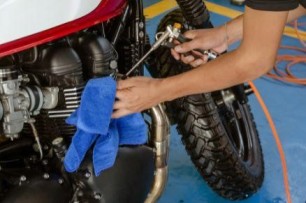
Here is a checklist to follow after the completion of servicing of your bike
Buying a bike takes a lot of thought and planning. Multiple factors influence your purchase. You arrange the funds, and after making a final decision, you pay the money and get a brand new bike. Just like your other possessions, your motorcycle needs optimum care too.
Maintenance of your bike is as essential as your safety while riding it. Whether you frequently use your motorcycle or occasionally, you need to ensure that your vehicle is not damaged. Even a tiny impaired part could cause significant harm to the bike and risk your safety. So as the owner, be careful about its regular maintenance.
All bikes have their periodic servicing cycle. Ensure to get professional servicing for your motorcycle at the authorised service stations. These centres use authentic spare parts recommended by the manufacturer and follow all the procedures to ensure that your bike does not suffer any damages in the long run.
But what happens after your bike is serviced? How can you assure that it has undergone proper servicing? Well, this blog will discuss what you need to keep in mind the next time you get your bike after servicing.
1. Air pressure:
Check the air pressure in the tyres. Unless your bike's tyre is visibly flat, you can't just judge the tyre inflation. Instead, use a tyre pressure gauge to check the correct pressure. Regularly check the motorcycle at different pressures when you ride it.
2. Engine oil:
You should inspect the engine oil after the servicing is completed. Make sure that proper levels are maintained. Look for any leakages. Carbon deposits can thicken the engine oil. Running the bike on dirty oil can damage the engine life in the long run.
3. Brakes:
Examine the brakes very carefully. Your bike's brakes are vulnerable to damage due to their excessive usage on the roads. Make sure that your brakes are not very loose or very tight, which would cause difficulties in applying them when needed.
4. Screeching noise:
If you hear a screeching noise, it could be due to an issue in the front brake pads. Make sure that they are appropriately checked and replaced if needed. Lack of oil could also be one of the reasons for such noises.
5. Spark plug:
Make sure that the spark plug is cleaned. And in case of any damages, ensure that it is replaced. The spark plug is connected to the engine combustion and should undergo regular maintenance. You can keep an eye out for checking the carburettor, air filters, chainset, etc.
Now that we've discussed the checklist you need to follow after completing servicing of your bike, you need to think about how to keep your bike safe from damage during unprecedented situations. The solution is to get your bike insured. And now, you can purchase bike insurance online from the comfort of your home and even get attractive deals with extra benefits. These benefits can reduce your monetary stress and cover your bike's repairing or garage costs.
Click HERE to know more about how you can buy bike insurance online.
Disclaimer: The information provided above is for illustrative purposes only. To get more details, please refer to policy wordings and prospectus before purchasing a policy.
Hi there! 👋 Need help with a policy, claim, or renewal? Chat with us instantly on WhatsApp.
Start chat →