


General Insurance Blogs, Articles & Updates by - Magma Insurance
Have us call you
- RENEW YOUR POLICY
- BUY NEW POLICY

GENERAL INSURANCE BLOG

Six best safety tips useful for born again bike riders
The returning riders, also known as the born-again riders, are folks who previously rode motorcycles and want to get back into it. No matter how professional you were in the past, continuing something after a break has some adverse outcomes. Therefore, if you have given up riding for any reason and wish to reclaim it with your two-wheeled companion, there are a few risks you need to keep in mind.
This article will thoroughly guide you with the best tips to avoid mishaps for returning riders. We suggest investing in bike insurance for your two-wheeler before you restart your lost desire to ride a bike again. In case you already have one make sure it is up-to-date.
1. Begin slowly and safely:
Returning riders should take it easy at first and gradually gain confidence while riding. Start your first few trips with short distances and ideally in minimal traffic conditions. Do not push your limits and end the journey whenever necessary.
2. Know which bike to start with:
If you have not hit the road for a long time, consider going for a moderate bike at the beginning. Compared to the bikes you rode in your days, the current models can be overwhelming for you. For example, if you decide for high horsepower and remain unsuccessful in handling it, your motivation will hit the ground. It will leave you disappointed and undermine your confidence. Hence, go for a manageable bike at first, and once you've acquired confidence and improved your road sense, you may always upgrade.
3. Consider taking a refresher course:
Although this sounds a bit unnecessary, basic training at a motor learning school helps you regain control of the two-wheeler and understand the updated traffic. Even if you can't seem to find a physical course, the internet will never let you down. Numerous articles, podcasts, videos, vlogs, and blogs regarding this subject will guide you in the right direction.
4. Learn and adapt to what has changed:
Regardless of the gap in your riding, the technology and regulations would be different when you start over. The machines used in today's bikes are advanced, tyres have anti-skid grips, and the braking systems have improved. Try to acquire the knowledge of up-gradation as much as possible to avoid facing issues about adaptation to new things.
5. Don't skip the riding gears:
Never neglect your safety gear. If your gears from earlier do not fit you anymore, get new ones right away. There is no acceptable reason to skip wearing your riding gear for any occasion.
6. Learn how to unlearn:
The future is for those who can learn to unlearn numerous times throughout their lifetimes. This should be a motto for born-again riders. Forget all the myths and misleading facts from the old days and make space for new logic and learning. Technology progresses every day, and so does the experience based on it. Gain knowledge of it prior and incorporate it into your riding style as often as possible.
We hope to assist you in making your transition easier than possible. The above-compiled tips will surely do the job. Also, having bike insurance will boost your confidence and ensure a happy return to biking. So, if you’ve made up your mind, then you’re set to dominate the roads again!
To get the best bike insurance, click HERE .
Disclaimer: The information provided above is for illustrative purposes only. To get more details, please refer to policy wordings and prospectus before purchasing a policy.
What to do when the brakes fail suddenly while driving
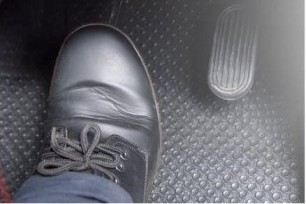
How well are you prepared for a situation like a brake failure? Well, most people can't imagine the correct answer. Imagine you are driving comfortably, and your eyes are engaged on the road. Then, when you approach traffic or a speed breaker, you hit the brake pedal, but your car doesn't slow down. You repress harder this time, but you are still speeding. Are brake failures terrifying to even think about? It's best to prepare for such panic scenarios.
Brake failures usually are not recognized beforehand; they hit you when you are in motion. It can be a panicking situation leaving the driver clueless and inviting a potential threat to his life.
In today's post, we'll talk about the dos and don'ts to stop your car safely when the brakes fail.
What to do?
1. Don't lose your cool:
We understand it's easier said than done but try not to panic. This will only put you and the passengers in unnecessary danger at the time of an actual stressful situation.
2. Go easy on the throttle:
Immediately take your foot off the accelerator pedal. You don't want to speed up even by mistake as it can only worsen the situation and make the vehicle handling uncontrollable.
3. Pump the brakes:
Press the brake pedal multiple times to generate enough pressure in the hydraulic system of the brakes. This can miraculously work out, and you'll be able to halt your car even after brake failures.
4. Lower the gears:
If the pumping doesn't help, shift into a lower gear gradually. Doing this increases the mechanical resistance, referred to as engine braking.
5. Engage handbrakes:
Some cars can restrict you from shifting to extra-low gear until the car has slowed sufficiently. In such cases, handbraking comes in. When you engage the handbrakes, do so gradually. If you suddenly apply them, your car can go skidding to make the situation worse.
6. Turn on the AC to the maximum:
Turning the AC to the max will take a few kilowatts of power. Turning on all extras will cause resistance to the alternator that can help you slow down.
Other dos:
● Keep your vision on the road at all times.
● Turn on the hazard lights. This will notify other drivers that you're in an emergency.
● If you notice an uphill road, use it to your advantage. Taking your vehicle to it will help you curb the speed.
● Wear your seatbelt at all times.
● Follow the speed limits on all roads.
Now that you know what to do. Let’s discuss the don'ts real quick:
● Do not continue driving on cruise control.
● Do not cut the ignition or change the gear to neutral as you will lose the full control.
● Do not shift from higher gear to low gear drastically. The same goes for handbrake. Do not engage it at once. This can cause skidding.
● DO NOT shift to reverse gear. This will completely shatter the gearbox, and further will not allow you to downshift.
● Don't move sideways with a speeding vehicle. Yes, it increases friction, but you run the danger of spinning out.
● Do not run into a concrete wall or a block to crash stop; go for shrubs and bushes.
When such situations arise, you are in danger and the rest of the commuters around. Therefore, you must think rationally and make decisions. You and your car can sustain damage in such scenarios; having reliable car insurance at your disposal will help you recover from it. If you have one, check for your car insurance renewal before you hit the roads. Car insurance renewal is a ticket for extended protection of your prized possession.
Also, don't ever overlook the necessity of having your car serviced at regular intervals so that critical safety systems, such as braking, are well maintained.
Car insurance renewals are possible online now. Click HERE to do it right now.
Disclaimer: The information provided above is for illustrative purposes only. To get more details, please refer to policy wordings and prospectus before purchasing a policy.

Seven crucial tips to avoid severe sports injuries
While being involved in sports is a pleasure, it also helps you achieve your fitness goals and maintain a healthy lifestyle. Being an athlete or a player, you simply cannot keep away from your share of cuts and wounds. However, you can reduce the risk of severe injuries in a few ways.
One can never predict the severeness of an accident, and hence only staying cautious won't work. You further need to cover yourself with individual accident insurance to enjoy the sport stress-free. Let’s mitigate ways to tackle them and keep you from encountering any severe injury;
1. Stretch! Stretch! Stretch!
Regardless of the kind of sport you are up for, warming up with some stretches is vital in keeping your body elastic and relieving muscle tension. To perform stretching after the game is just as important as doing it before the game. Post-game stretches relax the muscles and eliminate the chances of muscle fatigue.
2. Maintain a healthy diet:
The ideal time to start maintaining a nutritious diet is at least two weeks before the big game or your practice sessions. Besides consuming a balanced diet every day, consult with a sports nutritionist for specific guidance. Since food plays an essential role in your overall strength formation, this is a crucial step to keep you healthy.
3. Make sure you stay hydrated:
Hydration is a must for every action you carry out in your day-to-day life; similarly, staying hydrated during the game is essential. Prevent cramps and tiredness by taking time to drink water in between and be sufficiently hydrated. Water will catalyze your metabolism, keep your brain and muscles alert and impart energy to you throughout your game. This will help lower your chances of injury since staying active will keep your focus.
4. Get ample sleep:
Inadequate sleep causes your reflexes to slow down, which might lead to disastrous mishaps. Getting adequate sleep is not only required for sports but also in our regular life. A clear mind is the ticket to attain focus. And that is only achieved by getting mental and physical rest.
5. It is obligatory to have protective gear:
Having the proper protective gear is just as crucial as anything else. You should wear appropriate gear for each sport you participate in. Also, the gear should be correctly fitted. Consult with your trainers to ensure that your equipment is properly-suited to you and meets industry standards.
6. Obey the guidelines:
Many sports-related injuries can be prevented if you follow the proper guidelines. Guidelines also make the sport more demanding and entertaining while ensuring that nobody gets hurt.
7. Consult Sports Physiotherapists before the big event:
Besides the above tips, a sport physiotherapist further helps you assess and treat injuries related to the sport. His recommendations help you to gain a perfect fitness level and, in the prevention of injuries.
Michael Jordan once rightly quoted – “Never say never, because limits, like fears, are often just an illusion.” Our bodies have vulnerabilities that we do not always notice. But, what's more important than playing a sport is being a good sport while you are at it. Stay care-free and shield your dream of being a good sportsperson with individual accident insurance so that you focus on your training and not the injuries.
To browse individual accident insurance policies, click HERE .
Disclaimer: The information provided above is for illustrative purposes only. To get more details, please refer to policy wordings and prospectus before purchasing a policy.
Tattoos and piercings? Understanding the possible side effects and risks involved.
Tattoos and piercings are one of the most common forms of art of self-expression. While some people do it for religious purposes, others do it as a gesture or just as part of a trend. Especially with the new designs and technologies, more youngsters are getting fascinated towards them.
While you may be shortlisting new tattoo designs for your body, it is essential to understand that tattoos and piercings come with various health effects. You may flaunt your new tattoo, but the side effects that it develops can be challenging to overcome sometimes.
In this space, we will discuss the potential health risks of tattoos and piercings so that you can make your decision wisely. With that, let us dive into the details!
Risks of tattoos:
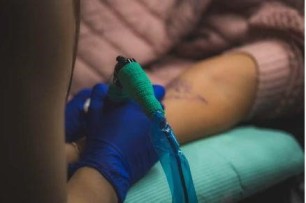
A tattoo artist will usually use a machine with a needle attached to make the tattoo. The needle injects the ink into the second layer of your skin, the dermis (below the epidermis). While tattoos are popular for expressing your feelings and yourself through art, there can be various complications. Some include:
1. Skin allergic reaction: Tattoo dyes like yellow, blue, green, and red can cause various skin reactions, including itching, rashes, more near the inked region. Even after years of getting the tattoo, a person may experience skin reactions that get troublesome with time.
2. Burn or swelling: Everybody reacts differently to tattoos. It is observed that many people experience a burning sensation and swelling around the tattoo area that can even last for longer durations if you don’t receive proper treatment.
3. Bloodborne diseases: If the needle is contaminated through infected blood, a person may get different bloodborne diseases, including hepatitis B, hepatitis C, tetanus, even AIDS. So, be careful regarding the sanitization of the needle and other equipment.
4. Inflamed tissues: A person can also experience nodules of inflamed tissue and may experience an overgrowth of scar around the tattooed area.
5. MRI test complications: Sometimes, a permanent tattoo on your body may interfere with the MRI test, disrupting the image's quality. In addition, burning or swelling can occur during MRI. However, this is rare but a possibility.
The long-term side effects of permanent tattoos are yet to be known. Although hundreds of ink are approved for cosmetic purposes, their side effects for injecting the skin are still not apparent. If you experience skin problems or allergic reactions after getting a tattoo, contact a doctor immediately.
Risks of piercings:
In certain parts of the world, piercings are a part of the culture. However, what most people do not understand is that piercings can cause various bacterial infections, development of an abscess. When it is left untreated, this puss-filled mass can develop a risk of blood poisoning and sepsis.
Since the nose and mouth area contain higher bacteria, the chances of infections are higher in these areas after a piercing. Additional risks include:
1. Keloid formation around the piercing area.
2. Swelling near the piercing site.
3. Bleeding due to damaged blood vessels.
4. Tongue piercing may cause damage to the teeth and gums in a few cases leading to difficulty in speech.
5. Swelling in the tongue after the piercing can cause blockage of the airway leading to difficulty in breathing.
Going with the tattoo and piercings trends can be a new experience that one does not want to miss out. However, it is essential to do extensive research on all the possible side effects and risks involved to ensure that these experiments do not affect your health negatively. Compromising health safety against excitement is not a wise thing to do. Therefore, guard yourself with health insurance before getting your favourite design inked on your body. Also, if needed, consult your family doctor, preferably a dermatologist, to get proper advice.
Click HERE to know more about health insurance plans for you.
Disclaimer: The information provided above is for illustrative purposes only. To get more details, please refer to policy wordings and prospectus before purchasing a policy.