


General Insurance Blogs, Articles & Updates by - Magma Insurance
Have us call you
- RENEW YOUR POLICY
- BUY NEW POLICY

GENERAL INSURANCE BLOG
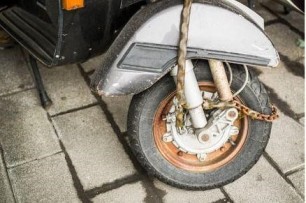
Important things to know while disposing off a two-wheeler
There is no denying that many outdated vehicles are still plying on Indian roads, causing massive pollution. Therefore, the Government of India has unveiled the Nation's new Vehicle Scrapping Policy. The main object of this updated policy is to get rid of old and unfit automobiles that produce pollution. The government aims to clean up the air, and the efforts are commendable.
If you have an outdated two-wheeler at home and are considering scrapping it, here are some things you should know prior.
1. Mandatory fitness examination:
The procedure of obtaining a fitness certificate would become significantly strict under the updated scrappage Policy. If your two-wheeler is more than 20 years old, you will have to take a fitness test for your vehicle.
Automobiles registered for business use are subject to the fitness standards once they go beyond the 15 years mark. Computerized workshops will be set up around the Nation. This will result in pinpoint accuracy and faster tests.
2. Compulsory end of life vehicle certification:
If your bike fails the fitness test, you will be required to get an ‘End of Life Vehicle certificate’. This is because used automobiles contain dangerous compounds such as lead-acid batteries, lubricating oil, coolant, braking fluid, and catalytic converters. If not disposed of properly, these compounds can contaminate the environment and risk human health and wildlife.
Benefits of scrapping your old bike:
If you're purchasing a new vehicle under the scrappage program, you will receive a 4 to 6% refund off the total price. In addition, state governments can recommend a road-tax credit of up to 25% for personal automobiles and up to 15% for commercial automobiles. In some cases, automobile manufacturers also offer a 5% discount to those who present the 'Scrapping Certificate,' and registration expenses will be waived when purchasing a new vehicle.
Additional pointers to know:
• The policy will not apply to vintage bikes.
• Hybrid and electric bikes are exempted.
• A bike that runs on alternative fuels like CNG is exempted.
When will the policy come into action?
The updated policy will come to force starting with large commercial automobiles, requiring mandatory fitness testing beginning April 1st, 2023. In a phased approach, all other vehicles will be subject to the fitness test starting June 1st, 2024.
Final Say:
The policy is set to come into action in the year 2022; the most crucial stage for the proposed program to succeed is to construct the necessary infrastructure across the nation immediately. As things stand, India has seven computerized fitness test facilities and two official scrappage sites. To meet the market demand, more such facilities are provisioned in coming years.
This policy will encourage the bike sale, benefit the environment, and a step towards a greener future. While benefiting from all the incentives when you dispose of your 2 wheeler, add an extra benefit of insurance to the bundle of happiness. Buy a 2 wheeler insurance online, customize your plan according to your needs, and include the add-ons that can help you when you plan to buy a new two-wheeler after disposing of the old one.
Click HERE to get 2 wheeler insurance online.
Disclaimer: The information provided above is for illustrative purposes only. To get more details, please refer to policy wordings and prospectus before purchasing a policy.
Know about these seven driving habits that might be damaging your car
We all want our cars to stay forever sparkling and perfect, and we do everything in our capacity to keep them brand-new. Still, we cause some damage to the vehicles. It doesn't matter if you are an experienced driver or a learner; we all sometimes make mistakes as a result of particular bad habits.
These incorrect driving habits lead to unnecessary wear and tear to the vehicles and spending more money on repairs in the garage. To avoid it, we have shared 07 driving habits that you might need to look into immediately.
1. Not slowing down at potholes and speed breakers:
At least one-third of the damage to your cars occurs due to not slowing down over potholes and bumpers. It is not practically possible to avoid potholes everywhere you drive, so the least you can do is slow down.
Not slowing down on potholes can cause buckled wheels, lumps in the tyres, and even cracked alloys. The same goes for speed breakers; if you slow down on a speed breaker, you can avoid severe damage to the underside of your car and the exhaust system.
2. Continuing to drive your car at a low fuel level:
People fill up the tank when it reaches the 1/4 mark. At the same time, others push their cars to their limits. If you're the second type, you may be causing damage to your vehicle. When your fuel tank is nearly empty, the car will draw petrol from the very bottom. This may appear harmless, but the base is usually where all the toxins settle and concentrate, and if there is a significant build-up of impurities, it may clog your filters which might enter the engine.
3. Overloading your car:
We all have a habit of leaving something behind in the car, thinking it does not make a big difference. But all this extra load brings strain on your car’s brakes and suspension. Therefore, think twice before loading unnecessary luggage in the trailer next time. Plus, you will also form a habit of keeping your car clutter-free.
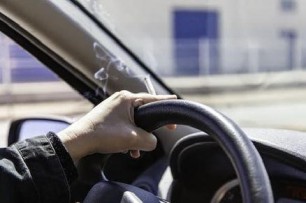
4. Smoking in the car:
Smoke from the cigarette makes your car stink. But the problem does not stop there. Over time, the particles from the smoke will mix with the car's material, leading to bad odour and discolouration of surfaces. This becomes tough to get rid of and will eventually deplete the value of your vehicle.
5. Revving your engine too soon in cold weather:
Revving your engine too soon will damage the engine's parts which are not yet lubricated with engine oil. Therefore, allow the engine to warm up properly before revving.
6. Applying brakes too late:
If you are habitual of harshly applying breaks at the last moment, it creates strain on the brake and makes the discs and pads wear out fast. Instead, maintain a steady speed and oversee the obstacles to avoid sudden and harsh braking.
7. Resting your hands on the gear stick:
Keeping your hand on the gear stick can be bad for the transmission because the constant pressure will cause it to wear out much faster.
Take a note of these driving habits that you might be doing unknowingly and keep your car safe from unnecessary damages. Another bad habit that may affect your car’s safety is neglecting your car insurance renewal. It is important to keep your car insurance renewal up-to-date and follow the above tips to keep your car looking and running great.
Click HERE to know more about the car insurance plans.
Disclaimer: The information provided above is for illustrative purposes only. To get more details, please refer to policy wordings and prospectus before purchasing a policy.
Essential tips to buying a second-hand two-wheeler
Two-wheelers are the most preferred travelling option for people from home to the workplace as they help your way through traffic smoothly. Moreover, as they have become daily support for middle-class families, many have dreamed of buying a two-wheeler, mainly since the pandemic emerged.
There are plenty of benefits to buying a second-hand two-wheeler. But before you purchase one, there are a few important things you need to keep in mind to ensure that you get the best value for money. For example, you don’t want to buy a vehicle that troubles you with additional money on maintenance or repair.
Below are a few tips to help you get the best deals for your second-hand two-wheeler.
1. Understanding the purpose of your vehicle:
If you need a vehicle for long trips, you will have to search for a high-performance touring bike to make your journey pleasant. Similarly, if you need a two-wheeler for your daily use, you may look for a comfortable motorcycle or scooter with a decent average.
2. Finding where you can purchase two-wheelers:
There are plenty of resellers available, both online and offline. You can directly approach offline showrooms of used two-wheelers or ask your friends for referrals. You can also check for resellers online to find a credible seller. It always helps if you connect with them in person and understand all the details.
3. Check the two-wheeler thoroughly:
Sometimes what you see online can be deceiving. Therefore, it is essential to check the vehicle personally. When you check the two-wheeler in person, you can observe the minor details such as any scratches, dents, and how well it is maintained. No matter where you buy the vehicle from, there are two necessary checks:
• Mechanical check
• Paperwork
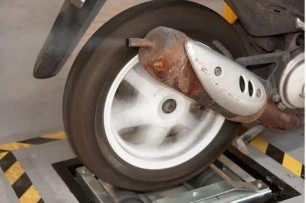
In mechanical check, always look out for any rust, scratches, engine check, oil check, oil leakage (if any), dents, mileage, accident damage, brakes, air cleaners, gears, clutch, how many kilometres it has run already, and more.
Similarly, you need to check for a PUC certificate, RC book, service history, tax certificate, NOC, and more for paperwork.
4. Ask for a test drive:
The best way to know if the vehicle works appropriately and suits you the best is to take a test drive. Taking a test drive will help you understand if you are comfortable with the bike’s performance and power. Even if your bike looks perfect, it may not be a comfortable ride for you. Therefore, ensure that you do not miss out on the test drive.
5. Know the market value and negotiate well:
Once you are satisfied with the vehicle’s condition and the documents, you can do thorough research online about the current market value of the two-wheeler you are purchasing. You can talk to the seller and negotiate for the final price you are willing to pay. Once you and the seller come to a final price, you can sign the official paperwork and make the payment!
The tips mentioned above can help you pick the best two-wheeler and ensure that you are getting the best deals! But remember that buying a second-hand two-wheeler is just the first step. You need to ensure its safety by adding a layer of protection in the form of 2 wheeler insurance. You may opt for 2 wheeler insurance online and avail exciting deals and lower premium options offering the best value-to-your-money.
Click HERE to buy 2 wheeler insurance online for your two-wheeler.
Disclaimer: The information provided above is for illustrative purposes only. To get more details, please refer to policy wordings and prospectus before purchasing a policy.
Guide for transferring your bike registration number while relocating to another state
Relocating to another state appears to be a daunting task if you’re experiencing it for the first time. There are multiple things to take care of while planning a relocation. From packing stuff and moving to another state to adjusting to the changing environment can irk you badly.
What worries you the most is the transfer of your bike registration that needs to be thoroughly examined during the entire relocation process. You need to acquaint yourself with the registration process of the new state and accordingly schedule your timelines for the same. This is indeed a cumbersome task, but we are here with our guide to make this process a swift one before it turns out to be a daunting task.
1. New state, fresh registration:
There are two scenarios that you need to understand. First, if you are relocating for less than a year, you don’t need to transfer the RC. But, if you’re planning to settle in the new state for more than a year, then you will have to go through a transfer process. Initially, you need to visit the RTO near your area and get a No Objection Certificate (NOC) as clearance for your bike. Then, after transferring to the new state, you will have to apply for fresh registration of RC of your motorcycle in the RTO of the new state.
2. What documents to carry?
Following is the list of documents required for the re-registration process.
• Original copy of Previous Registration Certificate.
• Three copies of Form 28 or the NOC issued by your local state’s RTO.
• NOC obtained from the local police station.
• NOC from Traffic police personnel.
• Form 20 as the application for the registration of the motor vehicle.
• Form 27 as the application for the assignment of a new registration mark to the motor vehicle.
• Attested copy of address proof.
• Attested copy of valid insurance.
• Attested copy of the Pollution Under Control Certificate (PUC).
• Copy of PAN Card or Form 60 and 61
3. Visit the RTO of the new state and complete the re-registration:
Visit the local RTO at your new location with all the above documents and fill your application for re-registration. Carefully provide all the essential information and verify all the documents thoroughly before submitting them to the officials. Once you fill the form and submit all your documents, you’re through your bike registration in the new state.
4. Fill the new road tax challan followed by vehicle inspection:
After completing the registration process at the new RTO, you will be asked to pay the required fees for that state’s new road tax challan issued by the RTO. Make the payment and collect your challan. The next step is the inspection of your bike. An RTO officer will conduct an assessment of your vehicle to check the condition of your bike and its parts. The primary purpose of the inspection is to ensure that your bike qualifies all the general safety requirements. All the collected data is stored for future reference along with the imprint of the chassis number.
5. The last step, and it’s done!
After completing verification, if your RC gets approved, you will be allotted a date to visit the RTO and collect your new RC.
To sum it up, make your relocation process manageable by following our guide. Follow all the steps mindfully and without any delays. Importantly, complete the entire registration process before your NOC expires. Considering all these factors, it is also essential to inform your bike insurance provider about your relocation. Provide all the details to the insurance company to verify your case and compute the insurance premium for your bike.
Click HERE to get the details about bike insurance to satisfy your requirements.
Disclaimer: The information provided above is for illustrative purposes only. To get more details, please refer to policy wordings and prospectus before purchasing a policy.