


General Insurance Blogs, Articles & Updates by - Magma Insurance
Have us call you
- RENEW YOUR POLICY
- BUY NEW POLICY

GENERAL INSURANCE BLOG

Taking insurance on your education loan may help you financially secure yourself
Higher education costs increase yearly, and many students turn to education loans to fund their studies. While a student loan can be a great option to finance your education, it can also be a significant financial burden after graduation. That is why it is crucial to consider taking out insurance on your education loan.
General insurance plans can offer you financial security in case of unexpected events that may cause you to default on the repayment of your education loan. Let's examine the benefits of taking out insurance on your education loan.
1. Financial protection for unforeseen events with education loan insurance:
Firstly, it provides financial protection to you and your family in case of an unexpected event such as job loss or a medical emergency. Suppose you cannot repay your education loan due to unforeseen circumstances. In that case, the burden of repayment falls upon the co-applicants. If you purchase insurance coverage, your insurer will ensure that your loan payments are taken care of, providing much-needed relief to you and your family during difficult times.
2. Improving credit scores with education loan insurance:
Insurance on your education loan may also improve your credit score. If you default on your education loan, it can adversely impact your credit score, making it more difficult for you to obtain credit in the future. By taking out insurance, you can avoid defaulting on your loan. This will help you maintain a good credit score and ensure that you are in a better position to obtain credit in the future.
3. Reduced burden of repayment:
Thirdly, insurance on your education loan can provide peace of mind. It can be stressful to think about the financial burden of repaying your education loan, especially if you are doubtful about your future income prospects. With insurance coverage, you can rest assured that your loan payments are taken care of. This will help you focus on your studies and career prospects without worrying about loan repayments.
4. Inbuilt insurance in education loans:
Insurance on your education loan may only sometimes be necessary. You can manage your loan repayments without insurance if you have a stable income and a good credit score. Additionally, some education loan providers may include insurance coverage as part of their loan package, so check with your loan provider before taking out a separate insurance policy.
Another critical factor to consider when buying insurance on your education loan is the type of insurance policy you choose. Various insurance policies are available, such as disability, unemployment insurance, etc.
5. Unemployment insurance for education loans:
Unemployment insurance can provide temporary financial assistance if you lose your job and cannot repay loans. It guarantees repayment of the loan amount without letting it reflect as a default. It also allows you to focus on finding stability and a consistent source of income rather than worry over the possibility of defaulting payments.
In conclusion, general insurance plans on your education loan can provide valuable financial protection and peace of mind. Similar to purchasing other general insurance plans, assessing your individual needs and circumstances is essential when choosing an insurance policy for your education loan. Carefully review the terms and conditions of the policy, and compare policies to ensure that you are getting the best value for your money.
Purchasing general insurance plans for your student loan is not necessary and only mandatory when applying for institutions abroad. It can be a valuable tool for all those who want to protect themselves and their families from unexpected events that may affect their ability to repay their education loans.
Click HERE to buy different general insurance plans online.
Disclaimer: The information provided above is for illustrative purposes only. To get more details, please refer to policy wordings and prospectus before purchasing a policy.
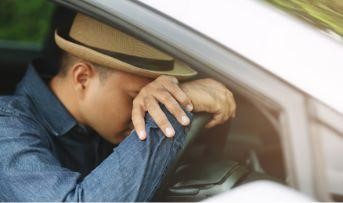
Drowsy driving: Its implications and how to avoid it
Driving is a skill that requires utmost responsibility while behind the wheel. While several uncontrollable factors cause accidents, motorists must always ensure they are non-negligent, careful, and alert while driving to minimise the risk of accidents.
One controllable factor that may lead to mishaps is drowsy driving. While sleep is uncontrollable, one must never drive in a dazed state of mind. While car insurance renewal may cover the loss to your vehicle, it does not suffice for the mental and physical trauma that results from accidents.
If you frequently feel drowsy while at the wheel, here are some tips to shake off the haze and drive alertly!
1. Break up your driving frequently:
Take a brief break from driving every 100 miles or two hours, regardless of how well you've slept the night before. Plan your route so that you may frequently stop to stretch, get some fresh air, and grab a snack or refreshing drink.
2. Drive cautiously at the drowsiest hours of the day:
Since your body's internal clock tends to make you sleepier between midnight and six in the morning and early afternoon, try to avoid driving during those times.
3. Sleep well at night:
A restful sleep of seven to eight hours is essential before a lengthy journey. When you feel drowsy, park at a safe spot and take a quick power nap.
4. Travel with a friend:
Bring along a passenger who can share driving chores and keep you awake because most drowsy driving occurs during a solo journey.
5. Avoid night-time driving:
Avoid driving at night if possible because it makes people sleepier and less aware. If you work a second or third shift, abstain from driving when your body is most used to sleeping.
6. Avoid using sedatives and alcohol:
Alcohol and other sedative drugs disrupt your sleep and make you feel sleepy the next day. Avoid driving under the influence of alcohol or any other drug.
7. Consider your health:
If you frequently have difficulties falling asleep, speak with your doctor to see what the issue might be. As with sleep apnea or narcolepsy, modest signs of exhaustion can occasionally indicate more severe health problems.
8. Get a caffeinated drink:
Pull up to a petrol station and buy a coffee, tea, soda, or energy drink for a fast dose. Caffeine enters the system and starts its impact after a half-hour. So, if you regularly consume it, you might not get the appropriate benefit.
9. Be alert for cautionary signs:
Look for an instant opportunity to stop and relax if you have any drowsiness. Don't try to push through if you're exhausted. Always remember that it's better to be safe than sorry.
10. Engaging radio programs to hear:
Turn on an exciting radio program to keep your mind engaged and awake if you're travelling alone or your passenger's talk has run dry.
11. Watch out for sleep-inducing tricks:
Some individuals use their windows, air conditioning, or radio to make themselves more alert, but doing so can take your focus off the road. It is preferable to pause and give your body the rest it requires rather than using these tactics.
12. Do not rush things:
Give yourself some additional time to react on the impromptu roadside excursions. Being rushed increases your chance of an accident and injury and decreases your likelihood of taking the necessary driving breaks.
Getting enough sleep is the best defence against drowsy driving over the long term. Focusing on your sleep hygiene, which includes your routines and environment, can help prevent drowsiness while driving.
You can endanger yourself and others if you find yourself nodding off while driving. We encourage you to undertake timely car insurance renewal to minimise the risk of accidents and efficiently deal with damages due to mishaps.
Click HERE to get your car insurance renewal done.
Disclaimer: The information provided above is for illustrative purposes only. To get more details, please refer to policy wordings and prospectus before purchasing a policy.
Wonder why two-wheelers are petrol-fuelled
With private modes of transport becoming more popular, the number of vehicles on the roads and policyholders of car and 2 wheeler insurance is only increasing daily. While the automotive industry welcomes the increased demand, it is an exciting prospect for industry watchers. As consumer preferences shift towards more sustainable alternatives across all purchases without a massive increase in budgets, alternative fuel offerings have emerged in recent years.
Why are petrol two-wheelers with a spark-ignition internal combustion engine still seeing steady demand despite the trend? Read on to know why petrol continues to be the most preferred fuel for two-wheelers.
Petrol engine:
A petrol engine is an internal combustion device designed to transform thermal energy into mechanical energy by the spark ignition of gasoline.
The benefits of gasoline engines:
● The power output is excellent
● The cost of buying a gasoline engine is lower than a diesel engine
● Petrol engines burn gasoline more sustainably than diesel engines and have a better price-to-power ratio
● Petrol engines are quieter and vibration-free
● Petrol engines cost less to service and maintain
● Naturally, petrol engines gain from being simpler to adjust and tune up
● They are light and effortless to operate
● Despite being flammable and explosive, it is simple and safe to store the gasoline
● Almost no other source of energy has a higher energy density than gasoline
Reasons for not using diesel engines in two-wheelers:
● Comparing the two engines, the carbon-dioxide output from the diesel engine is roughly 13% more per 3.8 litres. As a result, it pollutes more than a petrol engine and is unhealthy for the environment.
● Fuel pumps, glow plugs, and other components are necessary for diesel engines, and their combined cost will raise the bike's overall price.
● Diesel engines have lower RPM than gasoline engines but provide higher torque. Therefore, it is not appropriate for motorcycles where we require great speed.
● Because diesel engine combustion occurs due to auto detonation, diesel engines vibrate more than gasoline engines.
● A diesel engine is heavier than a gasoline engine and cannot be used in a motorcycle or other small vehicle.
● The engine block must be more vital to resist more excellent compression ratios because they result in higher pressure applied to the cylinder. This makes the cost of diesel engines higher than that of gasoline engines.
● Diesel engines use fuel injector technology, which is more expensive than the spark plug technology used in gasoline engines, to pump fuel into the combustion chamber.
Petrol engines are used in two-wheelers because they are slick, lighter, quieter, better at picking up, and require less maintenance, among other reasons. Petrol is significantly easier to ignite than other fuels and burns more efficiently. Gas engines are lighter, stronger, and more responsive than diesel engines. Diesel engines often have a slower throttle response than gasoline engines, which makes them less ideal for bikes.
While petrol may be a better alternative than diesel, it is essential to consider its hazardous nature and use it accordingly. Practice recommended fuel-filling habits that preserve the longevity of your engine and purchase comprehensive 2 wheeler insurance to protect your bike from any contingencies.
Click HERE to buy 2 wheeler insurance for your motorcycle.
Disclaimer: The information provided above is for illustrative purposes only. To get more details, please refer to policy wordings and prospectus before purchasing a policy.
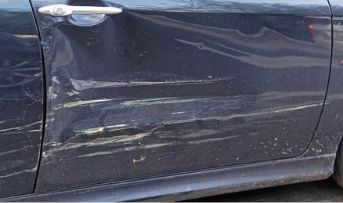
Here’s how you can protect your car doors from dents and scratches
The thought of getting a dent on your car doors while driving, parking, or simply due to external variables is upsetting. While door dings may not be expensive to repair, they diminish the car's value and make it an additional ordeal. Car Insurance renewal or purchase is the best way to protect yourself from the financial burden of repairs.
As preventive measures, here are some straightforward ways to avoid scratches on your car doors.
1. Test your defensive driving skills:
Along with following the fundamental traffic laws like wearing your seatbelt and obeying the speed limit, defensive driving also includes practical abilities like anticipating potential errors other drivers may make. You can reduce the possibility of car damage by maintaining a safe and appropriate distance from other nearby vehicles.
2. Install door edge guards:
Door edge protectors help to cushion your door from dents and scratches. You can DIY or get it installed by a local car accessories shop. They are available in adhesive and cling door variants and do not harm your car's paint when removed.
3. Pick your parking spots wisely:
Consider parking your car in a garage rather than on the curb or select a quieter location on the lot. Also, use a different mode of transportation while visiting crowded places like open markets to protect your car doors from scratches.
4. Door sill protectors:
The door sill area is vulnerable to wear and scratching because of constant contact. Door sill protectors almost eradicate this issue. The practical device is easy to install and cheap, making it the perfect preventive measure.
5. Regularly wash your car using the correct techniques:
Most minor dings and dents aren't due to collisions or bumps but usually happen while cleaning due to abrasive brushes used in automatic car washes that can easily scratch your paint. Consider going the manual route and ensure to rinse the dust and grime off before getting to work.
6. Avoid unnecessary contact:
Do not lean or sit on your car, put anything on it, or touch the painted surfaces excessively to prevent door scratches. Although it may seem unlikely, opening and closing the doors without using the handles could even cause scratches.
Using car covers is another habit you should break to avoid car dings. In addition to providing no defence against potential road scratches, they could do more harm than good. Along with probable paint damage from wind flaps, a similar outcome will also be anticipated each time you cover and uncover the car.
Although nobody wants their car's doors to get scratched, it occurs frequently. It looks terrible and can cause rust where the paint has chipped off. You may take preventative measures and exercise caution when handling your automobile doors to keep this from happening and the pricey paint repair. Car insurance renewal can help you avoid bearing the costs of the painting job in case the dents and scratches result from accidents. However, in all other cases, you will have to pay the expenses yourself, which is why you must practise preventive measures to maintain your car’s doors perfectly.
Click HERE to get car insurance renewal done.
Disclaimer: The information provided above is for illustrative purposes only. To get more details, please refer to policy wordings and prospectus before purchasing a policy.