


General Insurance Blogs, Articles & Updates by - Magma Insurance
Have us call you
- RENEW YOUR POLICY
- BUY NEW POLICY

GENERAL INSURANCE BLOG

Five reasons your car undergoes acceleration problem
Car acceleration issues, apart from being bothersome, can also be dangerous. There are several reasons why your car might have a problem while accelerating. Technically, when you push the gas pedal, several components and sensors work seamlessly to move the vehicle forward and achieve that speed. Even a minor failure in this whole system can hamper your car's acceleration.
The car's internal combustion engine needs to breathe to accelerate quickly and develop the desired thrust and power. It compresses a specific amount of air and fuel ignited in the combustion chamber. The exhaust gases from the process are released through the tailpipe. If there is any disruption in the process, a loss in power will occur.
Engine performance has been controlled by the Engine Control Module (ECM) since the 1980s. The ECM uses the data from several different sensors to administer the combustion process. Issues in air and fuel delivery sensory problems are the leading cause of acceleration malfunctions.
Let's discuss the reasons your car may undergo acceleration issues in detail.
1. Check the air filter:
If you're facing trouble accelerating your car, you might need to check the air filter. The function of the air filter is to trap dirt and other impurities and prevent them from entering the combustion chamber. A clogged air filter prohibits the air from entering the combustion chamber, further affecting the process.
2. Keep the fuel system clean:
A clogged or dirty fuel system also disrupts power generation, thus affecting the vehicle's acceleration. The fuel does not reach the combustion chamber and therefore starves the engine and causes low power.
3. Fix the ignition:
Ignition issues can be one of the leading causes of acceleration problems. These systems are designed to ignite the air/fuel mixture by creating a powerful spark. However, poor-quality ignition wires or dirty power plugs can cause trouble in the complete burning of fuel in the combustion chamber. This results in the loss of power necessary for achieving quick acceleration.
4. No way out for the exhaust gases:
Exhaust gases from the collapsed catalytic converter get trapped at times which hinders the breathing capability of your engine. This inhibition builds up excessive back pressure and causes a significant loss of engine power.
5. Have a functional O2 sensor:
The oxygen (O2) sensor measures post-combustion oxygen levels in the exhaust chamber. A slow-reacting, damaged, or dirty O2 sensor is responsible for the quality of the air/fuel mixture, which impacts the engine, thus affecting the acceleration.
Some other reasons due to which your car undergoes acceleration problems are:
• A slipping clutch disk that doesn't wholly engage with the transmission to the engine.
• A dirty or defective mass airflow sensor (MAF) affects the engine's airflow, causing a strain in acceleration.
• The throttle plate position and movement are measured by the Throttle Position Switch (TPS). A problematic TPS data affects the air/fuel mixture engine speed and ultimately strains the acceleration process.
Now that we have discussed several reasons for an acceleration problem, it would be a wise choice to purchase car insurance to protect your vehicle and you against unanticipated troubles. Mishaps come uninvited, so you need to be prepared during the good to be safe during the worst.
Address the above problems related to acceleration and fix them at the earliest to ensure safe travel. If your car demands extensive repairing, don't refrain from visiting a mechanic. Instead, guarantee your repairing expenses with car insurance benefits and make your vehicle functional again.
Click HERE to know more about car insurance.
Disclaimer: The information provided above is for illustrative purposes only. To get more details, please refer to policy wordings and prospectus before purchasing a policy.

Five reasons why eating in your car is a bad idea
Distracted driving is one of the most common reasons for fatal car accidents. However, calling and texting are not the only forms of distractions for driving. When it comes to the most distracting factors while driving, many individuals overlook eating. If there's one thing we can all agree on, it's that we've all had to eat our meals on the go, or at least the majority of us have.
When behind the wheel, drivers must keep their attention on the road and adhere to all safety rules to be safe. People who eat while driving are multitasking and diverting their focus away from the road, putting multiple lives at risk.
Learn more about the unpleasant reality of eating in your car.
1. Reaction set back:
Your response time will be slower and delayed if your eyes and focus aren't on the road. Accidents might occur as a result of delayed reactions. Your brain and senses need to respond swiftly to sudden changes on the road. Therefore, you cannot afford to preoccupy your attention with other activities like sipping coffee or having a burger while driving.
2. Bug alert:
You're creating a biohazard food trap by treating your car as a makeshift dining room. Engineers compress a lot of components into a tight area, a plethora of even narrower spaces that only French fries and breadcrumbs seem to fit. It has the potential to become a gold mine for insects and other small creatures.
3. Health faux pas:
While eating in the car can be handy, it rarely equates to healthy eating. The common fast-food alternatives at drive-through restaurants are easy to devour mindlessly. However, mindless eating is incompatible with regular, more natural eating habits, so you're more likely to ignore your health and instead grab something else at your next stop.
4. Creates distraction:
When you eat while driving, you aren't paying attention to what's happening around you. You might be concerned about staining your clothes or spilling your drink. If your eyes are off the road, you may miss changes in traffic patterns or fail to see a car in your blind zone.
5. Hands off the wheel:
You'll have to take your hands off the wheel at some point if you're eating while driving. Whether opening a packaged sandwich or a lunch box, people who eat while driving will let go of the wheel, generating a disturbance.
Being the person behind the wheel, you cannot take even a slight risk of taking your hands off the wheel. You don't just steer the vehicle, but even the safety of you and your co-passengers.
Negligent driving is a rising issue nationwide, and it needs to be addressed with immediate actions by spreading awareness and implementing the rules strictly. It will also be challenging to claim unintentional damage if proven at fault while driving.
So, say no to eating in the car and maintain good car hygiene. Good upkeeping of the car interiors, regular dry cleaning, and car insurance are considered healthy car habits. So, follow the above tips and check for the best car insurance in India to be financially safe and secure your possession. If you want to live a better lifestyle, it's time to give up eating in your car.
To look for the best car insurance in India, click HERE!
Disclaimer: The information provided above is for illustrative purposes only. To get more details, please refer to policy wordings and prospectus before purchasing a policy.
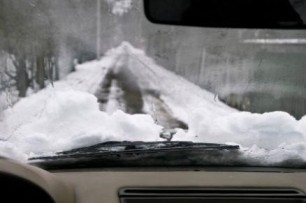
Driving through the snow? Here's what you need to know
Choosing to go for a drive while it's snowing outside may sound like an unusual option. So, ask yourself, "Have you prepared your car ahead of time?" A winter-ready vehicle should have enough tyre tread and air pressure, a vast tank of petrol, and a clean windshield.
Give yourself extra time to arrive at your location to avoid collisions. Do not take your hands off the wheel. Also, remember to get insurance from your choice of a motor insurance company and add a layer of protection to your car.
Keep in mind the following to lead a safer journey while driving through the snow.
1. Pay attention to the lights flashing:
If you turn and notice a flashing orange light, this is the stability-control system warning you that the vehicle is about to slip off the road. Ease off the accelerator until no more power is applied; this helps the automobile recover grip. Also, while making tight bends in town on icy or slushy roadways, do not accelerate rapidly. Always increase the throttle with steady momentum, so nothing unexpected occurs.
2. Install winter tyres:
This isn't a piece of driving advice; it's a survival suggestion. Winter tyres provide significantly greater grip in snow, sleet, and ice than even the most extraordinary all-season tyres. Installing a set of four winter tyres is the most intelligent thing you can do to boost your safety.
3. Handle the skids:
Skids, even large ones, are manageable, and you may quickly regain control of the vehicle. Firstly, don't panic—and don't slam the brakes. Instead, reduce your speed to avoid a front-wheel skid, which occurs when the front tyres lose traction, and the vehicle rotates in a broader arc than expected. In the event of a rear-wheel skid, swiftly move the steering in the same direction as the rear tyres are sliding. Keep your foot off the pedals. Steer back in the original direction when the rear wheels get a grip.
4. Drive extremely smooth:
The key component of driving safely in the snow is to be smooth with steering, acceleration, and braking. Why? Rapid control motions quickly unstick tyres with a fragile grip on the slick road. So every rotation of the wheel, a press of the brake, and movement of the accelerator must be careful, calm, and progressive.
5. Carry the necessary supplies:
Pack a snow shovel in your vehicle before you go, along with a bag of salt and a tow rope. The tow hook is located beneath the rear cargo floor, next to the spare tyre. Due to heavy snowfall, roads get severely affected, and tyres tend to get jammed, making the car halt.
Remember that your best chance for driving this winter is to ensure that your tyres sustain winter conditions. Snow can hamper the health of your car and make your journey troublesome. Stay adaptable, as it's best to pull over someplace to wait out the weather. Also, prioritise purchasing the ideal insurance plan from the best motor insurance company by considering your requirements and the benefits you can get from it.
Click HERE to head to the best motor insurance company.
Disclaimer: The information provided above is for illustrative purposes only. To get more details, please refer to policy wordings and prospectus before purchasing a policy.

Here is a list of five things that elders must take care of before planning a road trip
The passion for exploring does not fade with age. Many seniors start planning their post-retirement plans from an early stage. And, travel is one of the most exciting adventures they wish to do in their old age. After years of providing for their families, they deserve a break to live for themselves. The elderlies should experience the world’s magnificence at their own pace and spend some time enjoying the serenity of nature to rejuvenate their soul.
However, elderly adults should take particular measures before travelling. If you intend to travel with more aged folks or hook them up with a senior road trip group, here are some factors to consider for their security and wellbeing.
1. Health restrictions and physical evaluation:
You can never take too much precaution when it comes to health. It is critical to keep medications available, therefore, ensure they are conveniently accessible. Carry all prescribed medications with you. It is also a brilliant idea to supply over-the-counter medications on hand for various potential requirements.
2. Keep the trips short:
While creating an itinerary, plan the travelling and sightseeing accordingly. Avoid ending up bone-tired journeys. Instead, take frequent breaks while driving so they don’t feel tired. Choose destinations that don’t involve much walking and are ideal for aged people to explore. It is advisable to take frequent halts for the seniors to stretch their bodies and feel refreshed and energetic again.
3. Road conditions:
It is prudent to be aware of road conditions. Damaged roads can be a problem for people who are not used to travelling regularly. Also, keep in mind that older people’s bodies are vulnerable due to low bone density and cannot handle jerks like youngsters. Therefore, maintain a steady speed and avoid rushing.
4. Do not forget to pack the necessities:
You must bring a few basics with you: Warm clothes and any medical equipment such as asthma inhalers, wheelchairs, shawls, and so on. A cushion or blanket will also come in handy. Eating locally accessible food may not be the smartest choice in certain situations. As a result, bringing some of their favourite foods is preferable. But ensure that the food must be less spicy, less oily, easily chewable, and easy to digest.
5. Bring fewer belongings:
When going on a road trip, you want to concentrate on the journey, the magnificence of nature, and the locations you see. Taking valuables will add to your anxiety and reduce the pleasure of the vacation. It also presents unsafe conditions. And anyway, seniors who travel by car should be stress-free!
Follow the above tips carefully to ensure a comfortable trip for the elders. Checking on health and safety is paramount when travelling with aged people. To lean a little more towards the safer side, you must have insurance before planning the road trip. You are also required to invest in motor insurance as it is mandatory for anyone travelling via cars. So, before you start your trip, look for a motor insurance company in India and get your insurance covered. Remember to carry all the required documents with you throughout the journey.
To visit the best motor insurance company in India, click HERE .
Disclaimer: The information provided above is for illustrative purposes only. To get more details, please refer to policy wordings and prospectus before purchasing a policy.
Hi there! 👋 Need help with a policy, claim, or renewal? Chat with us instantly on WhatsApp.
Start chat →