


General Insurance Blogs, Articles & Updates by - Magma Insurance
Have us call you
- RENEW YOUR POLICY
- BUY NEW POLICY

GENERAL INSURANCE BLOG
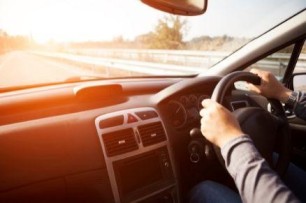
Wondering how to keep your car cool during summers? Here are the best ways to do so
Summers in India are pretty difficult to handle as the temperature can exceed over 45 degrees celsius, making it arid and humid. Humans can quickly get affected due to such hot weather, and it becomes unbearable to travel anywhere. While you can take care of yourself by drinking sufficient fluids and staying hydrated, your car needs an equal amount of maintenance,
especially in the summers. You must have seen how difficult it gets to drive anywhere during the hot season. Due to the temperature rise, the car becomes too hot to sit in and drive during a peak summer day.
Are you wondering how to keep your car cool during summers? Read this blog till the end to understand the tips to get the best results and protect your car from high temperatures.
1. Support solar technology by getting a solar-powered fan:
You can get a solar-powered fan for your car to cool down car interiors. It's better to use the sun's energy and heat instead of getting roasted. The solar fan helps balance the air inside the vehicle by extracting the hot air from the cabin. Regulating the process of constant circulation prevents overheating and avoids the stuffing of hot air.
2. Cross ventilation is a solution:
We all know how cross-ventilation works in our homes, kitchens, etc. Similarly, whenever your car is parked in the summers, especially if it is parked under the sun, it would be an intelligent solution to open the car's windows just enough to let the air pass from one window to another and circulate inside the cabin. Thus, a single temperature will not be maintained, and the car would be more comfortable to drive.
3. Park at the right place:
Look for some shade and park your vehicle under it to maintain a relatively low temperature for the car's body. A shade will protect the car's body from getting overheated due to the extreme temperatures and exposure to the direct sun, thus making the cabin bearable to sit and travel in. You can also cover your car to safeguard it against the hot weather, but it is a little more hassle than finding fully covered spots which provide shade to your vehicle.
4. Think about your steering wheel:
Summers spare nothing, not even the steering wheel of your car. Due to the hot climate, your car cabin temperature rises and affects the steering wheel, making it too hot to hold. You can cover your steering wheel with a light cloth to counter this. Avoid darker steering covers as they tend to absorb heat from the sun, making it unbearable for you to touch the steering wheel.
As we discussed protecting your car against high temperatures and how you can keep it cool, it is also essential to safeguard your vehicle against other damages that you may or may not see coming. Purchasing car insurance is an intelligent choice to cover your priceless possession under the safety net of financial benefits. But you need to make sure that you are aware of all the terms and conditions, including the new car insurance rates, before you make your final decision.
Click HERE to know more about the new car insurance rates.
Disclaimer: The information provided above is for illustrative purposes only. To get more details, please refer to policy wordings and prospectus before purchasing a policy.
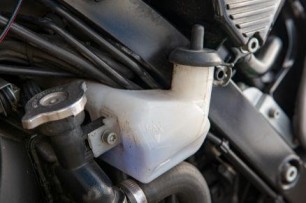
Is it good to ride your bike on reserve all the time
Fuel is one of the essential things needed for your bike to function efficiently. It generates power in your bike and makes it operable. You cannot risk being low on fuel or having no fuel in the tank. But there are times when you forget to fill up the fuel tank, and get stuck in an area with no petrol pumps around, or the fuel starts leaking, and you don't notice until the very end. What are you supposed to do then?
For such situations, bike manufacturing companies brought in the concept of reserve fuel. The reserve tank permits you to drive your bike till you find the nearest petrol pump and refill your tank. It is a fail-safe option in your main tank whenever you are stuck in a no-fuel situation.
However, this raises questions. Is it appropriate to ride your bike on reserve? What will happen to the bike's performance and efficiency? Let's address these.
1. No warning:
You can run your motorcycle on reserve all the time, but you might use up all the fuel without any warning signs that your tank is empty. This means that your bike can stop suddenly due to zero fuel, and you would have to push it to the nearest gas station.
2. Less power:
Driving on low fuel puts pressure on your bike's engine. As a result, the engine's power deteriorates over time and hampers your bike's performance significantly.
3. Practice occasionally:
The two reasons mentioned earlier are why you should not run your bike on reserve all the time. But it is advised that running your motorcycle on reserve from time to time is a good practice as it is essential to occasionally use the fuel in the lower part of the fuel tank. But, ensure that this is carried out periodically and doesn't become a habit.
4. Dirt collection:
In the previous point, we discussed that it is necessary to use the fuel in the lower part of your fuel tank. Why is it essential to do so? The lower part of your fuel tank is where a lot of dirt, dust, water, etc. is collected. And when you avoid riding your bike in reserve mode, all dirt and moisture can accumulate and fill up the reserve tank. This might end up clogging the main tank.
This accumulation can be challenging to deal with. It will involve a lot more tank maintenance, and frequent visits to the mechanic to get the tank cleaned, fixed, or even replaced, none of which is quick and easy to manage.
So, all in all, is it good to ride your bike on reserve all the time? It sure does not cause any severe harm as long as you are careful. Switching your motorcycle to the reserve mode means that the fuel will flow from the reserve tank instead of the main tank to the carburetor.
While riding in reserve is one of the many questions about motorcycles and their maintenance, other factors contribute to your bike's proper and efficient functioning. It is wise to insure your bike to protect it against any sudden problems with the parts or severe damages, which might involve a lot of repair expenses. Try investing in reliable motor insurance India and assure your bike a long life.
Click HERE to know more about motor insurance India.
Disclaimer: The information provided above is for illustrative purposes only. To get more details, please refer to policy wordings and prospectus before purchasing a policy.
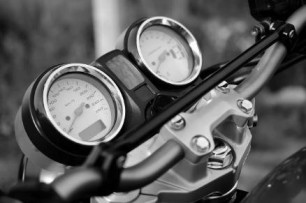
What do the motorcycle warning lights indicate, and how should you address them
We all know about the various traffic rules to abide by the motorcycle riders. As essential as following the traffic signals, learning and understanding all the warning signals that your vehicle gives you is equally important.
If you own a two-wheeler, you must be familiar with its parts and how every element contributes to the overall working of your vehicle. However, people often ignore maintaining or paying attention to the motorcycle's needs. Being too occupied with the hustle of daily life, you may neglect your motorcycle's deteriorating condition and continue using it in that state. This negligence can result in unfortunate occurrences.
What are the warning signs in a motorcycle?
Your motorcycle is designed to alert you of its needs and requirements. Every two-wheeler has a dashboard equipped with warning lights that flash as coloured symbols when a problem arises. While every two-wheeler differs, its dashboard typically consists of the speedometer, RPM meter, and fuel gauge. Next to these numbered dials are a bunch of warning lights that flash in various colours.
These warning lights in a motorcycle mostly follow the same system as the traffic lights to display the severity of the warning.
Blue or Green: the motorcycle's system is active and functioning correctly.
Orange: Something is malfunctioning and must be looked into as soon as possible.
Red: A defect has been detected in your motorcycle's system, and you must stop driving as quickly as possible.
Here are the few commonly found warning lights.
1. Engine temperature:
Regular usage of the motorcycle can overheat the engine. In this case, the engine's temperature rises, and the surrounding components are prone to damage. The dashboard will flash a red warning light in the shape of a thermometer to warn the rider about this overheating.
When this warning light is displayed, the best thing to do is stop riding the vehicle. It is essential to rest and let the engine cool down. Riding an overheated two-wheeler can be risky.
2. Oil pressure warning:
Oil is used as a lubricant in every motorcycle to reduce friction between its moving parts and gears. The oil pressure warning light will flash on the dashboard to alert the rider of low oil levels. Low oil pressure can damage your vehicle's engine and severely affect the bike's performance.
3. Engine management warning:
This orange warning sign is responsible for alerting you about a broad set of features that may be malfunctioning either collectively or single handedly. While the signal usually stops flashing after a few seconds of ignition, the vehicle could have issues involving its emissions, air intake, fuel, etc. Although you may have purchased reliable 2 wheeler insurance online, you must remember that riding the motorcycle, despite this warning, can be destructive for the bike and your safety.
4. The indicators:
These are green warning signs on the dashboard that blink when the rider clicks on the indicator while turning.
5. Neutral indication:
A green warning sign simply indicates that the bike's gearbox is in neutral gear.
It is important that you remember these warning lights are installed to protect you. You might have opted for 2 wheeler insurance online to protect your vehicle, but understanding the functioning of your bike and regularly maintaining it is your responsibility.
Click HERE to buy 2 wheeler insurance online.
Disclaimer: The information provided above is for illustrative purposes only. To get more details, please refer to policy wordings and prospectus before purchasing a policy.
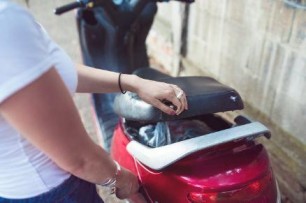
Easy DIY steps to clean your two wheeler's trunk
You are aware of the importance of cleaning and maintaining your two-wheeler, which can help you extend the life of your vehicle. But do you know that the trunk is often the most neglected space of your two-wheeler?
Your helmet, papers, groceries, umbrella, water bottles, etc., are primarily stored in the trunk of your two-wheeler. This makes it most susceptible to dust and dirt. In this article, we will take a look at a few easy ways to keep your trunk clean.
1. Organize:
The first step to maintaining a clean trunk is to keep everything organised. Try keeping your papers, first aid, and helmet systematically instead of throwing them into the boot. Store the essential documents in clean zip-lock plastic to avoid tears. Keep the first aid in a small pouch for easy access in an emergency. Efficiently organising the materials within the trunk helps you keep the space clean and provides you with easy access whenever you want something.
2. Dry cloth:
We tend to keep the helmets or wet umbrellas directly inside the trunk without giving a thought. One way to ensure clean trunk space is always keeping a dry cloth handy. If it is necessary to keep your wet umbrellas in the boot, keep the umbrella in plastic before placing it into the boot. To ensure that there is no water left, take a dry microfiber cloth and pat dry the area inside the boot. Do not forget to dry the area just under the seat as well. Moisture can lead to corrosion, eventually eating up the entire chassis. To avoid this, always ensure that your vehicle is dry.
3. Use sprays and cleaning solutions:
Ever so often, use mild cleaning liquid to clean the space out. Use a damp cloth to wipe down the area. After this, use the soap to wipe down inside the boot. Use a dry cloth to wipe off any remaining liquids to avoid stains.
4. Accidental spills:
Sometimes, we forget our shopping bags and end up stuffing our trunks with groceries and other essentials. This can create a chance of an accidental spill. Always use a dry cloth and a plastic container to take out the waste. After clearing out the spill, use a wet cloth to wipe down the boot’s insides. Use a non-corrosive spray or a sanitizer to get rid of the greasiness. Use another dry cloth to get rid of the residue. If you notice any dirt inside the nooks and corners, use an old toothbrush or a makeup brush to reach the area and clean out the excess gunk.
These are a few ways in which you can ensure clean trunk space. In the future, if you wish to sell your bike, a well-maintained and clean vehicle is a testament to the excellent ownership displayed by you. Another way to add value to your vehicle is by investing in the best two wheeler insurance in India. Being a responsible owner, you must ensure the safety of your two-wheeler by having the best deals to get guaranteed financial protection against any accident.
Click HERE to know more about the best two wheeler insurance in India.
Disclaimer: The information provided above is for illustrative purposes only. To get more details, please refer to policy wordings and prospectus before purchasing a policy.