


General Insurance Blogs, Articles & Updates by - Magma Insurance
Have us call you
- RENEW YOUR POLICY
- BUY NEW POLICY

GENERAL INSURANCE BLOG
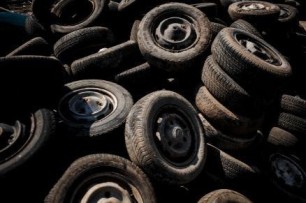
Know if it is worth buying used wheels or not
The tyres and wheels of your car are one of the most used external parts. They sometimes outperform their original capacity resulting in wear and tear due to rough surfaces. If left unnoticed, this can risk the safety of the passengers. So, you must ensure that your tyres are up to the standards as per the regulations set by the manufacturer, the road safety department, and the respective car company.
But what happens if you are facing issues with just one wheel? Do you have to go through the process of replacing all your wheels with new ones? What factors should you be watchful about, and how can you procure used wheels? Don't worry. At the end of this blog, you will know if it is worth buying used wheels or not. So, let's get started.
1. Why do we think it can be worth buying used wheels:
Purchasing used wheels is a good option if your four-wheelers have damaged wheels. This is a significantly cheaper and temporary option than buying a new set of wheels. You can comfortably use those used wheels without burning a hole in your pocket.
2. Understanding the quality of used wheels:
It would be best if you examined the used wheels closely. Be aware of all the cracks, dents, bends, or if any parts and pieces are missing. Surficial damages which are not causing any defects internally can be ignored. There might be issues with the structure of the wheels and rims, which can risk a puncture or blowout on uneven roads and at high speeds.
You can go to a junkyard where they sell used parts. But if you want to avoid the hassle and get quality used wheels and other components, visit an auto parts store that can provide you with top-quality used wheels.
3. Examining the used wheels for damages and defects:
A thorough visual examination is one of the best ways to determine the quality of the used wheels. The second solution is to take a test drive with those wheels. But there are situations where you might not be able to take a test drive, miss out on certain damages, or fail to understand the gravity of what might seem to be surficial damages. You should know other ways to inspect those used wheels in such cases.
If the wheel's outer rim has visible cracks, bends, or dents, it is more likely to get damaged, which might eventually cause a flat tyre. Examine the wheel for corrosion, rust, chipped paint, etc. Used wheels with improper or defective bolt holes should be immediately rejected. Test the wheel by rolling them on an even surface and avoid using them if you see any wobble, misaligned or sideways movement. This usually happens when the wheel is bent but could be difficult to notice during a visual examination.
4. Check the material:
Steel works quite well but affects the car's speed and acceleration since the material is heavy. People often use alloy rims as they are considered a good combination. It upgrades the look of your vehicle to give it a more sporty vibe, gives you a better driving experience, and eventually, helps you save fuel and money. You need to check the tyres' material and immediately reject used wheels with slight damage, corrosion, or rust.
Now you know if it is worth buying used wheels or not. And while we are considering wheels and their alternatives, a sudden accident or ending up in unfortunate circumstances can cause severe damage to your car. Getting those defects fixed can cause a substantial financial burden in times of distress. You need to purchase car insurance which would help you cover the massive costs of fixing and repairing in complex cases. You must explore all your options and buy reliable car insurance India with a reasonable premium and the best benefits.
Click HERE to learn more about the benefits of car insurance India.
Disclaimer: The information provided above is for illustrative purposes only. To get more details, please refer to policy wordings and prospectus before purchasing a policy.
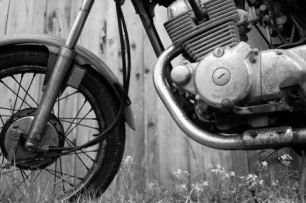
Everything you need to know while insuring your old bike
The craze for new things never dies out. You might ride your new bike or car more, and eventually, your old bike starts getting dust all over it. But you can't just let it sit there and slowly rust and get damaged to the point where it would be a huge pain to repair the damages, maintain and get it serviced regularly. There can be various risks and damages your old bike might go through over time.
But why is it essential to ensure that your old bike is up and running? Well, there could be multiple scenarios where old bikes may come in handy. You could land up in an emergency and might not have your new vehicle at that point. Or you could get stuck with the new car if it does not start up and you must urgently be somewhere. These situations will make you realise why it was an excellent decision to keep it up to date, maintained, damage-free, and keep up with its insurance.
This blog will discuss everything you need to know while insuring your old bike. All this information will provide context when you meet up with your insurance company officials or apply for insuring your old motorcycle online.
1. You need to be aware of the depreciation:
When your vehicle gets old, its original value depreciates over time. If it's more than a year, but under two years, the actual value depreciates by ten percent. The bike's value further declines by almost fifteen percent and more, depending on the manufacturing year.
This also varies as you compare one insurance company's list of depreciated values to the others. The primary point here is to make sure that you know what the vehicle is worth by consulting an expert or researching a bit about the current market value on your own.
2. Be mindful about renewals:
It would help if you were careful about renewal dates while purchasing third-party two-wheeler insurance for your old bike. This insurance does not grant you any grace period for your insurance renewals. Even if you realise your renewal payment is due a day later, the third-party two-wheeler insurance for your old bike will be considered null and void. But you can escape this trouble by buying comprehensive two wheeler insurance online India for your old bike. This type of insurance grants you a grace period of thirty days. The renewal of your insurance policy can only be completed after a thorough inspection of your old bike that is to be insured. To ensure you avail of all the benefits of the policy, please renew it timely.
3. What happens to the premium:
Since your old bike's market value has depreciated, you do not have to worry about sky-high premiums. Your premium rates would be determined according to the value of your bike. But this does have a side effect. You will be subject to lower IDV-Insured Declared Value which derives the assured amount you will get from the insurance based on the asset (in this case-the bike) in case of loss or theft. The compensation would be pretty low since your premiums and the value of your bike is already depreciated.
Other factors you need to include are the add-on benefits, the engine capacity, and the best premiums without diminishing the features of your policy cover.
Be it an old bike or new; you need to get two wheeler insurance to protect your motorcycle against mishaps. You can explore all your options and purchase the best two wheeler insurance online in India to serve your needs. Insurance firms are adapting to technological advancements and moving towards the online revolution. You may also reduce the physical and mental stress of buying insurance the traditional way by purchasing two wheeler insurance online India.
Click HERE to know more about purchasing the best two wheeler insurance online India.
Disclaimer: The information provided above is for illustrative purposes only. To get more details, please refer to policy wordings and prospectus before purchasing a policy.
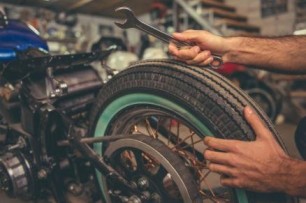
Shedding more light on CVT (Continuously Variable Transmission)
The most heard of types of two-wheeler transmission have been manual and automatic transmission. While manual transmission requires the driver to operate the gear stick and clutch to change gears, the automatic transmission does not need any driver input to change forward gears under usual driving conditions.
While automatic transmission has made driving significantly easier, there's a new type of transmission that might take over. This is CVT (Continuously Variable Transmission). A CVT is an automatic transmission where the rider doesn't need to apply the clutch pedal manually.
However, there are fundamental differences between the two. Traditional automatic transmission has a fixed number of preset gears for the driver. However, CVTs have an unlimited number of gear ratios that can accommodate the driving conditions at any given moment. It allows seamless shifts without hard shifting points, making the ride remarkably smooth.
This blog gives you an insight into this fascinating technology and why it is steadily gaining popularity.
Benefits and drawbacks of CVTs.
Benefits:
1. Improved fuel efficiency – Unlike typical automatics, the CVT can change the gear ratio forever to maintain the engine running at peak fuel efficiency. Overall, the more gears offered by an automatic transmission, the better the optimisation of engine power.
2. Smoother driving experience – The absence of harder shift points means the CVT delivers much more consistent performance on the roads. There are no sudden lags in acceleration as experienced with automatic and manual transmissions.
3. Driving uphill – Driving uphill or on steep roads is easier using a CVT. This is because, in regular transmissions, the driver would have to find the perfect gear ratio by themselves. In contrast, a CVT finds the exact ratio needed immediately, providing a smoother driving experience.
Drawbacks:
1. Heavy on the wallet – CVT systems are generally more costly than traditional counterparts. The repair and replacement costs are also more expensive. Additionally, CVT systems don't last as long as conventional systems and start failing more quickly.
2. Lack of high-performance capability and durability – A CVT is an excellent choice for an average driver, but it can't handle the higher horsepower. Hence it isn't used for performance and sports cars.
3. Noisiness – CVTs are louder and whinier than automatic transmission. Under fast acceleration, they tend to drone. This makes driving less enjoyable for the driver.
Working mechanism of CVT.
CVT systems use a pulley system to function effectively. Unlike the traditional automatic transmission, CVT uses several parts for shifting between gears.
This system depends on cones to change through the infinite gear ratios seamlessly in a CVT. These cones are attached to each pulley and the chain and can be moved around to adjust the dimensions of the belt. This allows for faultless shifting, which results in improved power output and better mileage.
A pulley connects the bike's engine and CVT and manages the direction of power. Based on the required energy, the diameter of the pulleys is adjusted.
The CVT's value lies in its simplicity. It has very few components but can work more efficiently for an average driver with increased fuel economy and steady, smooth operation. This technology can enhance the experience of a driver, but not all that glitters is gold.
The main drawback is that the repair costs might be overwhelming. Rather than fearing the expenses, take a step towards sensible investment, i.e. insurance. Consider looking for the best quotes online. Buy 2 wheeler insurance online and get amazing advantages that ensure a noteworthy return on investment during your hour of need.
Click HERE to know more about 2 wheeler insurance online.
Disclaimer: The information provided above is for illustrative purposes only. To get more details, please refer to policy wordings and prospectus before purchasing a policy.
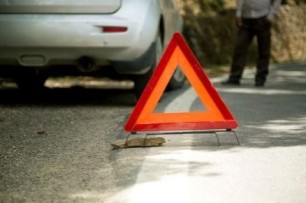
Outstation emergency coverage in car insurance: Everything you need to know
Being stranded in an unknown location with a broken-down car is probably one of the scariest things ever. Even if you are the most experienced driver, a situation like this can cause panic and anxiety. Over the years, roadside assistance has improved significantly, and highway services are prompt with their response time. One such service provided by your insurance company is the outstation emergency coverage. It never hurts to know that in case of an accident or a breakdown, your insurance provider has an option to help you.
Outstation emergency covers can vary depending on your add-ons and the overall premium. Still, in brief, this add-on offers you services such as emergency assistance in case of a breakdown or accident. Under this cover, your insurance provider is bound to help you wherever you are. If, due to severe damage, the car cannot be fixed on-site, the responsibility of taking the car to the nearest service station falls on them. In some cases, they are also liable to drop you at a safe location of your choice.
Let us look at the services that fall under the outstation emergency cover.
1. Towing facility in case the vehicle is immobile
2. Battery charging in case the battery dies out
3. Tyre change in case of flat tyres
4. Fuel refilling in case of an empty fuel tank
5. If you are locked outside the car, the company might arrange a spare emergency key
What to look out for while purchasing an outstation emergency cover?
1. If you intend on purchasing this service, your premium will cost extra.
2. The emergency should occur outside a hundred-kilometre radius of the registration location.
3. You are eligible for NCB even when you make an outstation emergency claim.
4. The cover can be purchased for up to 03 years.
5. Check the limitation on the number of outstations claims you can make.
How to avail your outstation emergency coverage?
1. Alert the insurance company:
You should notify the insurance company about the damage or accident as soon as it happens. Once they are informed, they are liable to send the support staff immediately. The company will send a surveyor to analyse the damage and prepare a report.
2. Do not withhold any details:
Your insurance provider is supposed to help you. Do not hide details of the damage or breakdown. The more information they have, the better the report. An excellent report ensures a hassle-free insurance claim. Upon investigation, your claim might not be processed if they find any ambiguity.
3. Repair and maintenance:
If your vehicle needs repair, it is best to go to the service station associated with your insurance provider. If you cannot find a network service provider, you will be asked to pay for the repair, which the insurance company will later reimburse.
As mentioned above, even the most experienced drivers can panic during such situations. Remember to turn on the parking lights and keep the car breakdown warning signs behind and ahead of the car. If you have network coverage, notify your family or friends about your location.
The above points will give you a detailed idea about the outstation emergency coverage. With this coverage in hand, you can go on long road trips and weekend getaways with your loved ones without constantly worrying about flat tyres, empty fuel tanks, or a complete breakdown. Coverage schemes like these are a boon for travel enthusiasts who enjoy road trips.
Put in your best research and browse multiple options on various sites before you buy car insurance policy online. Reading about the various insurance providers and their coverage will give you a better insight into what services are better suited for you. Also, making an online deal will offer you several advantages with just a few clicks and from the comfort of your home.
Click HERE to buy car insurance policy online.
Disclaimer: The information provided above is for illustrative purposes only. To get more details, please refer to policy wordings and prospectus before purchasing a policy.