


General Insurance Blogs, Articles & Updates by - Magma Insurance
Have us call you
- RENEW YOUR POLICY
- BUY NEW POLICY

GENERAL INSURANCE BLOG

Beware of those selfies you might be going for in dangerous locations
The youth of today believe in capturing every moment. Thanks to technology advancements, photographing a memory takes only a few clicks. With the onset of the age of social validation, clicking unique pictures is the way to stand out in a crowd. People have gone to lengths trying to capture a perfect moment. The results are sometimes outstanding and, other times, an invitation to danger. In this article, we will discuss how selfies have taken a dangerous turn in the past and how to look out for your safety while clicking pictures.
Over the years, we have seen a rapid rise in the use of mobile phones in the country. Be it for communication or the accessibility that a phone brings, people of every age group have invested in a smartphone. What comes as a shock is that India has a record number of deaths caused by selfies. News about people drawing, falling off a cliff, and car accidents became part of our daily lives.
How do we avoid these situations? Let's take a look at how.
1. Maintain a safe distance:
If you intend to take selfies on a bridge or a high-rise area, it is best to maintain a distance of a few feet to ensure your safety. The weather at such locations is highly unpredictable, making the site more challenging to manoeuvre. Avoid leaning too far, and stay away from the railings. If you want to catch the view more closely, invest in a sturdy and good-quality selfie stick that can be extended further. This way, you can rest assured that you are getting the best picture while being safe and responsible.
2. Avoid busy roads:
The roads in India are almost always crowded with people and vehicles. Everything starting from pedestrians to rickshaws and trucks, take the same road. To avoid congestion and accidents, avoid taking selfies on overcrowded roads. Not only are you putting yourself at the risk of getting hit by a vehicle, but you are also running a risk of mugging and robbing. It is best to keep your phones and cameras inside your bag for safekeeping.
3. Avoid water bodies:
The beautiful picture of water washing your feet and waves crashing from across is a sight to behold. But did you know that most selfies-related accidents occur by drowning? If you want to take images around beaches, rivers, or waterfalls, maintain a safe distance from the water. Water is powerful and is capable of dragging you with it. Being mindful of your surroundings will keep you safe and help you revel in the beauty of the space.
4. Be present at the moment:
No matter the number of selfies you take, none of them will be as meaningful as the experiences of exploring a new place. Try to interact with the locals and understand the place's culture to make lifetime memories. Explore new food options and learn how to make them, and do not forget to collect souvenirs as memories from the journey.
These were a list of simple tips that you can follow to keep yourself safe while clicking selfies. Remember that being mindful of your surroundings and taking adequate steps to ensure your safety is crucial when exploring new places. If you find yourself in situations like these, get help as soon as possible. And to cover the costs of such accidents and mishaps, invest in the best personal accident insurance India. Personal accident insurance is a smart way to safeguard yourself against accidents and the costs incurred. Stay safe and ensure the safety of people and places around you.
Click HERE to buy the best personal accident insurance India.
Disclaimer: The information provided above is for illustrative purposes only. To get more details, please refer to policy wordings and prospectus before purchasing a policy.
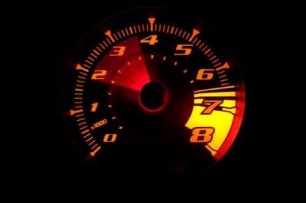
Complete guide on rev matching on bikes
In India, the majority of motorcycles lack a slipper clutch. While learning motorcycle, many people find it challenging to downshift correctly. The engine comes under stress because they typically downshift while holding the clutch, which results in the higher gear accelerating harder than the lower gear at the same speed. To match that speed on the lower gear for a seamless transfer, one should preferably rev a bit higher before downshifting. Otherwise, you would be "engine-braking," which is not an intelligent way to slow down.
The correct way of downshifting is to blip the throttle between shifts to match the revs to the speed. This is also known as revving. In this post, we are talking all about it. So, without further due, let's get into it.
How to rev-match correctly?
● As you press the brakes, hold the clutch and downshift as you start to slow down (do not release the clutch yet).
● Now, "blip" the throttle while maintaining clutch pressure to increase engine RPM gently.
● As soon as the engine starts to rev, let go of the clutch instantly.
● Don’t forget to keep carefully applying the brakes. When you downshift, the aim is to match the revs needed for the bike to move at that precise pace.
● If your bike jerks and slows down unexpectedly, it means that the engine's RPM wasn't high enough. Try to rev it up further the next time you try it.
● The last step would be to practice and practice. Getting it right the first time is not necessary. Don't give up. You will learn how to downshift with time.
The importance of rev-matching.
Now that you know what occurs when your motorbike is rev-matched, let's talk about its significance. Downshifting without rev-matching may cause a significant shock in the motor while travelling at high speeds, especially on large bikes with high horsepower output. The result will be a back wheel that hops, skips, and steps out of alignment. In a scenario like this, controlling the motorcycle at high speeds requires excellent control and precision. The shock won't be as extreme or dramatic on motorcycles with less power, but it still has the potential to cause an accident.
Matching your RPM reduces engine wear and tear, yet another crucial justification for rev-matching. The shock that results from improper rev matching puts more strain on the engine and gearbox, among other parts.
Does rev matching consume more fuel?
The forceful use of the accelerator does cause it to use somewhat more fuel, but only little than usual.
If done properly, rev-matching can assist you in downshifting efficiently and reduce stress on your engine and clutch. It's a tactic that bikers employ frequently. It's crucial to keep in mind that you don't have to match your revs perfectly at first when you're practicing. To master, like with any other ability, rev-matching needs considerable practice. You will eventually be able to tell when your engine and road speed are in sync.
Take your first step towards rev-matching today, and don't forget to be safe. Riding on roads is always an invitation to mishaps that may be a potential threat to you and your bike. Always stay alert while riding, wear a protective gear helmet, and avoid overspeeding. Do not forget to invest in the best bike insurance for an additional safety net over your bike. Buy bike insurance online today and gift yourself with benefits that will eliminate the financial stress off you during panic situations.
Click HERE to buy bike insurance online and get rewarded with effective benefits.
Disclaimer: The information provided above is for illustrative purposes only. To get more details, please refer to policy wordings and prospectus before purchasing a policy.
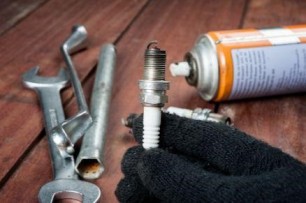
Complete guide to changing the spark plug of your bike
If you are a biker, you know the importance of maintaining your bike in top-quality condition. Some people learn ways to keep their bikes on their own, while others depend heavily on mechanics and service stations to maintain their vehicles properly. In this article, we will understand the functions of one of the most vital components of a bike, the spark plug, and how to maintain and change it.
What is a spark plug?
A device that delivers electric current to the combustion system via the ignition point is known as a spark plug. A spark plug ignites and fuels the vehicle using an electric spark while maintaining the engine pressure.
What key dimensions do you need to look for in a spark plug?
1. Diameter:
The right diameter is imperative for the proper functioning of the spark plug. The wrong diameter can affect the internal components and damage the bike.
2. Reach:
The spark plug's optimal range or reach determines its ignition capacity. If the length of the spark plug is too short, it will fail the ignition. And if it is too long, it might ignite pre-emptively or get jammed and hit the valve inside.
3. Range:
The range of the spark plug is calculated by the distance from the insulator's tip to the ceiling ring. A longer distance will heat the plug and cause pre-ignition, while a shorter range results in a colder plug resulting in easy wear and tear.
4. Gap:
The distance between the centre and the grounded electrode is known as the spark plug gap. The bigger the size of the gap, the bigger the spark produced.
What are the indicators of a damaged spark plug?
1. When you stop the bike, and the engine starts sputtering or idling, it indicates a failed spark plug.
2. If you have trouble starting your bike engine, it could indicate trouble with ignition and the spark plug.
3. If you notice corrosion in various parts around the spark plug, then it is high time to change your spark plug.
4. You might have a faulty spark plug if you notice a poor fuel economy.
Various other factors are indicators of a faulty spark plug. If you notice any problem while riding your bike, it is best to take your vehicle to a mechanic and inspect it as soon as possible.
How to change a spark plug at home?
Although it is advisable to make any changes to your bike under the supervision of a trained mechanic, if you want to change your spark plug, the following list will help you with that.
1. The first thing that you need to do when changing a spark plug is to pull the cap and remove the wire. Remember to do it gently, as a sudden tug or pull can damage the connection and prevent the ignition from happening.
2. Attach the ratchet to the plug and make sure that the plug is fitting properly inside the socket. Using the ratchet, turn the spark plug till it is loose, and then carefully remove it.
3. Inspect the plug for oil and soot deposits or other damage. If the spark plug is greasy and dirty, it is high time to change it with a new one.
4. Before fixing a new spark plug, it is better to check for the range, diameter, and space of the spark plug. The exact spacing of the spark plug will be mentioned in the user manual.
5. Clean the new spark plug and place it neatly to ensure it fits properly.
6. Tighten the spark plug and put the cap back on.
These were the steps you need to follow when you want to change the spark plug of your bike. Remember that if you notice any abnormality with your bike and experience trouble while driving, it is best to get it checked by a mechanic. Invest in bike insurance to safeguard yourself against the cost of repair and maintenance. Bike insurance adds value to your bike and helps you gain a better riding experience with more focus on security and less financial stress.
Click HERE to buy bike insurance.
Disclaimer: The information provided above is for illustrative purposes only. To get more details, please refer to policy wordings and prospectus before purchasing a policy.

Here are some strange facts about your body that you should know
The human body is the basis of all sustenance. All your organs are arranged in a highly complex manner and have been connected to derive energy from each other’s functionalities.
Every day, thousands of scientists across the globe conduct further research, trying to discover new things about the body which help us thrive even in the worst of circumstances.
You might have read about human anatomy in your school and college, but we bet there are many weird things about the human body that you might not know. Intrigued? Here are some strange facts about your body that you should know. Let’s get started.
1. Did you know that babies have 300 bones during birth instead of the usual 206 bones that develop over time as you grow older? A baby’s bones are delicate, and their bodies have bones half-made of cartilage.
2. The longest bone of your body, called Femur, is located in your upper leg and can manage almost thirty times your body weight.
3. The saliva your body makes every day, if collected for an average lifetime, can fill up to twenty thousand litres, roughly accounting for two giant swimming pools.
4. Almost twelve percent of people dream of monochrome (black and white). This had significantly reduced from fifteen percent before colour televisions and media took over. It is quite intriguing to observe how colour media has influenced the dream patterns of human beings apart from other impacts they have caused on our lifestyles.
5. You are more prone to heart attacks on Mondays due to the sudden stress you face as you get back to work. Your body gets a little relaxed over the weekend, and the pile of work at the beginning of the week creates sudden tension in your body. Plus, having excessive alcohol in your weekend plans makes your body vulnerable to heart attacks.
6. You are usually taller when you wake up in the mornings! This happens due to the compression of bones’ cartilages during the day. So, the body relaxes at night, and you are a little taller in the morning. An ode to gravitational force, it seems!
7. Ever wondered why permanent tattoos are so hard to remove? That’s because they are ingrained in your nerves and not on the top layer of your skin. Permanent tattoos take their space in your immune system, so lasers must be involved for their removal. Using lasers kills the cells, and the remaining ink released is processed by macrophages, which also helps heal the laser injuries. The tattoo takes a few sessions to start with the fading process.
8. See your hand. You see that little finger, or as you call it, your “pinkie” finger? Research has found that the maximum strength of your writing lies in your little finger, and you would lose fifty percent of the power if you lost that pinkie. Who would have thought?
We hope these facts amazed you and catered to your curiosity about your body. And while we are on the subject of strange facts, we must not forget that health is wealth, and if health is lost, nothing stays the same. You must take good care of your physical and mental health by eating right, staying safe, exercising, etc.
Also, you must stay prepared for unforeseeable circumstances you might find yourself or your loved ones. There can be no better investment than investing in your health. If you are in the best of your health, you can achieve all your aspirations and get the maximum returns. Health insurance is the right way to approach such situations. Explore your options and purchase the best health insurance policy in India which best suits your needs and provides comprehensive coverage.
Click HERE to know more about the benefits of the best health insurance policy in India.
Disclaimer: The information provided above is for illustrative purposes only. To get more details, please refer to policy wordings and prospectus before purchasing a policy.