


General Insurance Blogs, Articles & Updates by - Magma Insurance
Have us call you
- RENEW YOUR POLICY
- BUY NEW POLICY

GENERAL INSURANCE BLOG
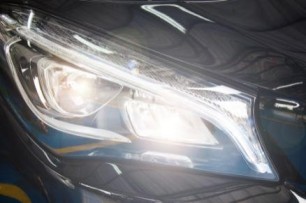
Is personalising your car a good idea
Personalisation is a key to reaching the customers' hearts in the current times. Every brand has been trying to create its products with options to add a personalised touch for the consumers to feel like their own. The entire marketing world has been trying to come up with ways in which they can win this race and convert more customers to purchase their products and keep coming back for more. Personalisation, as a critical factor in today's customers' buying patterns, has a considerable influence and can change the game in the market.
We can comprehend personalised touch in small products like clothing, accessories, soft toys, sports kits, skincare items, and much more. But, can you add this unique touch to your car? Are such options available in the market? Are these choices limited? Are you someone who is looking for the answers to these questions and perhaps some more information on the same?
This blog answers all these questions about personalising your car and whether it is a good idea. Let's get started.
1. Number plates: yay or nay?
Customers pay extra money selecting a unique number to add that personalised touch to the vehicle. And this personal number will help you fetch a good deal as it amps up your car's resale value when you want to switch to another vehicle and close an agreement on the car you currently own.
On the plus side, a personalised number will make you part of the cool collector's club in the world of cars. It creates a "connoisseur of cars" persona for you as well.
2. Increases the level of safety while driving.
Adding a personal touch to your car requires a massive investment of money. The amount of money you spend depends on the features of your vehicle you want to modify and the accessibility of the tools, among other factors involved here.
But since you spend quite a large amount of money, you try to protect your car against any damages. This leads to you making mindful choices on the road, including taking extra safety measures while driving, ensuring that you obey the traffic rules even in urgent times, and avoiding any "road rage" type of scenario.
You can customise your mirrors to lessen the chances of blind spots in your vehicle while driving. You can get a complete view of your car's positioning and the vehicles near you if you decide to get a 180-degree mirror.
3. Upgrade the entire look.
You can get High-Intensity Discharge (HID) headlamps for your car, which would help you upgrade the look of your vehicle and come in very handy by improving the visibility when you are out on the road during the nighttime.
These HID headlamps work with a light temperature and emit subtle blue light, which elevates the look of your car. The blue light not only looks attractive and complements the car's exterior but has been proven easy on the eyes and does not blind the driver coming from the opposite direction.
Speaking of investing money into upgrading the look of your vehicle with the help of personalisation, you also need to ensure that you protect your car against damages. Not all accidents come with a warning and are your fault. But you must ensure that you wouldn't want to get involved in such chaotic situations.
You must have car insurance to stay stress-free financially and focus on resolving the situation if you end up in one. Explore all your options, check in with your current insurance provider, and Buy New Car Insurance which caters to your needs in the best ways possible.
Click HERE to learn more about how you can buy new car insurance.
Disclaimer: The information provided above is for illustrative purposes only. To get more details, please refer to policy wordings and prospectus before purchasing a policy.
Let's understand the evolution of two-wheelers in India
Two-wheelers have been around for decades. Almost every average family in the country owns a two-wheeler which they use to run errands. The purpose of the two-wheeler depends on several circumstances and the motive of the commute. Two-wheelers are the most popular personal transportation services and fall into the affordable category. The prices increase depending on the type of the two-wheeler, its purpose, and its features.
But have you ever thought about the history of these vehicles and how they grew so prevalent in our country? How did they first come into circulation? Well, we will sail you through the evolution of two-wheelers in India through this blog.
1. What was the purpose of two-wheelers?
The two-wheelers were developed to provide people with a safe and convenient option for smooth rides. They have evolved over the years, and we now have bikes that range in lakhs with multiple fancy features, a dream of every bike fanatic. Now let's take a road down memory lane and revisit the evolution of two-wheelers in India.
2. The era of vintage bikes.
We all know the brands that manufacture classic and vintage-style bikes. Apart from being known for their royal appearance and elegance, these bikes represent a class apart from how they steal the show in the market. It was the year 1902 when a single-cylinder engine motorcycle was sold first time in India. Purchasing or owning a bike of this category used to express a solid and respectable financial status and background, rather than just being considered a bike used for everyday purposes.
3. What happened after the classic bikes became old news?
The market welcomed other two-wheeler brands which manufactured these noisy bikes that would leave their impressions behind by the loud sound of their silencers or by the whiffs of smoke released. The era of scooters came in as these bikes became popular.
The design, the efficiency, and how it differed from the widely popular bikes ignited its charm. The popularity of scooters escalated beyond expectations in the 70s till the late 80s, and there used to be a waiting period for the purchase! The crazy high prices of the scooters did not discourage the people from waiting for an extended period to bring them home.
4. Welcoming other foreign brands.
At the beginning of the '80s, India became a popular destination for various foreign brands to make their sale. The two-wheeler industry formulated partnerships with these brands to bring them to India at a cost affordable to the Indian audience. The collaboration with these companies grew exponentially, with the foreign brand names becoming a standard of every Indian household.
Today, the bike industry has diversified, from comfortable tourers to compact city bikes and from fuel-efficient to race engines.
Some more informative pointers to understanding the evolution of two-wheelers in India include how these landmark bikes and other categories became a reference model for the other brands' style, design, and comfort patterns. Now, we are heading into the era where electric two-wheelers are no more a concept but a reality!
Quite interesting to visit how two-wheelers in India became widely popular. And while we revisit the timeline of these developments, you need to be aware of how crucial it is to safeguard your two-wheeler. Being a bike owner feels fantastic, but living your responsibilities as the owner is paramount.
You must hold yourself accountable to maintain your bike's best shape. This can be possible with the help of two wheeler insurance.
Take your search online, and find the Best Two Wheeler Insurance India to buy coverage that keeps your asset safe and sound. Invest in a policy that ensures the best returns and an efficient claim settlement process.
Click HERE to know more about the benefits of buying the best two wheeler insurance India.
Disclaimer: The information provided above is for illustrative purposes only. To get more details, please refer to policy wordings and prospectus before purchasing a policy.
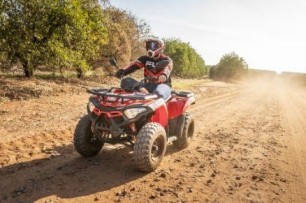
Know how ATVs work and why they are becoming a popular adventure option
All-terrain vehicles, popularly known as ATVs, are a new trend in the automobile market. With many options bombarding the automobile industry, be it utility ATVs, sport ATVs, or children's ATVs, it is difficult not to know about them. This article will look at all the options, their functionality, their working, and why they are becoming a popular adventure option.
What is an ATV?
An ATV is a popular off-roading option designed to travel on four wheels. There are two subcategories to ATVs. The first one is a TYPE I ATV, designed to be used only by one person, and no other passengers can be on board. TYPE II ATVs are more popular amongst tourists and can board two to three people depending on the vehicle's build.
ATVs are also built-in various sizes and for different utilities, and we will look at each in the next section of this article.
What are the different kinds of ATVs?
1. Sport ATVs:
If you enjoy adventure and the occasional bouts of an adrenaline rush, then sports ATVs are just for you. They are made especially for speeding and tricky turners. It glides smoothly across corners and different surfaces. Sports ATVs are the perfect machine for motor enthusiasts who enjoy the thrill of speed and sports.
2. Utility ATVs:
These ATVs are for more labour-oriented work and to transport heavy objects from one place to another. Some ATVs come with levers that can lift heavy objects and place them in different positions as per the requirement. With mighty engines, these can navigate through any terrain, including rocky and hilly areas.
3. Side by side ATVs:
These ATVs or quads can seat up to four people. These are not operated using handlebars. Instead, they are equipped with steering and provide riders with an experience similar to driving a car. These can be used in snow, sand, and deserts.
4. Youth ATVs:
They are designed for younger people, especially children looking to experience ATVs. These are equipped with full safety measures to ensure the protection of riders at all times. The engines are not as powerful as normal ATVs and range between 50cc to 125cc.
5. High-performance ATVs:
As the name suggests, these are high-performance vehicles, as they are equipped with extremely powerful engines, more than the power and acceleration compared to other ATVs. The engine capacity ranges anywhere from 350cc to 700cc.
Why are they a popular sporting option?
Because of their agility, speed, and ability to manoeuver different kinds of terrain, ATVs have gained traction over the years. Watching these can be fun and thrilling. Many sporting activities happen around the year, and if you enjoy all kinds of riding or racing, ATV sporting is a must.
Driving an ATV requires a lot of physical exertion, skills, and tactics, which is why it is a challenging and interesting option for adventure seekers. Trail racing, motocross, cross country, desert racing, hill climbing, etc., are some of the more popular ATV sports in the country.
Having discussed all the important elements of an ATV, it is time to shed light on the importance of careful driving and maintenance of your vehicle. While ATVs are an interesting option if you enjoy riding, keeping yourself and others around you safe is important. Always wear safety gear and helmets while driving ATVs.
Remember to take your ATV for regular servicing and maintenance to ensure their longevity and optimum functionality. Do not forget online Motor Insurance Renewal to safeguard yourself against the costs and expenses of maintaining an ATV.
Click HERE for online motor insurance renewal.
Disclaimer: The information provided above is for illustrative purposes only. To get more details, please refer to policy wordings and prospectus before purchasing a policy.
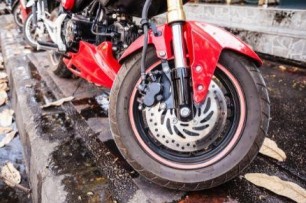
Let's know more about USD forks in bikes and how are they useful
Owning a bike is a fun and thrilling experience. Bikes make it easier and less time-consuming, whether you have to go to your office, ditch the cab surcharges, or go for a monthly grocery run. Adding to that, impromptu road trips, midnight drives, etc., are some of the bonuses of having a bike. Familiarising yourself with every inch of your bike brings you closer to your bike and helps keep your bike functioning properly for a long time.
But there are many parts of the bike that not everyone is familiar with, and even if they are, they might not know the importance and the maintenance of the same. In this article, we will take up one such part of your bike's body and deep dive into understanding its mechanism and usage. We will discuss your motorcycle's Upside Down fork or USD forks.
1. What is a USD fork or upside-down fork in your bike?
A USD fork or the upside-down fork is foldable, fitted in an upside position on your bike. Most modern bikes are equipped with these for better movement and agility of your motorcycle. Their primary purpose is to reduce the unit's weight by loading heavier components onto the lower part of the fork. USD forks also enhance the strength and integrity of the different elements in your bike.
USD fork is responsible for handling the suspension of your motorcycle. As opposed to the telescopic forks, in USD forks, the sliding tube is on the lower side of the wheel. Since it is fixed with the help of a triple clamp, it is better suited for handling heavyweight and maintaining the weight of the suspension system. Most heavy-duty and racing bikes have USD forks in them.
2. What is the use of USD forks?
Sports bikes are meant to give high performance concerning pick up, speed, and torque. The USD forks permit the riders to use their bikes efficiently without compromising the quality of their riding experience.
3. What are the disadvantages of USD forks?
Although USD forks perform better, they are way more expensive than conventional telescopic ones. And since the cost is a crucial factor in making bikes, the motorcycle's overall cost increases significantly when the manufacturers use USD forks. Another disadvantage of the upside-down fork is that since it is more susceptible to shock absorption, the suspension is likely to wear off over time.
4. How to maintain USD forks?
Lubrication is the key to keeping your fork working efficiently and for an extended period. Ensuring no contaminants in the lubricant is one key factor to keep when maintaining your USD forks. Oil-based lubricants are best for such suspension systems. Ensure that the seals in your suspension are proper. The seals make it easier for the system to keep the dirt and oil separate.
Mudguards are another way to ensure the wheel's dirt and dust are thrown up and do not get into your suspension fork. Take your bike to an experienced mechanic and get a mudguard fixed to avoid contamination.
Remember that your bike is only as good as your maintenance. Regular servicing and maintenance are crucial to keeping your bike in perfect condition. To ensure you are not compromising on the care, buy bike insurance . Bike Insurance is a safety net that protects you from any extra expenses you might incur in damage or repair of various parts. Also, always ride with proper gear and with all the valid documents.
Click HERE to buy bike insurance.
Disclaimer: The information provided above is for illustrative purposes only. To get more details, please refer to policy wordings and prospectus before purchasing a policy.