


General Insurance Blogs, Articles & Updates by - Magma Insurance
Have us call you
- RENEW YOUR POLICY
- BUY NEW POLICY

GENERAL INSURANCE BLOG
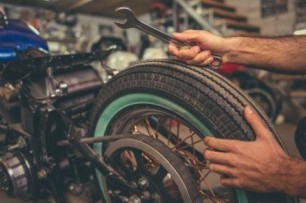
What are the customers expecting from the two-wheelers this year
Two-wheelers have been around for decades now. Once considered a symbol of status and background, now two-wheelers are vehicles of convenience. They help you run your daily errands, commute to work and other work locations, go for long drives, and several other purposes. Every year, different two-wheeler manufacturing companies release new models and versions of previous models with improvised features.
They conduct a market survey and analyse customers' demands who have been using two-wheelers for a long time. With the advancement in technology, different features and systems have been included in the two-wheelers to make them more efficient, fuel-saving, stylish, practical, and convenient.
Customers invest a lot of time and get influenced by several factors when determining which two-wheeler they want to purchase. Everyone wants to buy a trendy two-wheeler with multiple features that help make it more convenient, efficient, and within their budget. But how do you differentiate the demands of customers every year? What factors influence the needs of two-wheeler users and potential consumers? This blog will discuss the answers to all the above questions.
1. Improvised anti-lock braking system:
An anti-lock braking system is a modern technology development curated for two-wheelers for safety purposes. The ABS helps in monitoring the rotation of the wheels of the bike.
An efficient anti-lock braking system helps the tyres stay in contact with the surface whenever the two-wheeler rider uses the brakes. This helps avoid wheel skidding, spinning, or unrestricted slipping accidents. The entire purpose, as explained, is why this system is called an anti-lock braking system.
2. Tyres with excellent performance:
We cannot stress how much tyres can help to increase the bike's efficiency and performance. They are considered one of the essential mechanical parts after the engine of the vehicle. The engine's power is channelled into execution by the tyres, which happens in fractions of a second.
This high and fast execution level is why high-performance tyres are needed in a two-wheeler. And the modern vehicles are launched with superior quality tyres, thus enhancing the appeal and helping with improved grip and traction capabilities.
3. The body of the two-wheeler:
Vehicles with improved fuel injection systems also require bodywork that can be sensible aerodynamically. Lightweight materials are used to achieve an aerodynamic shape of the two-wheeler, which ensures a smooth riding experience while keeping the safety quotient intact.
The air resistance reduction capabilities of the aerodynamic structure of the vehicles have smoothened the entire riding affair in the new models.
Other features the customers look forward to are improved quality and framework of chassis and suspension, enhanced fuel efficiency, engines with liquid cooling capacity, traction control systems, slipper clutches, and several others.
We hope that this blog catered to a lot of questions you had about the consumer demands and how different features help improve the bike's quality and can prove to be the differentiators in buying a particular two-wheeler. And in the interest of learning about two-wheelers, you must also understand the importance of protecting your vehicle if you land in chaotic situations. Accidents never warn you before they occur.
So, it is a wise option to be financially prepared to focus on the situation and not worry about the money. This is why one must get 2 wheeler insurance. You can explore all your options from the comfort of your home and purchase 2 Wheeler Insurance Online to save time, money, and energy. Buying 2 wheeler insurance online will reward you with good premiums and a hassle-free process of getting it issued.
Click HERE to know more about the benefits of buying 2 wheeler insurance online.
Disclaimer: The information provided above is for illustrative purposes only. To get more details, please refer to policy wordings and prospectus before purchasing a policy.
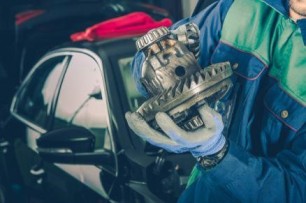
What is a differential, and how is it useful for cars
Have you ever been in a situation where the mechanic asks you to change or repair something, and you have no idea what they are talking about? Don't worry; we got you covered. In this article, we will talk about one less discussed car part known as the differential. This article will walk you through car differential's key points and functionalities.
What is a car differential?
A set of gears that transmits power to the wheels is known as the differential. The differential helps apply torque (rotational force) on the wheels to make turns and operate at different speeds.
The differential is a critical player in the movement of the driving wheels despite their positioning. We all are aware of the fact that while making a turn, the wheel on the outside turns faster than the wheel on the inside. Differentials keep such movements intact, smooth, and crisp.
Differential gets its name from the root word "difference." The name is related to the part where the differential helps turn the wheels at various speeds. Hence, the term is justified.
Working of a differential.
The differential is made up of several parts, of which the main components are considered to be the ring and the pinion gears. The carrier assembly is the part where the ring gets attached. A set of gears called spider gears are placed inside the carrier. These spider gears are again made up of a group of pinions and the side gears, which mainly function to create the differential action/activity.
After this is set in motion, the flow of power inside the differential forces the pinion gear to drive the ring gear, which ultimately rotates the carrier. This carrier then sets the pinion gears in motion and pushes the side gears. There are driver axles that help transmit the torque attached to the side gears, which ultimately drive your car's wheels.
Where is the differential found?
The differential is usually placed in the front axle assembly or the rear axle assembly of your car in modern cars and trucks. You will notice a centre differential that helps drive the front and the rear axle assemblies in AWD-all-wheel drive applications.
Types of differentials.
Vehicles use different types of differentials which accomplish their functions differently when attached to other technological systems in the car.
Open differentials have a relatively simple and efficient design. They have open designs, which include a pinion gear that drives the ring gear and sends power to both the front and the rear axles for further operation.
Limited slip differentials follow a similar pattern as the open differentials except where they can power both the axles even if one wheel loses traction. Limited slip differentials also contain a few extra parts called the clutch packs, which help in locking the left and the right side of axles together in case a wheel loses its traction.
Other types of differentials include locking differential and torque vectoring differential.
How would you know if there is an issue with your differential?
Your car's differential can wear out eventually due to various reasons. It would be best if you watched out for these signs to get an idea about the condition of the differential, such as annoying noise and vibrations, clunking noises, weird sounds while making turns, oil leakage, etc.
We hope this information helped you gain a better insight into the functions of different parts of your car. And while we are talking about understanding your vehicle's mechanical systems, it is equally essential to ensure the safety of your car. Explore all available options from the comfort of your home and Buy Car Insurance Policy Online that would optimally cater to your needs.
Click HERE to know more about how you can buy car insurance policy online.
Disclaimer: The information provided above is for illustrative purposes only. To get more details, please refer to policy wordings and prospectus before purchasing a policy.

Here are the easy and effective ways to master clutch control of a car
Mastering the clutch can be challenging for somebody who has just started learning to drive a car. When to press the clutch, when to let go, and what to do on a slope are only some of the many clutch-related questions we face every day as a beginner. But as somebody rightfully said, practice makes it perfect.
The more you practice, the better you handle the accelerator and learn to sync with the vehicle's clutch. However, you can do a few things to improve your driving experience and better understand your car's clutch system.
This article will look at all the simple tips and tricks you can follow to master the clutch and become an expert driver in no time.
1. Adjust your driving environment:
When practising your driving skills, it is essential to ensure the safety of yourself and others. Choose an empty field or road to practice your driving manoeuvres. Ensure that nobody is around you and your car for a considerable distance.
Wear your seat belt tightly and adjust your seat to get a comfortable driving posture. Your seat adjustment is key to good driving. If you have to strain your legs to reach the pedals or if you have to cramp your legs into position, then it will affect your driving adversely.
2. When you start the engine:
One of the main issues faced by new learners is starting the car. It is natural for the car to sputter or jerk when starting as a beginner. Talk to an instructor and learn how to manoeuvre the clutch and the accelerator. Once you turn on the ignition, depress the clutch fully and put your car in the first gear.
Now, slowly release the clutch and accelerate the pedals. A rule of thumb is that the accelerator and clutch are complimentary pedals. The more stress you put on the clutch, the lesser power you give to the accelerator. Repeat this step for few times to get a command over bite point of clutch.
3. Manoeuvring the slopes and hills:
One of the new drivers' biggest fears is taking the car up a hill. While it might seem like an intimidating task, with practice, you can master conquering any hill. While climbing a steep slope ridden with traffic, you must keep two things in mind. First, your car needs maximum energy to climb the hill.
Second, you cannot accelerate the car because you always risk crashing into another vehicle. In a situation like this, you must constantly alternate between controlling the clutch and handling the speed. Dip the clutch constantly to keep the car moving slowly, but if you feel like your vehicle is going to stop and recede, raise the pedal to give it some speed.
4. Conquer the fear:
While this is seemingly obvious, most people quit driving because of fear. Improper clutch handling brings the fear of accidents due to wrong coordination. It may also result in quicker wear and tear and might need replacement before time. But if you are covered by good car insurance, you can rest assured that all the expenses will be taken care of by your insurance provider.
Give yourself and your car as much time as needed to understand the vehicle's functionalities better. Most importantly, do not compare your learning speed with others because what matters is that you are keeping yourself and others on the road safe.
These are a list of a few things that you need to remember when handling clutch. As mentioned above, insure cars with affordable yet efficient insurance companies. With the new car insurance rates in the market, there are many options to choose from.
Click HERE to know new car insurance rates in India.
Disclaimer: The information provided above is for illustrative purposes only. To get more details, please refer to policy wordings and prospectus before purchasing a policy.

Here is the list of the top race tracks for biking enthusiasts
If racing fantasies you and if you consider yourself a biking enthusiast, we’ve got you. We all have been fascinated by high-speed car and bike chases and races in our lives. Be it watching Formula One racing or watching movies about speed, they blow our minds with all the stunts, the cinematography, the angles, the acting, sound effects, visuals, and most importantly, “the adrenaline rush” these sequences provide us.
But does India support such racing events? Are there any such riding competitions held in our country? Do you have such questions and require more information on this subject? Well, this blog will have answers which will pique your interest in this topic. Here is the list of the top race tracks for biking enthusiasts.
1. Buddh International Circuit:
Constructed in Greater Noida, Buddh International Circuit made it to the national and international headlines as India’s official Formula One circuit. India is one of the few countries with a racetrack for large-scale international events. The Buddh International Circuit also hosted the Indian Grand Prix for a couple of years, making India one of the few countries to pull it off.
And not just Formula One, this circuit has hosted several competitions such as the National Racing Series, the F1600, the T1 Truck Racing Series, and the National Motorcycle one-make series, to name a few.
2. Madras Motor Racetrack:
This racing track is situated in Irungattukottai, Chennai, India’s first official circuit. It was constructed around the 1980s and was finally set in motion for its purpose in 1990. It has seven turns in its short club track, while the track consists of twelve turns altogether. The short club track has a length of 2.1 km, and the entire circuit is designed in a clockwise pattern.
The racetrack acquired its grade two licence to host multiple bike and car races in several categories, including GT and touring car racing. It staged several other races except for Formula One. The Madras Motor Race Track has also hosted National Touring Cars, the National Motorcycle, and the one-make Motorcycle Championship, to name a few other races. The racetrack is considered to be fit for off-road Supercross competitions too.
The other purpose this racetrack serves is for bike, and car manufacturers, as several of them test their vehicles on this track to check the quality and other features and whether their product requires rework or is fit to be rolled out to the public.
Various automobile-related newspapers, magazines, and websites use these tracks to understand different vehicles better before publishing content about them for their enthusiastic audiences.
3. Kari Motor Speedway:
The racetrack called Kari Motor Speedway is located in Coimbatore, Tamil Nadu. This track was opened in 2013 and has been named after racer and designer Late Mr. Sundaram Karivardhan.
In the past, this track acted as a runway for power gliders and was a part of the Karivardhan-owned aviation company. The Kari Motor Speedway has hosted events like National Touring cars, one-make series, and the National Motorcycle Championship, to name a few.
Some other race tracks in India are Chicane Circuit, Hyderabad, Meco Kartopia in Bangalore, etc., which host various karting competitions.
We hope this helped you gain insights into how our country promotes such racing events and has avenues for the same. And in hindsight, while we cater to the biking fanatic in you, we would also like to draw your attention to the safety of your vehicle. To combat the unexpected situations and focus on getting your two-wheeler fixed, you need to purchase 2 wheeler insurance. Explore all the options provided by various insurance companies and buy the best 2 wheeler insurance which would serve your needs optimally.
Click HERE to know more about the benefits of 2 wheeler insurance.
Disclaimer: The information provided above is for illustrative purposes only. To get more details, please refer to policy wordings and prospectus before purchasing a policy.