


General Insurance Blogs, Articles & Updates by - Magma Insurance
Have us call you
- RENEW YOUR POLICY
- BUY NEW POLICY

GENERAL INSURANCE BLOG
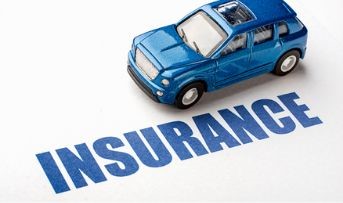
Incentives for policyholders may encourage safe driving on roads
The number of vehicles on Indian roads is witnessing an ever-increasing trend. This graph simultaneously shows a sharp rise in online motor insurance policyholders. This is primarily due to the increase in the disposable incomes of families and the changing lifestyle. However, this has also resulted in a drastic increase in road accidents and road rage cases.
It is the need of the hour to promote safe driving on the roads so that people feel protected while using the streets. Providing various incentives for policyholders by online motor insurance companies may encourage safe driving on the roads. Let us see how.
1. Telematics:
Driver telematics is gaining popularity and is an important tool to study and alter irresponsible driver behaviour on the roads. It can also be used as a data analysis tool to provide insights into driving behaviour and reward or penalise a driver.
Telematics in insurance can be app-based or black-box based. It can be useful in tracking driver behaviour, speed, acceleration style, clutch use, braking pattern, etc. Motor insurers can develop a point-based system and reward safe driving on roads with positive points. This means you will be rewarded with positive points if you maintain a good average speed, do not jump traffic signals, and are not involved in any accidents.
On the other hand, you can be penalised by providing negative points if you overspeed, jump traffic signals, or indulge in rash driving and accidents.
The drivers with positive points at the end of the insurance term get a discount on their renewal premium as an incentive. Drivers with net negative points at the end of the year will be charged a higher premium as a punishment. This can provide drivers, especially beginners, a great incentive to drive safely and responsibly to lower their premiums.
2. No-claim Bonus:
Most online motor insurance companies already provide a no-claim bonus or NCB to incentivise safe driving under a comprehensive car insurance policy. You get discounts of up to 50% of the insurance premium at the time of renewal if you have yet to make any claim throughout the year.
NCB is a great incentive for policyholders to encourage safe driving on roads. It encourages driving responsibly and safely, thereby preventing accidents. NCB ranges from a 20% discount in the first year of renewal to 50% for the fifth or higher claim-free year.
3. Damages and dents:
Motor insurance companies can provide incentives such as discounts on renewal premiums to the drivers to keep their cars free from scratches, external damages, and dents. They can check for such external damages during insurance renewal and reward the customers with minimal or nil external damage. This will motivate the drivers to drive safely on the roads so that they do not engage in any collision or accident with other vehicles or property.
Providing incentives for policyholders to encourage safe driving on the roads is paramount and the need of the hour. The number of accidents and loss of lives and property due to them will decrease significantly. Moreover, this will benefit online motor insurance companies, as safe driving will mean fewer claims resulting in higher profits.
Online motor insurance companies highlight the incentives they plan to provide on their websites and all the portals providing online motor insurance services. Potential policy buyers should go through these incentives and policy details to choose the best online motor insurance policy. Irrespective of the incentives and benefits, drivers must always have the mindset of safe driving.
Click HERE to buy online motor insurance.
Disclaimer: The information provided above is for illustrative purposes only. To get more details, please refer to policy wordings and prospectus before purchasing a policy.
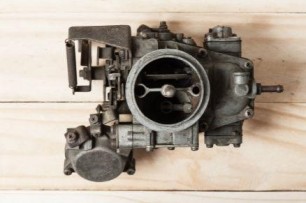
Let's understand the difference between fuel injection and carburettor in bikes
Buying a bike is a significant investment for any individual. You put a lot of thought and money into the type of bike you want. The model, budget, brand, features, arrangement of finances are some significant factors a prospective bike owner must consider while making a decision.
An essential part of finalising the type of bike you want is determining the fueling system: carburettor or fuel injection system. For someone who desires to buy a motorcycle but is not technically sound, determining the difference between these two can be an exhausting process.
In this blog, let's understand the difference between fuel injection and carburettor in bikes so that you can get a clear idea about which one would serve your needs in the best way possible.
Let's have a look at the carburettor:
The carburettor is the traditional fuel-delivery system in two-wheelers. It has been the standard system opted by most manufacturers in India. The carburettor consists of a tube connected to a venturi. The venturi then reduces the fuel's flow by narrowing it into a cone-shaped tube. Air pressure is created by the device developing suction to draw the fuel. In layman's terms, the carburettor combines air and fuel in a definite ratio and passes it on to the combustion chamber.
Why should you opt for a carburettor?
1. They are relatively cheap, resistant and sturdy.
2. Affordable and easily replaceable.
3. Fine-tuning is possible (improves mileage).
4. Easily removable and serviceable.
What are the difficulties you might face?
1. You might experience a lag when you squeeze the throttle while riding.
2. It cannot achieve optimum fuel efficiency.
3. Prone to damage (wear and tear).
4. Dust blockages can be problematic.
Now, let's understand what a fuel injection system is?
A fuel injection system is a modern technology-based system used in bikes in the current times. It consists of multiple electronic components and sensors that form the Electronic Control Unit (ECU), which monitors the whole fuel-injected system. The fuel pump inside the tank monitors and controls the fuel flow. The ECU calculates the air and fuel needed for the combustion process.
What are the advantages?
1. Sharper throttle response with no lag.
2. Precise air and fuel mixture for efficient combustion.
3. Durable and low maintenance process.
4. Better mileage.
5. Reduced air pollution.
What are some hitches of the fuel injection system that you might face?
1. Comparatively expensive than the carburettor system.
2. Difficult to fine-tune without expensive and complex tools.
3. ECU takes a professional understanding of how things work. Regular mechanics might find it challenging to repair.
Those were the significant concepts, advantages and challenges to help you understand the difference between fuel injection and carburettor in bikes. This will help you determine which system would cater to your needs in the best way possible. Now, to make sure that you safeguard your bike during unfortunate incidents, it would be a wise option to get it insured.
Explore the market and buy the best two wheeler insurance online India which suits your needs. Digital technology has made it convenient for customers to purchase insurance of their choice online without any intermediary's involvement.
Click HERE to know more about how you can purchase two wheeler insurance online India.
Disclaimer: The information provided above is for illustrative purposes only. To get more details, please refer to policy wordings and prospectus before purchasing a policy.

Let's understand the merits and demerits of 4-wheel drive cars
Cars are fantastic companions for commutation, whether you're cruising along highways, navigating busy roads, or going off-roading. On the other hand, the technology-driven components of the cars determine their performance in various conditions.
The variety of car features has significantly increased in recent times, and you now have more choices when selecting your next car than ever before. One such option is a four-wheel drive (4WD) car based on the drivetrain system you want to use.
A 4WD offers to maximise the effective usage of the vehicle on rough roads and rocky terrains. It is an exciting concept that has been introduced in the automobile sector but requires good knowledge to utilise it to its best potential.
You need to understand the merits and demerits of 4WD to make the right choice before buying one.
Advantages of 4WD:
1. A widespread myth is that you must always drive your car in 4WD mode. You have the option of switching between 4WD and 2WD at any time. Modern four-wheel-drive automobiles have a button that activates or disengages all four wheels. So, if you don't require all four wheels to work simultaneously, you may drive around with the 2WD system.
2. In hazardous driving situations such as snow, ice, mountain regions, and other scenarios where staying in control is challenging, 4WD enhances traction and control by engaging both sets of wheels.
3. The improved traction gets combined with the engine's enhanced power. It provides the extra boost 4WD vehicles require to climb over obstacles and up steep inclines. It is ideal for off-roading and mountainous terrain.
Disadvantages of 4WD:
1. The most significant downside of 4WD is the increased expense of acquisition, and maintenance. The extra equipment (transfer case, differentials, etc.) increases the vehicle's complexity and weight, increasing its original market value.
2. Furthermore, the additional weight of a 4WD system and the additional power generated result in lower fuel economy than 2WD systems. Driving your automobile with all four wheels producing power will burn more fuel.
3. Drivers that employ 4WD may grow overconfident, leading to more situations where they become stuck. Excessive confidence can even lead to dangerous accidents if the driver loses control over the vehicle and fails to manage the power that is being generated.
4. The 4WD system connects the front and back driveshafts, ensuring that all four wheels revolve at the same speed. It makes it harder to turn the car because the wheels must move at different rates to corner successfully. The inner wheel rotates slower than the outer wheel, which must traverse a greater distance in the same amount of time. As a result, the outer wheel will rotate quicker. You will damage the transfer case, gears, and drive shafts if you turn the car with 4WD activated. Hence, it's best to use 4WD only for off-roading.
A 4WD is a fantastic investment if you enjoy driving off-road or if you have to deal with difficult driving conditions regularly. But don't assume you need 4WD to get to and from work.
Whether it is a 2WD or 4WD, securing your car from damages is paramount. Accidents are unpredictable, but safety can be defined beforehand. Buy car insurance policy online to stay financially shielded and protect your car to get the best returns on your investment.
Click HERE to buy car insurance policy online.
Disclaimer: The information provided above is for illustrative purposes only. To get more details, please refer to policy wordings and prospectus before purchasing a policy.

If you’re in your 20s, this is the perfect time to buy health insurance
A person’s 20s are a hectic yet exciting part of life. Many gain financial freedom and start deciding how to spend their money wisely. The 20s are a time to be living it up, but it is highly sensible to shell out some money to invest in the best health insurance in India.
As you get older, getting health insurance becomes trickier and more expensive, and it is ideal for insuring yourself against the mounting healthcare costs early in your 20s.
This article gives insight into the benefits of getting insured in your 20s.
The waiting period will not affect you as much:
The waiting period in health insurance terms is when a policyholder cannot claim insurance for certain diseases, pre-existing ailments, etc. This is fine for a policyholder who takes their health insurance in their 20s. As the waiting period is spent in your 20s, when you have a lesser probability of getting diseases, you would be spending this waiting period at a time when you don’t need coverage.
As opposed to this, taking health insurance in your 40s or 50s is much more troublesome. You might have to compromise on getting the benefits of your health insurance and wait for 2 to 4 years before getting the disease-specific help you require.
1. Lesser premium:
Insurance providers assess the risk associated with a person before deciding the premium and the cover of a policy. Generally, a person in their 20s has a lower risk of needing the payout. Thus, the premium is much lower than a person in their 30s or 40s is paying for the insurance policy.
2. Tax benefits:
Health insurance plans provide another significant advantage in the form of tax deductions. Under the Income Tax Act 1961, one can avail of tax benefits if the policyholder pays out of pocket for the health insurance premium. You can avail of these benefits for yourself, your ageing parents, your spouse, and your dependents.
3. More comprehensive health insurance plans:
Being in your 20s makes you a suitable candidate for health insurance. This is because there is less possibility of pre-existing illnesses in these years. Your policy issuer automatically covers any new diseases that materialise after you’ve taken the insurance. Also, you can select a suitable plan according to your budget and requirements by researching the best health insurance in India
4. You can avail of no-claim bonuses for a long time:
No-claim bonuses are discounts on premiums given to policyholders when renewing their policy as a reward for not filing a claim within the policy tenure. The percentage of discount differs between companies. As there is a lower probability of filing a claim in your 20s, you can avail of your NCB for longer or transfer it during renewal.
5. Rejection rates are almost nil:
An insurance company may reject your application based on your medical history. As there are fewer chances of pre-existing illnesses among young individuals, there is less chance of rejection. Also, you may opt out of paying a copay in your health plans, which is impossible for aged policy seekers.
With the present trends of inflation, especially in the healthcare industry, it is prudent to purchase the best health insurance in India early to reap the benefits of protection for an extended period. Since the cost of living only increases as you rise in the ranks of your profession and earn more money, it is ideal to start investing in health insurance from an early age. We urge young professionals to consider investing in the best health insurance in India not just as a tax-deductible but to protect their present wealth and future earning capacity.
Click HERE to know more about the best health insurance in India.
Disclaimer: The information provided above is for illustrative purposes only. To get more details, please refer to policy wordings and prospectus before purchasing a policy.

World Cancer Day: Ten self-help tips to quit smoking
Tobacco use is both a physical and mental addiction. This deadly habit has affected a vast population worldwide. Nowadays, smoking and chewing tobacco observe no age as the majority of the youth are trapped under the negative influence of excessive tobacco use, which becomes irresistible and difficult to quit.
Nicotine delivers a transient high. To quit smoking, you must prohibit both the addiction and the associated behaviours and routines. With the correct assistance and quitting strategy, smokers can overcome their habit even if they've tried and failed previously.
We're all aware of the harm caused by smoking and how it isn't easy to quit. When you stop getting your tobacco dose regularly, your body goes through physical withdrawal symptoms.
Following are ten tips that will guide you to quit smoking in no time.
1. Make a quitting strategy:
Following the "no puff" criterion is always beneficial. Consider challenging situations and prepare your moves. Promise yourself not to smoke and stick to this until the cravings pass.
2. Observe when you require a smoke:
Identify the times when your cravings are at peak and avoid those situations. Instead, engage yourself during this time to keep you from giving in.
3. Get going:
Exercising is a known way to reduce addiction. For example, a simple 5-minute walk or stretch helps your brain to release anti-craving hormones that further reduces cravings.
4. Maintaining proper hydration:
It's an excellent idea to keep track of what you drink, just as you do with what you eat. While it is necessary to drink enough water, certain beverages are not suggested since they encourage smoking.
5. Apply relaxing methods:
Relaxation methods, such as deep breathing exercises, muscular relaxation, yoga, massage, listening to calming music, or visualisation, may help take the edge off.
6. Keep your mouth engaged:
Whenever you feel the urge to smoke a cigarette, munch on some snacks. And remember, you don't always have to snack on junk food; snacks can be healthy too. You can even eat chewing gum to keep your mouth engaged and avoid cravings.
7. Think about your diet:
Some meals, especially meat, make cigarettes more enjoyable. Others, such as cheese, fruit, and vegetables, make the smoke less desirable. So rather than your typical steak or burger, try having veggies instead.
8. Get some help in quitting:
If you have people around you who wish to quit smoking, offer them to stop together. Your local ‘quit smoking club’ may also assist you. With professional guidance and advice, you're four times more likely to succeed in quitting.
9. Keep a positive attitude:
You may have tried and failed to stop smoking in the past, but don't let that discourage you. Instead, consider what your history has taught you and how you want to do things differently this time.
10. Reassure yourself of the advantages:
Remember the benefits of quitting, such as better health and relations, healthy resistance mechanisms, etc. Also, keep in mind that every time you fight a cigarette urge, you're one step closer to becoming smoke-free.
It's never too late to undo something. So, let this World Cancer Day motivate you to quit smoking and walk towards healthy living. Smoking might give you pleasure for a couple of minutes, but it takes away more than you realise. Not to mention the severe illness and ailments that come with it. So, make the wise decision to just give it up.
Besides quitting smoking, buying health insurance can be crucial to living a healthy and long life. Take account and responsibility for your health, and don't hide any information from your insurance company regarding your smoking or drinking habits. Be true to yourself and give all accurate details to get the best benefits of your health insurance at the time of need.
To buy health insurance, click HERE.
Disclaimer: The information provided above is for illustrative purposes only. To get more details, please refer to policy wordings and prospectus before purchasing a policy.
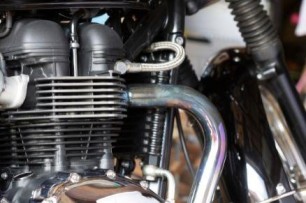
Let's understand why bikes do not have diesel engines
Diesel engines are commonly used in the automobile sector. Cars, trucks and other vehicles rely heavily on them. On the other hand, diesel-powered bikes are rarely seen. Have you ever wondered why? It's not like the industry hasn't seen diesel-powered motorcycles before. In India, only one diesel-powered bike has been introduced. But that is all.
If bikes can run on gas and petrol, why not diesel? With the petrol prices touching new highs every month, it only makes sense to have bikes with a diesel engine, right?
Although the idea is not bizarre, it isn't easy to execute. Keep reading to know why manufacturers do not use diesel engines in bikes. We have mentioned five reasons that will help you understand better.
1. Compression ratio:
The compression ratio of a diesel engine is 24:1, which is higher than a petrol engine's compression ratio of 11:1. The diesel engine must be bigger and heavier to accommodate such a high compression ratio. As a result, it is heavier than a gasoline engine, making it unsuitable for a small vehicle such as a motorbike.
The diesel-powered engine creates greater vibration and noise than the petrol-powered engine due to the higher compression ratio. A bike will not be able to sustain such high vibrations and noise levels.
2. Heating issues:
As compared to petrol engines, diesel-powered engines generate more heat. When diesel burns, it creates a lot of heat, harming the cylinder walls and other engine components like pistons and valves.
To lower the heat, manufacturers will need a larger surface area and a more effective cooling system which is inconvenient. On the other hand, petrol engines produce less energy per gallon. As a result, they stay significantly cooler and are less prone to harm the engine.
3. Price and Size:
The addition of a turbo compressor to push extra air into the cylinder increases the expense and size of a diesel engine. Moreover, injector technology is utilised to pump fuel into the combustion chamber, which is more costly than petrol engine spark plug technology.
A diesel engine is much larger than a petrol engine, and it requires a lot of force to start, making it unsuitable for motorcycles.
4. Greater torque but low speed:
Diesel engines generate greater torque. However, they have lower revolutions per minute (RPM) when compared to a petrol engine. Diesel isn't regarded as an ideal fuel since bikers' high-performance bikes demand greater RPMs.
5. Not so eco-friendly:
The amount of carbon dioxide produced by a diesel engine is around 13% more per gallon than a petrol-powered engine. Its usage is harmful to the environment, observing the average number of motorcycles used nationwide. This figure can be a significant threat to India's climate.
There you have it, all the key reasons why manufacturers won't produce diesel-powered bikes. Even if we look from a biker's perspective, no biker would want a bulky bike with more cons than pros. Although if the technology evolves in the future, we might have a diesel engine revolution. Until then, stick to your petrol-powered bike and insure it with the best two wheeler insurance in India. You can browse multiple options and choose one with the best premium and benefits.
Click HERE to buy the best two wheeler insurance in India.
Disclaimer: The information provided above is for illustrative purposes only. To get more details, please refer to policy wordings and prospectus before purchasing a policy.
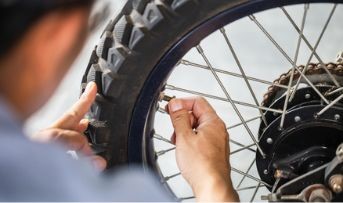
Here are some bike puncture probabilities every rider must be aware of
While bikes are the most commonly preferred mode of personal transport used in all-terrain conditions, easy to manoeuvre, and convenient, their safety is often ignored. The government's strict move to mandate bike insurance makes it evident that the safety and protection of the rider are essential and can’t be compromised.
Besides bike insurance, you can also ensure safety through regular maintenance and preventive measures to avoid mishaps. Punctures are one such risk that you may encounter at any time. They can be frustrating but are unavoidable. Here are some factors riders should be aware of that could lead to a tyre puncture.
1. Old tyres:
As consumables, tyres must be replaced every 5 years or 30,000 to 40,000 kms, based on the riding style and road terrain. If you notice little surface rips, a large tear that may expose the tube, cracks, or other symptoms of wear down, the tyre has to be changed. Since they are your primary point of contact with the road, having new tyres will reduce the probability of having a puncture and improve the overall feel of your vehicle.
2. Sidewall cracks:
The lack of use of the vehicle, the environment, or parking the two-wheeler in direct sunlight can all cause tyre sidewall cracks. They might seem insignificant, but they can cause catastrophic air leaks over time.
3. Pinch flats:
Pinch flats can occur because the tube is forced against the wheel rim and either tear or explode on pumping. The incident occurs due to the hasty insertion of the tube and carelessness. Always partially inflate the tube before fitting it to prevent this from happening.
4. Increased tread wear:
Tyres include grooves known as treads for better traction and grip on the ground. The impression deteriorates due to use, making it difficult to manoeuvre the bike by decreasing traction and lengthening the time taken to brake. A tyre wear indicator is typically an arrow sign that shows the extent of wear and the point at which you should change your bike's tyres.
5. Ignoring tyre inspection:
Small, sharp objects pierce the rubber of the inner tube to cause a puncture. If the item remains lodged in the tyre unnoticed for a long period, it can cause the new inner tube to be punctured. Have a proper tyre inspection before replacing your tube to avoid such issues.
6. Wheel damage or bending:
The alloy wheel or steel wheel may break or bend from the area around the tyre bead if you ride over a large, deep pothole, collide with another vehicle, or have an accident. This may result in an air leak due to a puncture.
7. Improper tyre pressure:
Under-inflated tyres will bend in response to the slightest bump or obstruction, making them vulnerable to pinch flats when the tube can become wedged between the rim and the tyre. You risk hitting a pothole or other impediments with more force if you have too much pressure in your tyre, making it challenging to bend against any object and keep it rigid. Your weight, the breadth of your tyres, and the weather will all affect the proper tyre pressure.
8. Unusual deterioration pattern:
The tyre may show signs of wear and tear. It can be on the shoulder or in the middle of the tyre. Mechanical problems, such as worn-out shock absorbers or a problem with wheel alignment, are to blame. It's essential to replace the tyre if it shows evidence of abnormal wear and tear.
9. Valve stem damage:
The valve stem, located on the inner circle of both tube-type and tubeless tyres, is where you fill the tyres with air. The ability of the tyre to retain air decreases if that valve stem is damaged, whether by corrosion, blockage, or breaking.
Punctures are a constant worry, especially considering bikes' lack of sophisticated safety features. While you cannot prevent punctures, you can keep a look for signs of a possible puncture. We also recommend riders consider purchasing comprehensive bike insurance. This will shield you, your bike, and others from finances worries if your bike suffers severe damage.
Click HERE to purchase the best bike insurance to secure your assets and finances.
Disclaimer: The information provided above is for illustrative purposes only. To get more details, please refer to policy wordings and prospectus before purchasing a policy.
How to improve the fuel efficiency of your car
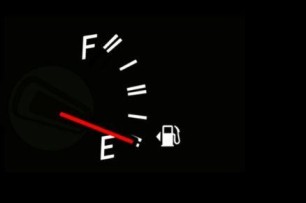
No matter how much we stress about the rising fuel prices, there isn't much we can do about them. Then how do we ensure we use our vehicle efficiently and stay stress-free about the condition of our car? Moreover, how do we compensate for the fuel prices we pay?
Do you know regular maintenance of your vehicle can save you up to thirty per cent of fuel consumption? And yet, a lot of car owners slack off on taking care of their vehicles. Some don't go for regular servicing, and others use cheap spare parts and end up damaging their car.
This blog is your guide on improving the fuel efficiency of your car. We will discuss various ways to attain maximum efficiency without widening the hole in your pocket created by the increasing petrol and diesel prices.
1. Avoid leaving the vehicle idle:
Leaving your vehicle in an idle state at traffic signals consumes almost a gallon of fuel and increases your carbon footprint by releasing unnecessary carbon dioxide into the air. Instead of leaving your car in an idle state, restart as per your necessity. This saves a lot of fuel and minimises carbon dioxide emissions into the atmosphere.
2. Warm-up:
Slowly and effectively heating your car's engine is a better choice than revving it. Unnecessary pressure will decrease the efficiency of your engine, and it will consume more fuel for power generation. After starting your vehicle, wait for thirty seconds to allow the engine to warm up properly at its own pace.
3. Say no to heavy braking:
Reduce the use of throttle and avoid applying unnecessary heavy brakes. This saves your vehicle from the possibility of wear and tear and decreases fuel wastage by almost thirty per cent, thus improving your car's fuel efficiency.
4. Don't rev your car:
Revving your engine causes wastage of fuel. It flushes down all the oil from the cylinder walls. The absence of oil could worsen the next time you start up your car. This will put pressure on the engine and result in excessive fuel consumption.
5. Multiple errands:
Planning your trip according to your errands can efficiently help you utilise the fuel. You can combine and run multiple errands and reduce the number of trips.
6. Alignment:
Check the alignment of the chassis parts and suspension. If the wheels are bent, or if there are broken springs, the drivetrain drag of your car will increase, resulting in increased fuel consumption. Defective parts and misalignment can also put your safety in danger and amplify the risks of accidents.
That's a wrap on how to improve your car's fuel efficiency. Using these tips, you can ensure maximum and optimum utilisation of the petrol and diesel you put in your vehicle. While fuel efficiency is an essential aspect of owning a car, ensuring your car's security is equally important. Invest in car insurance and protect your vehicle from any unfortunate incidents. To purchase insurance, explore the market, and browse through multiple deals to ensure that you get the best car insurance price in India.
Click HERE to know more about how you can get the best car insurance price in India.
Disclaimer: The information provided above is for illustrative purposes only. To get more details, please refer to policy wordings and prospectus before purchasing a policy.
Hi there! 👋 Need help with a policy, claim, or renewal? Chat with us instantly on WhatsApp.
Start chat →