


General Insurance Blogs, Articles & Updates by - Magma Insurance
Have us call you
- RENEW YOUR POLICY
- BUY NEW POLICY

GENERAL INSURANCE BLOG

Here are a few reasons why your two-wheeler may be making strange noises
If you are a bike rider, you know that your bike needs to be regularly serviced to ensure a smooth and safe ride. Regular maintenance and check-up can go a long way for your two-wheeler. But, while you can grease and tighten the loose parts at home, it is better to leave the work for the experts. Today, we will look at the weird noises your two-wheeler makes and how you can identify the source of the problem.
This article will help you make an informed decision as to when to take your bike to the mechanic and when you can fix it yourself.
1. Clicking sounds:
You might have heard a periodic click from your two-wheeler on many different occasions. Although it can be a complex process to locate the exact source of the sound, you might be able to find it eventually with the help of a mechanic.
A mechanic's gadgets can be useful tools to help you find the source. A small gap, loose fittings, or a hole caused due to rusting can all be reasons for the clicking sounds.
2. Gurgling sounds:
Gurgling sounds arise when there is a problem with the cooling system. Any drop in the level of the coolant is indicative of an issue. For example, the pump cannot circulate the coolant properly if there is an air gap, and it starts to boil if it cannot move away from hot areas. This could result in the gurgle.
3. Ticking sounds:
If your bike makes a ticking sound when it reaches a particular speed, it usually indicates some damage in the valve clearance. Immediately get it inspected by a mechanic. Loose valves can affect the performance of your vehicle.
4. Whirring sounds:
Whirring sounds are invariably caused due to the drive chain. Chains generally make sounds. But if you hear anything out of the ordinary, it's time you get them checked. Cleaning your chain and examining loose rollers and stretches can help you resolve the problem.
5. Knocking sounds:
Knocking sounds are directly connected to the engine. Worn-out shells and collapsed bearings can hinder your engine's performance and be catastrophic. If you hear them while driving, you should immediately park the vehicle to safety and inspect the problem. It is also recommended to call a mechanic to fix the issue.
6. Whining sounds:
Whining sounds are clear indicators of gearbox issues. Gears work in pairs, and a problem in either reflects on the other.
7. Clattering sounds:
Clattering sounds could be indicators of issues with the chain or tensioner. Since chains undergo wear and tear over time, it leads to fatigue in the tensioner. This is not as dangerous as knocking sounds, but it can affect the bike's performance.
8. Popping sounds:
Checking the exhaust pipes for gaps or gas leakage should be the first step when you hear popping sounds.
These are the few sounds that you might have heard from a two-wheeler. After the preliminary examination, it is best to take your vehicle to a mechanic. They will be able to provide you with solutions for the same.
Sometimes you might need to change parts of your bike if the damage is severe. This can be expensive and burn a hole through your pockets. But, having your two-wheeler covered under insurance can do wonders for you. A good 2 wheeler insurance acts as a shield against such unprecedented expenses and offers several benefits that can be advantageous in case of damages.
Click HERE to look at 2 wheeler insurance options.
Disclaimer: The information provided above is for illustrative purposes only. To get more details, please refer to policy wordings and prospectus before purchasing a policy.
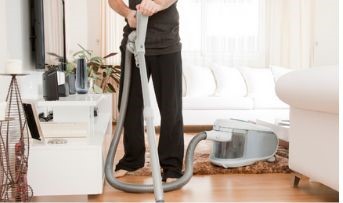
Spring cleaning is beneficial for your house and your health too
Most people love to clean their houses and redecorate them to give them a brand-new look. Often, professional deep cleaning is required to address those areas and corners throughout the house you overlook daily. However, it is recommended that they do so before the beginning of spring. While experts have documented the pros and cons of summer and winter cleaning, spring cleaning has no negative implications.
Not only does a round of decluttering make your house look spik and span, but it also does wonders for your physical and mental health and overall well-being! Especially when you are living with the elderly, ensuring a clean and safe indoor environment becomes more important.
Before diving into the benefits of the activity and getting started on deep cleaning your home, consider purchasing health insurance in India for parents and other family members. Health insurance in India for parents protects them from the risk of mishaps or developing any allergies by creating a safety net that shares the financial burden of hospitalisation.
With that out of the way, here are some of the benefits spring-cleaning offers.
1. Keep your mind and body physically active:
Only a few people enjoy going to the gym or a strenuous workout. However, carrying boxes of old goods and scrubbing the walls and the floor can be a real workout. Keeping your body and mind active results in a healthy heart and a happy mind. Moreover, cleaning is one of the best ways to burn some of the calories you gain during the holiday season. Plug your headphones in and play your jam and get cleaning!
2. Reduces the chance of injury:
A messy home increases the risk of injury for everyone, irrespective of age or gender. Spring cleaning gives you the time to throw out extra junk and replace old and weak items with new and stronger ones. It also allows you to notice any loose wire or floorboards that can cause severe injuries.
3. Protects the immune system:
While seasonal allergies can cause daily discomfort, mould, dust, and pet dander cause many medical problems. Therefore, deep spring cleaning helps eliminate pests and prevent respiratory problems. Dusting the furniture, windows, and other hard-to-reach places and covering them with a rug or cloth minimises the chances of dust accumulation. Deep vacuuming of carpets, curtains, and floors also prevents infections and pest problems.
Besides these, cleaning the kitchen and bathroom allows you to redecorate the place and understand the need for some particular cleaning products. Remember to avoid the overuse of sponges and dishcloths, as they get filled with bacteria over time.
4. Improves mood and focus:
A clean and fresh house improves your mood and clears your mental space. Cleaning your home is also a great way to relieve stress and anxiety, thus allowing you to focus on other aspects of your life. Clear and calm mental health leads to positivity and better productivity.
5. Prevents bugs and rodents:
Bugs and rodents love a dirty and messy home. Therefore, proper spring cleaning helps you avoid the growth and spread of bacteria and diseases caused by unwanted pests. Regularly sanitise the garbage bags below the kitchen sinks and cabinets and the area around the fridge to prevent bugs and rodents.
Cleaning your house may seem tiring and stressful, but once you start, you'll realise how much you need a clean and proper space and the therapeutic joy it offers. It also allows you to bond with your family over the seasonal cleaning. Before you start, ensure you buy health insurance in India for parents and all your dependents to protect yourself from medical emergencies.
Click HERE to buy health insurance in India for parents.
Disclaimer: The information provided above is for illustrative purposes only. To get more details, please refer to policy wordings and prospectus before purchasing a policy.

Follow these eight handy driving tips while travelling on highways
Road trips are something that all travel enthusiasts look forward to. They allow you to explore more than just your destination. From families to working professionals, road trips are perfect for every individual who wants a short and quick escape from the daily hustle of life.
While you enjoy most of the time driving on the highways with fast-paced cars passing along, there are certain things to keep in mind while navigating your way through the roads safely.
This article will look at eight handy driving tips while travelling on highways.
1. Speed control:
As opposed to city roads, on the highway, you are expected to drive faster than usual, owing to the multiple lanes and the light traffic situation. However, it is best to stick to the speed indicated by the signs on the road.
2. Lane change:
Switching lanes is one of the most overlooked driving practices. It is significantly more important on highways as most vehicles travel at higher-than-average speeds. When you change lanes, remember to turn on the car indicators to the traffic behind to signal them.
3. Analysing the distance:
While on the highway, ensure sufficient distance between your vehicle and others. Doing this gives you enough time to slow down and avoid a collision in case the driver in front brakes suddenly.
Stick to the “three-second rule”. Look for a point of reference and check the time you take to get that point after your preceding car passes it. The time taken should be at least three seconds, if not more.
4. Night driving:
Proper visibility is essential when it comes to driving at night. Keep the windshield clean and ensure that all the lights are working. The headlight should not be aimed too high because it will cause discomfort to others on the road. Try avoiding late-night trips. Instead, start early in the morning so that you manage to reach your destination during the daylight hours.
5. Breakdown:
In case of a breakdown, slow down gradually and move to either side of the highway. Turn on the hazard lights and place the hazard triangle about 10 feet behind the car to warn others. Call assistance after examining the damage. It is advisable to have contact details of highway assistance handy while taking road trips.
6. Take regular breaks:
Continuous driving for hours can be exhausting for the drivers. It is advisable to take frequent halts or refreshment breaks to relax your body and prepare to resume your journey. You can either take a quick nap or have some warm tea or coffee.
7. Servicing:
Before going on a long trip, it is recommended to take your car to the service centre. Facing issues while driving on the highway can be troublesome. Hence servicing and checkups should be a must before long trips.
8. Paperwork:
Carrying legitimate paperwork during highway journeys is essential. Make it a point to have your licence, PUC, and car insurance papers. Check the validity of all these documents to avoid getting fined and ensure that you face no legal troubles while on the road.
These are some of the top tips to keep in mind when taking a road trip. Navigating through the highway can be challenging at times. Hence, it is best to have a car insurance cover to safeguard you. With so many options to choose from, you might want to go through the new car insurance rates and choose the one that suits your needs the best.
Click HERE to know more about new car insurance rates.
Disclaimer: The information provided above is for illustrative purposes only. To get more details, please refer to policy wordings and prospectus before purchasing a policy.

Five ways to tackle dental anxiety and respond well to your treatment
Dental issues are quite prevalent these days. Our lifestyles are a significant reason behind these health troubles. The type and quality of food we consume, the dental care routine we maintain, and the products we use are vital factors that contribute to our dental health.
We all experience fear when we have to visit the dentist. And a lot of people often try to escape dental treatments despite suffering from severe tooth problems. Four out of seven people in Asia face dental anxiety. It is pretty common, but you need to take it sincerely. People with dental anxiety often try to delay their treatments, skip their appointments, try unprescribed solutions, or ignore the gravity of their troubles.
Delaying the treatments might lead you to the dentist without having any choice except to get more expensive treatments. In this article, we will discuss five effective ways to tackle dental anxiety so that you respond well to your treatment.
1. Be straightforward with your dentist:
You should disclose all the problems you feel and the symptoms you notice to your dentist. Feel comfortable telling them about your fear regarding dental examinations and procedures. Revealing your concerns will help the dentist make your appointments smooth and stress-free.
It gives the dentist freedom to lead the way around your dental check-up and tell you about the science behind your oral dilemmas and treatments to help you understand the process in a better way.
2. Have a company:
Don’t go to the dentist alone if you face dental anxiety. Instead, ask a family member or close friend to accompany you so that they can help you stay calm.
This will keep you relaxed throughout your dental appointment. They can also help you note down the intricate details regarding the treatment and medication.
3. Search for an excellent dental practitioner:
Try to find a good dentist specialising in treating people with dental anxiety/phobia. The more you trust your dentist, the smoother and more comfortable your experience will be.
You may reach your friends or relatives to find out about their dentists. It will give you a better idea (and a reference wouldn’t harm).
4. Meditation:
Your dental anxiety can get the worst of you as you are sitting in the waiting room or about to hop into the chair. Meditation can help you reduce stress and keep you calm.
Close your eyes or concentrate on any object around you and slowly let your body relax. Muscle relaxation helps in releasing stress.
5. Deep breathing:
Like meditation, breathing exercises also help you achieve the calm you require to tackle your dental anxiety. Deep breathing keeps your mind at peace and relaxes your body.
Try closing your eyes, breathing in, holding it for a few seconds, and then breathing out through your mouth. Repeat this a couple of times and relax before climbing into the chair.
Now that we’ve discussed how to tackle dental anxiety, it is wise to purchase online health insurance and get regular full-body check-ups. Getting online health insurance can help you tackle unprecedented health emergencies and safeguard you and your family from the monetary pressure of such unfortunate situations.
And check-ups can help you detect ailments in the initial stage to avoid them becoming severe. Also, adapt to good oral hygiene, a healthy diet, and regular exercises to keep yourself fit and energetic.
Click HERE to learn more about online health insurance.
Disclaimer: The information provided above is for illustrative purposes only. To get more details, please refer to policy wordings and prospectus before purchasing a policy.

Porting your health insurance policy cannot get simpler
With age, one has to adapt to the evolving environment and take on complex roles as a contributor to the growth of society, the workplace, and the family. This additional responsibility within the settings of your home usually translates into the natural reversal of roles where you begin to take charge of duties that your parents once undertook. This includes financial responsibilities such as future-proofing wealth, preparing for contingencies, and planning for your future needs.
When considering ageing parents, one of the priorities to manage is their health and well-being. Despite carefully purchasing the best health insurance in India for parents, you may find yourself in a dilemma after a short while. As their immunity weakens, they may need coverage that may require additional premium payment or porting of the policy to reap better value from a different insurer provides. However, you do not wish to lose out on the NCB and the accumulated benefits of retaining the policy.
If you are in a situation where you wish to port your policy to avail the perks of the best health insurance in India for parents, here is a simplified guide.
1. Evaluate alternatives:
It is recommended to compare and evaluate the offerings of various insurance providers before purchasing any insurance product. The same applies to finding the best health insurance in India for parents. The digital presence of most major insurers makes it easy to compare different health insurance policies online. Ensure that you check their coverage, premiums, inclusions, and exclusions to find the most compatible policy that protects against contingencies and risks.
2. Written request submission:
Once you decide to port your policy, the immediate step is to inform your present insurer of your decision. Usually, it requires 45 days for the request to get approved. Therefore, you must send in the request for porting at least 45 days in advance from the date of policy renewal.
3. Intimate the new insurer:
Once you identify and contact a new insurer that offers the best health insurance in India for parents, you will receive a portability form that requires all the details of the policy you wish to port and a proposal form.
4. Sharing of policyholder information:
This step takes place between the old and new insurers. The new insurance company requests the medical details of the insured to assess the risk of insuring your parents. Any related documentation, like claim records and personal details, may also be shared. At the same time, this information is also shared with IRDAI.
5. Risk assessment:
Upon receiving the documents, the new insurer analyses your parents’ risk profile to determine the risk involved. An underwriter or actuary usually undertakes this task.
6. Policy underwriting:
If the risk assessment results in a favourable outcome, the insurer undertakes to cover your parents. This is usually informed to the policyholder within 15 days of submitting the portability form. In case of a delay in correspondence, you are assumed to be covered by the new insurer.
7. Policy comparison:
Once framed, the proposed policy is shared with the present insurer for comparison and evaluation. The current and new insurers are responsible for ensuring that the IRDAI-issued guidelines for porting are strictly followed. Upon successful assessment from both insurers, a portability certificate is issued. You must ensure that the proposed policy includes at least the same sum as the previous policy with all the accumulated benefits and coverages.
While porting does not allow a complete change in the policy, it enables minor modifications to alter the existing policy and make it the best health insurance in India for parents. The convenient procedure makes it easy to switch between insurance companies to derive better value, better customer service, and coverage, among other factors.
Click HERE to buy the best health insurance in India for parents.
Disclaimer: The information provided above is for illustrative purposes only. To get more details, please refer to policy wordings and prospectus before purchasing a policy.

Drinking Hot Water: Let's understand the health advantages of it
We have all heard about the wonders of water. From personal beliefs to affirmations by medical science, water is proved to have multiple benefits for the overall development of the human body. It is good for the skin, muscles, and joints. It aids in the absorption of nutrients and helps defend against infections. Experts recommend having at least 8 glasses of water each day, but what if we tell you that out of those 8, if you have a couple of glasses of hot water, it will significantly improve your health.
The benefits of drinking hot water have received scientific attention. Ayurveda also claims that drinking hot water is a simple approach to enhancing one's health.
Drinking water at room temperature can help you feel better, but drinking warm or hot water is known to provide extra health benefits.
Let's look at some of these potential advantages in this post.
1. Promotes digestion:
A glass of hot water to start the morning can aid in the removal of toxins from your body. The hot water will help your digestive system by breaking down any residual food in your stomach from the previous night. If you drink hot water before or after meals, it will assist your body in breaking down food more quickly.
Cold water, on the other hand, whether eaten before, during, or after a meal, will harden any oil present in the dish. This will result in fat accumulation in the gut, which will take longer to digest. Iced water is particularly harmful because the ice's quick chilling process depletes the water's inherent nutrients and minerals.
2. Improves blood circulation:
When you consume hot water, fatty deposits in the body are flushed out. Any deposits that have collected in the adipose tissue are also eliminated. Removing these pollutants improves your body's blood circulation. This will assist you in relaxing your muscles and improving your overall well-being.
3. Helps with constipation:
Many of you may have experienced constipation at some point in your lives, and it can be quite unpleasant. The tension and bloating you're experiencing is caused by dehydration. Beginning the day with a glass of hot water before breakfast will improve bowel function.
4. It helps you shed that extra weight:
When you consume hot water, the abrupt spike in temperature causes your body's temperature regulation mechanism to wake up. To compensate for the hot temperature, the body reduces your internal temperature.
This entire procedure boosts the efficiency of your weight reduction attempts by activating your metabolism. As hot water also aids in constipation, you lose some water weight caused due to bloating.
5. Helps you release toxins:
Drinking hot water also stimulates the endocrine system. Sweating and the discharge of toxins via the skin are caused by this stimulation.
6. Relaxes you muscles:
Drinking hot water aids in muscle relaxation by increasing blood flow.
Remember that you should avoid drinking water close to boiling. It's advisable to take a modest sip before taking a big mouthful to prevent burning your tongue and oesophagus.
Now that you know how drinking hot water can do miracles for your body, it's time to adopt the habit. If you are a college student or an office goer, make it a practice to carry hot water in a thermo-steel bottle and consume it throughout the day.
Another great way to ensure good health is by getting insured. Ideal health insurance will protect your financial plan by covering all the expenses. Review multiple health insurance plans from the best health insurance company in India before deciding.
Click HERE to know about best health insurance company in India.
Disclaimer: The information provided above is for illustrative purposes only. To get more details, please refer to policy wordings and prospectus before purchasing a policy.

Five reasons why you should have a family doctor
With the ongoing COVID-19 pandemic, we have realised the potential risk that infections and diseases pose to our lives. As a population, we have become more aware of the importance of strong immunity, a cautious lifestyle, and preventive medicine.
Even as we try to be vigilant, we are bound to fall sick from time to time. A doctor should be the first contact when unwell, either from a viral infection or other ailments. They can offer a diagnosis based on the symptoms and provide us with a list of medications. Having an assigned and dependable family doctor in such times goes a long way.
While many may choose not to have a definite family doctor, here are a few reasons why having one is highly recommended.
1. Know your family history:
Family doctors tend to treat you and your immediate family for years. As a result, they have knowledge of all the health complications, tendencies, allergies that you are prone to. They are also aware of your family’s health history, which allows them to keep this information in mind while diagnosing you with specific ailments.
For example, certain diseases, like diabetes and hypertension, are genetically inherited. Having a family doctor helps diagnose and treat you correctly while keeping your family and personal health history in mind.
2. Stay updated on your case throughout your life:
When you have a family doctor, they become your go-to person for seeking help. As this continues through the years, they become your primary physicians. While you grow up, the family doctor can consistently treat you and even the new generations to come.
They can help you diagnose and treat illnesses, suggest ways to build and maintain your immunity, and perform routine health check-ups.
3. They can help you find a specialist:
When dealing with heart or respiratory ailments, cancer, or any major illness, reaching out to a family doctor can be very helpful. Doctors have a vast network of connections in the medical world and can help connect you to a reputed specialist who can fulfill all your expectations, correctly diagnose, and provide an effective treatment plan for you.
4. More economical than visiting the hospital:
If you have been insightful enough to invest in a good health insurance policy for family, hospital bills may not be at the top of your worries. However, if you or your family members fall sick, visiting the hospital for a check-up may still be costly.
Having a family doctor can be a cost-efficient way for getting a diagnosis and treatment than consulting a doctor at the hospital.
5. Establish trust and comfort:
Many people avoid physicians as they feel uncomfortable or terrified of them. Having a family doctor who consistently treats you and your family over the years builds a sense of trust in their diagnosis, methods, and treatment. You will feel more comfortable discussing health issues with them than consulting a new doctor every time.
Having a family doctor to depend on is essential. Our health affects our lives significantly, and it is important to take the best steps to keep it sound. While there is always a comprehensive health insurance policy for family, having a primary doctor who knows your health history can go a long way. The need for dedicated family doctors and physicians will grow in the coming years and make our lives convenient.
Click HERE to buy the best health insurance for your family.
Disclaimer: The information provided above is for illustrative purposes only. To get more details, please refer to policy wordings and prospectus before purchasing a policy.

Pay attention to the hot weather when choosing between fabric or leather upholstery seat cover
Every individual who owns a car wants the best for their vehicle. However, wanting the best and understanding what's best for you are two different things. The two of these ideas coincide when a sensible car owner makes prudent choices regarding the car, including the purchase of private car insurance India, ensuring proper maintenance, and choosing appropriate accessories.
Since vehicles are a status symbol, maintaining their overall look becomes essential. Apart from its exteriors, the aesthetic of the interior cabin is just as important. When choosing the correct seat cover, most car owners need more clarification on fabric and leather seat covers.
This article offers you some tips on how to decide between fabric or leather seat covers, considering the functionality and benefits of both.
Evaluating their performance in hot weather.
Since cars are usually parked outdoors, the cabin is subjected to continuous changes in temperature, which should be kept in mind while choosing the right seats for your vehicle. This may not be your biggest concern if you have a covered space like a garage. Opt for fabric covers for all other cases, as leather seats tend to crack in the heat, ruining the plush look of your car. Fabric seat covers provide a cooler and more breathable option, especially if the fabric is made from moisture-wicking material.
Ultimately, the best seat cover option for hot weather will depend on your individual needs and preferences. If you prioritise comfort and breathability, a fabric seat cover may be your option. Leather may be the way to go if you want a stylish option.
You should also consider the following advantages of both seat covers.
Benefits of fabric seat covers –
1. Comfort:
For many reasons, fabric seat covers are more comfortable than their leather counterparts. Since fabric covers do not absorb heat, they keep the temperature cool inside the car.
2. Maintenance:
How much maintenance a fabric seat cover needs depends on the fabric's grade. A fabric seat cover isn't scratched as easily as leather and can be cleaned with top-quality wash material.
3. Variety of options:
Fabric seat covers come in various colours, textures, and patterns. Depending on your car’s colour and insides, you can choose the fabric seat cover that suits your requirements. Owners can choose the perfect car seat covers from dark to pastel colours.
4. Budget-friendly:
Unlike leather seat covers, fabric seat covers are more budget-friendly than the former. Maintaining a car is quite expensive for some car owners. If you are also one of them, fabric seat covers are the best option as they are readily available and do not burn a hole in your pocket.
Benefits of leather seat covers –
1. Hypo-allergenic:
Many people worldwide suffer from dust allergies. While it is not hazardous, some face severe consequences due to dust allergy. Leather seat covers are advantageous for people with allergies as leather does not accumulate dust mites or other allergens like fabric does.
2. Appearance:
There is no doubt that leather seat covers offer a specific look and radiate wealth and power, unlike fabric seat covers. Some people prefer the leather seat cover because it looks sleeker and more high-end than most fabric covers. While they are limited in colours, one cannot deny their elegant appearance and what they offer to the car interior.
3. Easy care and durability:
While fabric requires cleaning products, leather is easy to clean. It is durable and can last for many years if cared for properly. Unlike fabric, it does not require constant care but can quickly become a problem if a single crack comes on them.
Choosing a leather or fabric seat cover is entirely an owner's choice. Before selecting any seat cover, check its pros and cons carefully to avoid complications. Comfort and convenience must be the top priorities. We encourage you to apply the same approach while buying private car insurance India to find the best alternative.
Click HERE to buy private car insurance India.
Disclaimer: The information provided above is for illustrative purposes only. To get more details, please refer to policy wordings and prospectus before purchasing a policy.
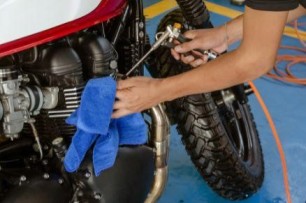
Here is a checklist to follow after the completion of servicing of your bike
Buying a bike takes a lot of thought and planning. Multiple factors influence your purchase. You arrange the funds, and after making a final decision, you pay the money and get a brand new bike. Just like your other possessions, your motorcycle needs optimum care too.
Maintenance of your bike is as essential as your safety while riding it. Whether you frequently use your motorcycle or occasionally, you need to ensure that your vehicle is not damaged. Even a tiny impaired part could cause significant harm to the bike and risk your safety. So as the owner, be careful about its regular maintenance.
All bikes have their periodic servicing cycle. Ensure to get professional servicing for your motorcycle at the authorised service stations. These centres use authentic spare parts recommended by the manufacturer and follow all the procedures to ensure that your bike does not suffer any damages in the long run.
But what happens after your bike is serviced? How can you assure that it has undergone proper servicing? Well, this blog will discuss what you need to keep in mind the next time you get your bike after servicing.
1. Air pressure:
Check the air pressure in the tyres. Unless your bike's tyre is visibly flat, you can't just judge the tyre inflation. Instead, use a tyre pressure gauge to check the correct pressure. Regularly check the motorcycle at different pressures when you ride it.
2. Engine oil:
You should inspect the engine oil after the servicing is completed. Make sure that proper levels are maintained. Look for any leakages. Carbon deposits can thicken the engine oil. Running the bike on dirty oil can damage the engine life in the long run.
3. Brakes:
Examine the brakes very carefully. Your bike's brakes are vulnerable to damage due to their excessive usage on the roads. Make sure that your brakes are not very loose or very tight, which would cause difficulties in applying them when needed.
4. Screeching noise:
If you hear a screeching noise, it could be due to an issue in the front brake pads. Make sure that they are appropriately checked and replaced if needed. Lack of oil could also be one of the reasons for such noises.
5. Spark plug:
Make sure that the spark plug is cleaned. And in case of any damages, ensure that it is replaced. The spark plug is connected to the engine combustion and should undergo regular maintenance. You can keep an eye out for checking the carburettor, air filters, chainset, etc.
Now that we've discussed the checklist you need to follow after completing servicing of your bike, you need to think about how to keep your bike safe from damage during unprecedented situations. The solution is to get your bike insured. And now, you can purchase bike insurance online from the comfort of your home and even get attractive deals with extra benefits. These benefits can reduce your monetary stress and cover your bike's repairing or garage costs.
Click HERE to know more about how you can buy bike insurance online.
Disclaimer: The information provided above is for illustrative purposes only. To get more details, please refer to policy wordings and prospectus before purchasing a policy.

Keeping memories: How to save old photographs properly
For decades, clicking photographs with a film camera was the only way to store memories. Today, we use smartphones to capture and save memories as videos and pictures. However, if you are from the 90s era or before, you must still have hundreds of pictures and photo films locked away in your cupboard or neatly tucked into photo albums.
While tossing out old clothes that we've outgrown may be easy, throwing out photographs is just too difficult. They hold countless memories in a single snapshot that you never want to let go of. You may even put up a few photographs in frames to hang up on the wall or place on your bedside.
However, over the years, you may notice them begin to degrade. Some get brown patches, some turn yellow, and some develop folds and creases around the corner. Therefore, it is essential to remember these tips to preserve old photographs properly.
1. Throw out the old photo albums:
Storing the old photographs in a box or folder does not ensure their protection. Using the usual peel-and-stick photo albums is not the best option for holding your photos. They are usually made of ordinary plastic, glue, and cardboard, which can harm the pictures in the long run. If you want to save them, look for ones free from acid. Avoid albums made with dyes and recycled materials.
2. Do not stick your photographs:
Exposing your photographs to any kind of glue or adhesives can harm their quality. The paper can tear or weaken due to the use of glue. Instead of sticking the photographs in books or albums, look for albums with paper sleeves or acid-free plastic sleeves.
3. Label wisely:
Future generations who inherit the photographs may need the context behind them and labelling them with thorough information can go a long way. However, while most of us might write using a permanent marker or a pen, the ink poses a threat of staining the photographs. Instead, use a pencil and write lightly around the edges to avoid damaging the centre of the image. If you are worried about lead smudging, avoid touching the parts you've written on.
4. Preserve in appropriate locations:
Collections of old photographs are delicate and need to be stored the right way. They need to be boxed in climate-controlled areas of your home that are not too cold, hot, or humid.
Moisture and heat can affect the paper quality and the print of the photograph. Therefore, keeping the albums in paper boxes is better than using plastic boxes. Place these boxes in a closet that is not prone to flooding or intense heat, sunlight, and moisture.
To sum it up, these few measures may help you preserve the quality of your photographs and maintain their shine over the years. To make sure you continue making memorable memories much like the ones you've saved in those photographs, invest in dependable general insurance plans to secure your family.
Click HERE to buy general insurance that best suits your requirements.
Disclaimer: The information provided above is for illustrative purposes only. To get more details, please refer to policy wordings and prospectus before purchasing a policy.
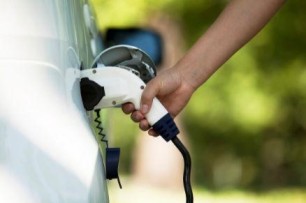
Here's everything you need to know about car insurance for your electric vehicle
In recent times, Indians have increasingly begun opting for electric vehicles. The reasons include saving on fuels and interest in ecologically beneficial features. When deciding if an EV is the best option for you, examine how an electric vehicle varies from a car with a combustible engine. One of these distinctions is insurance, and you must understand how an electric car's insurance in India works.
So, to help you with just that, we've discussed everything about electric car insurance in this post.
The importance of Electric Car Insurance.
1. Mandatory by Indian law:
The Motor Vehicle Act 1988 of India covers all vehicle legislation. According to the act, all cars (including EVs) are required to carry vehicle insurance to operate legally on public highways.
2. Damage protection:
Appropriate protection is essential to prevent or control damages caused due to accidents. Anyone who has had any experience with automobile repairs knows about the expenses involved, especially in the case of electric vehicles. Thus, whether the damage to your automobile is due to your fault or someone else's, a car insurance policy will cover the repairs without putting pressure on your pockets.
3. Third-party liability:
In the event of an accident claim involving third parties, you will be required to pay for any damage incurred out of your pocket. However, you won't have to worry about these ramifications with third-party liability insurance. Under your car insurance cover, your insurance company handles and compensates for any loss or damage done to third parties.
4. Personal accident covers:
Personal accident cover is also mandated as per Indian law. It protects you against uncertainties like accidental death, injuries etc. Remember, it does not come with the car insurance plan but needs to be purchased separately as an add-on feature.
Please note, there are no separate insurance plans for Electric Vehicles (as of yet). The general insurance sector in India has yet to provide specialised coverage for EVs. As of now, consumers must choose from current car insurance policies designed for vehicles with combustible engines.
Also, the IRDAI has recently ordered that insurers should promote electric car insurance policies. This means that India's third-party insurance coverage for electric vehicle cars will cost lower than traditional petrol/diesel vehicles.
What is covered under Electric vehicle insurance?
• Personal accident coverage
• Third-party insurance coverage
• Car theft
• Road accidents
• Damage resulting from fire
• Repairs and replacements of parts
• Damage resulting from a natural calamity
What is not covered under electric vehicle insurance?
• Claims after drinking and driving
• Claims if the driver is found without a driving license
• Higher damage caused due to intentional negligence
• Lapsed insurance claims
To conclude, whether you own an electric car or a traditional one. Having car insurance is mandatory and acts as your financial safety cushion. Like all your expensive belongings, protect your electric automobile against damages.
Car insurance guarantees that your vehicle stays in good condition for a long time and helps you avoid monetary stress. It also pays for expenditures incurred as a result of third-party harm. Furthermore, the IRDAI has decreased third-party insurance prices for electric vehicles by 15%. So save your EV from potential damage like it protects the environment.
Click HERE to get the best deals on car insurance.
Disclaimer: The information provided above is for illustrative purposes only. To get more details, please refer to policy wordings and prospectus before purchasing a policy.
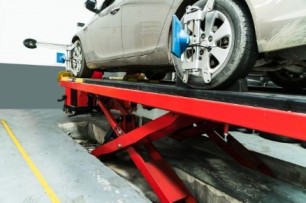
Know more about the wheel alignment of your car and how to check it by yourself
To be a vehicle owner entails a variety of duties. To get the most out of your automobile, you must frequently care for and repair it. If sufficient care is not performed, not only will your vehicle's quality suffer, but it may also cause an accident. Having your vehicle's tyres aligned regularly is one of the most important things you need to ensure tyres last longer.
Many individuals believe that alignment should be left to specialists. While this is true in many ways, some alignment specifications are simple enough to check on your own, and wheel alignment is one of them. This may be useful after upgrading steering or suspension parts so that the car isn't out of alignment during the journey to the shop, or it can at the very least offer a better knowledge of the process.
Following are a few ways you can check your car's wheel alignment by yourself.
1. Caster:
Most vehicles are constructed with a mild downward caster. Your caster angle contributes to the equilibrium of driving, balance, and turning. A high caster causes the steering axis to lean toward the driver. On the other hand, a low caster indicates that your vehicle's steering axis is tilted away from the driver.
To measure the caster angle yourself, you need to park the vehicle on a flat surface and place both wheels on the turntables. Next, install the bubble gauge on the hub. Then turn the tyre 20 degrees inwards and level the gauge. Using the adjustment knob, set the caster reading as zero. Now, move the tyre 20 degrees outwards to get the caster reading.
2. Camber:
Camber is the degree of tyre lean of a car measured in degrees. Negative camber takes place when the top of the tyre tilts inwards. Whereas positive camber occurs when the top of the tyre tilts outwards.
Most contemporary automobiles feature a somewhat negative camber to increase stability and control. Camber misalignment may be caused by worn bearing, ball joints, and other wheel suspension systems. Excessive inward or outward skew indicates poor alignment and must be corrected.
3. Toe-in:
Toe alignment, as opposed to camber alignment, is the degree to which your tyres spin inward or outward as seen from up top. Depending on the vehicle, typical toe-in standards range from one-thirty-second to one-eighth-inch. Toe-in alignment occurs when your automobile's tyres are inclined in the same direction. Toe alignments are done at the last after caster and camber are done.
As a vehicle owner, you must recognise the signs of misaligned wheels. Take a moment to check your vehicle's wheel alignment regularly. It can add to the life of your car's tyres and improve the handling. Even if you decide to get the vehicle aligned in a garage, you will better understand the issue and information.
As needed, trained and experienced vehicle experts will be able to align your wheels. However, to sustain the absolute protection of your vehicle, yourself, and anyone around you, it is advisable to opt for insurance. If you have just purchased a new car, always remember to buy new car insurance to safeguard your vehicle.
Click HERE to buy new car insurance.
Disclaimer: The information provided above is for illustrative purposes only. To get more details, please refer to policy wordings and prospectus before purchasing a policy.

Let's know if proportionate deduction resolves all your confusion surrounding sub-limits in health insurance
Health insurance consists of myriad terms and conditions that policyholders should read in detail at the time of health insurance policy renewal or purchasing. However, most of us usually do not pay heed to them and suffer at the time of settlement of the claim. An important clause involves sub-limits in a health insurance policy and the subsequent proportionate deduction.
Sub-limits in health insurance policies usually include capping or limiting the room rent during your hospitalisation. There are a variety of rooms available in any hospital, ranging from general wards to semi-private rooms and deluxe rooms. There is also a proportionate deduction clause associated with the sub-limit. Let us understand these terms in detail.
Sub-limits explained.
Sub-limits are limits or maximum percentage of the total sum insured that an insurance company will bear for the hospital expenses under various categories. Insurance companies usually use the maximum permissible room rent in the hospital as a benchmark for deciding the sub-limits.
For example, if your health insurance policy is Rs.5 lakhs and the permissible sub-limit for room rent is 1%, the insurance company will only bear 1% of Rs.5 lakhs or Rs.5000 per day for the rent of your room in the hospital. Any amount over it will have to be borne by you.
In this case, if your room rent is Rs.7000 per day, the excess amount of Rs.2000 over the sub-limit cap of Rs.5000 per day will have to be borne by you. Generally, the sub-limit on room rent ranges between 1%-2% of the total insured amount.
Proportionate deductible clause.
Insurance companies usually insert a proportionate deductible clause in health insurance policies. The companies calculate the excess room rent over the sub-limit allowed in percentage terms. They then deduct a proportional amount from all associated treatment costs, including surgery fees, tests, doctor consultation and visiting charges, ICU charges, etc. The insured has to bear them from his pocket.
Insurance companies use the following formula to calculate the proportionate deduction.
Excess room rent over the room rent limit/ Room rent limit as per the policy x 100
For example, suppose the room rent limit per the policy is Rs.5000 per day, and the actual room rent is Rs.7000 per day. Hence, proportionate deduction to be applied:
2000/5000 x 100 = 40%
In this case, if the doctor consultation fee is Rs.2000, the insurance company will deduct 40% of this amount, i.e., Rs.800, and will cover only Rs.1200. The remaining Rs.800 will have to be borne out of your pocket.
How to deal with the proportionate deductible clause?
You should always check whether the proportionate deductible clause applies to your health insurance policy when purchasing it. If applicable, you should adhere to the sub-limit cap and choose a room accordingly in the hospital, especially if your hospitalisation period exceeds 3-4 days. This will ensure that the insurance company cannot apply the proportionate deductible clause and will cover all expenses during the hospitalisation period.
If your policy includes a sub-limit capping, consider changing your insurer at the time of health insurance policy renewal to one without such a clause. We can also port our policy to some other company for this purpose.
A health insurance policy is fundamental in the present world because of our food habits and lifestyle. However, only some people know the concept of sub-limit capping and proportionate deductible clauses. This can burn a big hole in your pocket in a medical emergency.
Do not worry if your health insurance policy comes with these riders. Shift to another policy or company at the time of health insurance policy renewal. This will protect you while ensuring that the insurance company will bear all the hospital expenditures in case of hospitalisation.
Click HERE to purchase reliable health insurance.
Disclaimer: The information provided above is for illustrative purposes only. To get more details, please refer to policy wordings and prospectus before purchasing a policy.
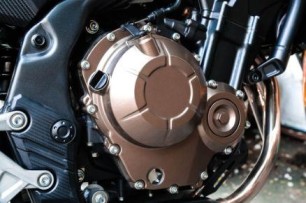
Know more about these motorcycle classes: BS4 and BS6
Are you looking to purchase your first two-wheeler or perhaps on the hunt for an upgrade to your current one? You must have heard various terms such as BS6 and BS4 being used for two-wheelers. Before we jump into understanding them, let's understand why we are talking about these classes.
In order to address the growing concerns about pollution and global warming, the Government of India has introduced regulations known as Bharat Stage Emission Standards (BSES). BSES is the governing body responsible for regulating the output of air pollutants coming out from vehicles. The BSES has made it mandatory for all motorcycle producing brands to register and primarily sell only BS6 bikes from 1st April 2020.
In this blog, we will try to bring forth everything there is to know about BS4 and BS6 engines.
What are BS4 and BS6?
BS4 and BS6 are the 4th and the 6th iteration of the BSES pollution regulations. The Central Pollution Control Board put forth the BS4 emission norms in 2017, which permitted 50 parts per million sulphur content. However, with the introduction of BS6, it was mandated that only ten parts per million Sulphur content were allowed.
Due to BS6, India's emission norms are believed to be equivalent to those of developed countries. BS6 means cleaner fuel and less toxic gases from the exhaust, thus reducing the pollutant content in the air.
The BS6 petrol engine is 25 per cent cleaner than the BS4 motor. And in the case of diesel, it is 80 per cent cleaner than a BS4 diesel engine.
Can you use BS6 fuel in a BS4 vehicle?
BS6 vehicles aren't everywhere just yet, so most motorcycles using BS6 fuel are BS4 vehicles. The important thing to keep in mind is that it is a cleaner fuel and will be perfectly fine for your engine.
Once the laws are mandated, every fuel station will be pumping BS6 fuel. So it is unreasonable to expect one to change their vehicle. This is why it is acceptable to use BS6 power in your BS4 vehicles.
Can you use BS4 fuel in a BS6 vehicle?
It is highly unlikely to have any immediate effect on the motorcycle. There has been certain ambiguity when it comes to this. The petrol engine manufacturers said no effects were seen when a BS6 vehicle used BS4 fuel. However, in the case of diesel engines, there will be some wear and tear eventually. Though, the repercussions would be seen over a very long period.
With the constantly changing time and increasing pollution and population, the automobile industry is preparing for revolutionary changes in the next five to ten years. The laws concerning pollution are becoming more stringent, and it is essential to keep your bike's health in top order to avoid hefty fines in future. Regular check-ups, including pollution checks and servicing, are vital for the good health of your two-wheeler.
It is a good idea to purchase bike insurance to protect yourself from any expenses incurred during these processes. Invest in the bike insurance plan that comes with an attractive premium and features to benefit you when in need.
Click HERE to check out bike insurance plans.
Disclaimer: The information provided above is for illustrative purposes only. To get more details, please refer to policy wordings and prospectus before purchasing a policy.
Infrequent drivers, check out pay-as-you-drive insurance
Car insurance services are evolving to serve their customers more efficiently and effectively. With the advancement of technology, car insurance has moved from paper-based to digital-based insurance offerings. One such evolution in car insurance is introducing pay-as-you-drive insurance.
If you've never heard of the term, here's all you need to know!
What is pay-as-you-drive insurance?
The pay-as-you-drive insurance model is a new car insurance policy recently introduced in India. It allows the policyholder to customise their car insurance and reduce the premium. The required third-party liability car insurance is included in the pay-as-you-drive insurance for the length of the policy. Apart from that, it provides comprehensive coverage based on the distance the car travels. Policyholders of pay-as-you-drive insurance pay the premium for the distance their car covers.
There is no need to worry about the authentication of pay-as-you-drive insurance, as the Insurance Regulatory and Development Authority of India (IRDAI) has approved this insurance mode. Therefore, some car insurance companies in India offer and accept the pay-as-you-drive insurance model. This insurance is an excellent option for infrequent drivers. So, if you take out your car occasionally, this insurance is an advantage for you!
How does pay-as-you-drive car insurance work?
As mentioned above, pay-as-you-drive is new in India, and only some people are aware of the rules and regulations of this insurance policy. To make things easier, we have mentioned some essential points for a better understanding.
1. Research a little about the insurance company:
Only some insurance companies are offering the pay-as-you-drive insurance mode. Thus, it is essential to look for genuine sellers. Conduct basic online research about those who offer this plan. Once you've found a genuine insurer, you'll need this feature to move forward with the insurance policy along with
● Recent odometer reading and other essential car details
● Consent form
● Necessary KYC details
● Driving licence
Besides these, provide other documents requested by the insurance company.
2. Deciding the kilometres:
Unlike other types of car insurance, the premium for a pay-as-you-drive policy is determined by the number of kilometres driven by your car. While choosing the policy, you must make an informed decision on how far you wish to drive your vehicle since you'll have to pay the insurance premium according to the distance your car covers. Be sure to check and read all the terms and conditions before finalising.
3. Installation of the telematics device:
As your insurance company may have told you, you may need to put a telematics device in your vehicle. The telematics devices help record the kilometres driven by your car. You can easily install the application on your smartphone and keep a record of how much total distance you have covered.
The insurance company can also use this application to remind you about the exhaustion of the chosen kilometre slab. They can also inform you about easy top-up and renewal notifications.
In addition to tracking how far a car has gone, the device provides information about average speed, how the brakes are used, etc. With all this information, the premium is calculated by analysing the collected data.
Initially, purchasing such a new insurance policy may seem risky. Over time, you'll realise that it is an excellent way to protect your car if you're an infrequent driver. Research more about the pay-as-you-drive insurance policy and consider purchasing the policy from the best car insurance company in India to ensure complete protection for your car.
Click HERE to buy car insurance to safeguard your car from mishaps.
Disclaimer: The information provided above is for illustrative purposes only. To get more details, please refer to policy wordings and prospectus before purchasing a policy.

Snake bite: Seven immediate actions you need to take
No matter how prepared you are or how well planned your life is, there is always something that catches you by surprise. You could be out on a trek, visiting a wildlife sanctuary, or just simply walking in your garden when you spot a snake, and while your first instinct may be to run, it is said that snakes do not attack unless they feel threatened.
So staying calm and avoiding movement might be the best option you have. However, if you find yourself in a situation involving a snake bite, these are the few things that you could follow to ensure your or the victim's safety.
1. Staying calm:
This might seem like a banal comment during emergencies, but staying calm ensures that your heart is not pumping blood vigorously. Panicking leads to faster circulation, which means it will spread the venom.
2. Restrict movement:
This step is crucial, as the passage of the venom is not directly associated with blood flow. The venom flows through your lymph, which only moves when you do. So any calls that you need to make for the ambulance should be done by somebody else.
3. Pressure immobilization:
Bandage firmly, 'above' the area of the bite. Use a piece of cloth if a bandage is not available. Roll it around the lymph till whatever place it can reach. Now splint the affected area to keep it still. Use any stick, rolled-up layers of paper, etc., to support.
4. Do not wash the wound:
Washing the area gets rid of the venom that the doctors can use to identify the species of snake. Therefore, it is advised to leave the affected area as-is for the benefit of the doctors.
5. Rush to the nearest hospital:
The only remedy to a venomous snake bite is to get an anti-venom as soon as possible. Rush to the nearest medical facility to ensure that timely medication is provided before the patient's condition turns critical.
6. Keep the victim warm:
It is crucial to keep the patient warm and calm to keep their blood pressure under control. However, no caffeine or alcohol should be given. In addition, any food or beverage, including water, should not be provided since it will slow their metabolism.
7. No ice packs and self-medication:
Research shows that using an ice pack on snake bites is harmful and can add to your problems. Avoid the inspection and cleaning of the wound, and avoid using medicines that you might use for regular cuts and wounds. Don't take any action without proper knowledge. The hospital staff are trained to attend to the wound, the venom, and the medication for every circumstance.
Sticking to the steps mentioned above will buy the patient some time before the anti-venom can be injected. As mentioned, a snake bite can create a sense of panic and fear, but maintaining your calm and taking the first aid measures ensures that you have sufficient time before reaching the doctor or medical facility.
Life is full of surprises, some good and some bad. Being prepared always helps, which is why you should invest in good health insurance. With a plethora of options available in the market, you can sit back and not worry about the unnecessary expenses you might face in case of such emergencies.
Click HERE to find out more about health insurance plans that you can invest in.
Disclaimer: The information provided above is for illustrative purposes only. To get more details, please refer to policy wordings and prospectus before purchasing a policy.
Incentives for policyholders may encourage safe driving on roads
The number of vehicles on Indian roads is witnessing an ever-increasing trend. This graph simultaneously shows a sharp rise in online motor insurance policyholders. This is primarily due to the increase in the disposable incomes of families and the changing lifestyle. However, this has also resulted in a drastic increase in road accidents and road rage cases.
It is the need of the hour to promote safe driving on the roads so that people feel protected while using the streets. Providing various incentives for policyholders by online motor insurance companies may encourage safe driving on the roads. Let us see how.
1. Telematics:
Driver telematics is gaining popularity and is an important tool to study and alter irresponsible driver behaviour on the roads. It can also be used as a data analysis tool to provide insights into driving behaviour and reward or penalise a driver.
Telematics in insurance can be app-based or black-box based. It can be useful in tracking driver behaviour, speed, acceleration style, clutch use, braking pattern, etc. Motor insurers can develop a point-based system and reward safe driving on roads with positive points. This means you will be rewarded with positive points if you maintain a good average speed, do not jump traffic signals, and are not involved in any accidents.
On the other hand, you can be penalised by providing negative points if you overspeed, jump traffic signals, or indulge in rash driving and accidents.
The drivers with positive points at the end of the insurance term get a discount on their renewal premium as an incentive. Drivers with net negative points at the end of the year will be charged a higher premium as a punishment. This can provide drivers, especially beginners, a great incentive to drive safely and responsibly to lower their premiums.
2. No-claim Bonus:
Most online motor insurance companies already provide a no-claim bonus or NCB to incentivise safe driving under a comprehensive car insurance policy. You get discounts of up to 50% of the insurance premium at the time of renewal if you have yet to make any claim throughout the year.
NCB is a great incentive for policyholders to encourage safe driving on roads. It encourages driving responsibly and safely, thereby preventing accidents. NCB ranges from a 20% discount in the first year of renewal to 50% for the fifth or higher claim-free year.
3. Damages and dents:
Motor insurance companies can provide incentives such as discounts on renewal premiums to the drivers to keep their cars free from scratches, external damages, and dents. They can check for such external damages during insurance renewal and reward the customers with minimal or nil external damage. This will motivate the drivers to drive safely on the roads so that they do not engage in any collision or accident with other vehicles or property.
Providing incentives for policyholders to encourage safe driving on the roads is paramount and the need of the hour. The number of accidents and loss of lives and property due to them will decrease significantly. Moreover, this will benefit online motor insurance companies, as safe driving will mean fewer claims resulting in higher profits.
Online motor insurance companies highlight the incentives they plan to provide on their websites and all the portals providing online motor insurance services. Potential policy buyers should go through these incentives and policy details to choose the best online motor insurance policy. Irrespective of the incentives and benefits, drivers must always have the mindset of safe driving.
Click HERE to buy online motor insurance.
Disclaimer: The information provided above is for illustrative purposes only. To get more details, please refer to policy wordings and prospectus before purchasing a policy.
Let's understand the difference between fuel injection and carburettor in bikes
Buying a bike is a significant investment for any individual. You put a lot of thought and money into the type of bike you want. The model, budget, brand, features, arrangement of finances are some significant factors a prospective bike owner must consider while making a decision.
An essential part of finalising the type of bike you want is determining the fueling system: carburettor or fuel injection system. For someone who desires to buy a motorcycle but is not technically sound, determining the difference between these two can be an exhausting process.
In this blog, let's understand the difference between fuel injection and carburettor in bikes so that you can get a clear idea about which one would serve your needs in the best way possible.
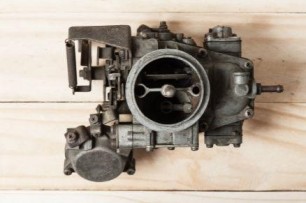
Let's have a look at the carburettor:
The carburettor is the traditional fuel-delivery system in two-wheelers. It has been the standard system opted by most manufacturers in India. The carburettor consists of a tube connected to a venturi. The venturi then reduces the fuel's flow by narrowing it into a cone-shaped tube. Air pressure is created by the device developing suction to draw the fuel. In layman's terms, the carburettor combines air and fuel in a definite ratio and passes it on to the combustion chamber.
Why should you opt for a carburettor?
1. They are relatively cheap, resistant and sturdy.
2. Affordable and easily replaceable.
3. Fine-tuning is possible (improves mileage).
4. Easily removable and serviceable.
What are the difficulties you might face?
1. You might experience a lag when you squeeze the throttle while riding.
2. It cannot achieve optimum fuel efficiency.
3. Prone to damage (wear and tear).
4. Dust blockages can be problematic.
Now, let's understand what a fuel injection system is?
A fuel injection system is a modern technology-based system used in bikes in the current times. It consists of multiple electronic components and sensors that form the Electronic Control Unit (ECU), which monitors the whole fuel-injected system. The fuel pump inside the tank monitors and controls the fuel flow. The ECU calculates the air and fuel needed for the combustion process.
What are the advantages?
1. Sharper throttle response with no lag.
2. Precise air and fuel mixture for efficient combustion.
3. Durable and low maintenance process.
4. Better mileage.
5. Reduced air pollution.
What are some hitches of the fuel injection system that you might face?
1. Comparatively expensive than the carburettor system.
2. Difficult to fine-tune without expensive and complex tools.
3. ECU takes a professional understanding of how things work. Regular mechanics might find it challenging to repair.
Those were the significant concepts, advantages and challenges to help you understand the difference between fuel injection and carburettor in bikes. This will help you determine which system would cater to your needs in the best way possible. Now, to make sure that you safeguard your bike during unfortunate incidents, it would be a wise option to get it insured.
Explore the market and buy the best two wheeler insurance online India which suits your needs. Digital technology has made it convenient for customers to purchase insurance of their choice online without any intermediary's involvement.
Click HERE to know more about how you can purchase two wheeler insurance online India.
Disclaimer: The information provided above is for illustrative purposes only. To get more details, please refer to policy wordings and prospectus before purchasing a policy.

Let's understand the merits and demerits of 4-wheel drive cars
Cars are fantastic companions for commutation, whether you're cruising along highways, navigating busy roads, or going off-roading. On the other hand, the technology-driven components of the cars determine their performance in various conditions.
The variety of car features has significantly increased in recent times, and you now have more choices when selecting your next car than ever before. One such option is a four-wheel drive (4WD) car based on the drivetrain system you want to use.
A 4WD offers to maximise the effective usage of the vehicle on rough roads and rocky terrains. It is an exciting concept that has been introduced in the automobile sector but requires good knowledge to utilise it to its best potential.
You need to understand the merits and demerits of 4WD to make the right choice before buying one.
Advantages of 4WD:
1. A widespread myth is that you must always drive your car in 4WD mode. You have the option of switching between 4WD and 2WD at any time. Modern four-wheel-drive automobiles have a button that activates or disengages all four wheels. So, if you don't require all four wheels to work simultaneously, you may drive around with the 2WD system.
2. In hazardous driving situations such as snow, ice, mountain regions, and other scenarios where staying in control is challenging, 4WD enhances traction and control by engaging both sets of wheels.
3. The improved traction gets combined with the engine's enhanced power. It provides the extra boost 4WD vehicles require to climb over obstacles and up steep inclines. It is ideal for off-roading and mountainous terrain.
Disadvantages of 4WD:
1. The most significant downside of 4WD is the increased expense of acquisition, and maintenance. The extra equipment (transfer case, differentials, etc.) increases the vehicle's complexity and weight, increasing its original market value.
2. Furthermore, the additional weight of a 4WD system and the additional power generated result in lower fuel economy than 2WD systems. Driving your automobile with all four wheels producing power will burn more fuel.
3. Drivers that employ 4WD may grow overconfident, leading to more situations where they become stuck. Excessive confidence can even lead to dangerous accidents if the driver loses control over the vehicle and fails to manage the power that is being generated.
4. The 4WD system connects the front and back driveshafts, ensuring that all four wheels revolve at the same speed. It makes it harder to turn the car because the wheels must move at different rates to corner successfully. The inner wheel rotates slower than the outer wheel, which must traverse a greater distance in the same amount of time. As a result, the outer wheel will rotate quicker. You will damage the transfer case, gears, and drive shafts if you turn the car with 4WD activated. Hence, it's best to use 4WD only for off-roading.
A 4WD is a fantastic investment if you enjoy driving off-road or if you have to deal with difficult driving conditions regularly. But don't assume you need 4WD to get to and from work.
Whether it is a 2WD or 4WD, securing your car from damages is paramount. Accidents are unpredictable, but safety can be defined beforehand. Buy car insurance policy online to stay financially shielded and protect your car to get the best returns on your investment.
Click HERE to buy car insurance policy online.
Disclaimer: The information provided above is for illustrative purposes only. To get more details, please refer to policy wordings and prospectus before purchasing a policy.

If you’re in your 20s, this is the perfect time to buy health insurance
A person’s 20s are a hectic yet exciting part of life. Many gain financial freedom and start deciding how to spend their money wisely. The 20s are a time to be living it up, but it is highly sensible to shell out some money to invest in the best health insurance in India.
As you get older, getting health insurance becomes trickier and more expensive, and it is ideal for insuring yourself against the mounting healthcare costs early in your 20s.
This article gives insight into the benefits of getting insured in your 20s.
The waiting period will not affect you as much:
The waiting period in health insurance terms is when a policyholder cannot claim insurance for certain diseases, pre-existing ailments, etc. This is fine for a policyholder who takes their health insurance in their 20s. As the waiting period is spent in your 20s, when you have a lesser probability of getting diseases, you would be spending this waiting period at a time when you don’t need coverage.
As opposed to this, taking health insurance in your 40s or 50s is much more troublesome. You might have to compromise on getting the benefits of your health insurance and wait for 2 to 4 years before getting the disease-specific help you require.
1. Lesser premium:
Insurance providers assess the risk associated with a person before deciding the premium and the cover of a policy. Generally, a person in their 20s has a lower risk of needing the payout. Thus, the premium is much lower than a person in their 30s or 40s is paying for the insurance policy.
2. Tax benefits:
Health insurance plans provide another significant advantage in the form of tax deductions. Under the Income Tax Act 1961, one can avail of tax benefits if the policyholder pays out of pocket for the health insurance premium. You can avail of these benefits for yourself, your ageing parents, your spouse, and your dependents.
3. More comprehensive health insurance plans:
Being in your 20s makes you a suitable candidate for health insurance. This is because there is less possibility of pre-existing illnesses in these years. Your policy issuer automatically covers any new diseases that materialise after you’ve taken the insurance. Also, you can select a suitable plan according to your budget and requirements by researching the best health insurance in India
4. You can avail of no-claim bonuses for a long time:
No-claim bonuses are discounts on premiums given to policyholders when renewing their policy as a reward for not filing a claim within the policy tenure. The percentage of discount differs between companies. As there is a lower probability of filing a claim in your 20s, you can avail of your NCB for longer or transfer it during renewal.
5. Rejection rates are almost nil:
An insurance company may reject your application based on your medical history. As there are fewer chances of pre-existing illnesses among young individuals, there is less chance of rejection. Also, you may opt out of paying a copay in your health plans, which is impossible for aged policy seekers.
With the present trends of inflation, especially in the healthcare industry, it is prudent to purchase the best health insurance in India early to reap the benefits of protection for an extended period. Since the cost of living only increases as you rise in the ranks of your profession and earn more money, it is ideal to start investing in health insurance from an early age. We urge young professionals to consider investing in the best health insurance in India not just as a tax-deductible but to protect their present wealth and future earning capacity.
Click HERE to know more about the best health insurance in India.
Disclaimer: The information provided above is for illustrative purposes only. To get more details, please refer to policy wordings and prospectus before purchasing a policy.

World Cancer Day: Ten self-help tips to quit smoking
Tobacco use is both a physical and mental addiction. This deadly habit has affected a vast population worldwide. Nowadays, smoking and chewing tobacco observe no age as the majority of the youth are trapped under the negative influence of excessive tobacco use, which becomes irresistible and difficult to quit.
Nicotine delivers a transient high. To quit smoking, you must prohibit both the addiction and the associated behaviours and routines. With the correct assistance and quitting strategy, smokers can overcome their habit even if they've tried and failed previously.
We're all aware of the harm caused by smoking and how it isn't easy to quit. When you stop getting your tobacco dose regularly, your body goes through physical withdrawal symptoms.
Following are ten tips that will guide you to quit smoking in no time.
1. Make a quitting strategy:
Following the "no puff" criterion is always beneficial. Consider challenging situations and prepare your moves. Promise yourself not to smoke and stick to this until the cravings pass.
2. Observe when you require a smoke:
Identify the times when your cravings are at peak and avoid those situations. Instead, engage yourself during this time to keep you from giving in.
3. Get going:
Exercising is a known way to reduce addiction. For example, a simple 5-minute walk or stretch helps your brain to release anti-craving hormones that further reduces cravings.
4. Maintaining proper hydration:
It's an excellent idea to keep track of what you drink, just as you do with what you eat. While it is necessary to drink enough water, certain beverages are not suggested since they encourage smoking.
5. Apply relaxing methods:
Relaxation methods, such as deep breathing exercises, muscular relaxation, yoga, massage, listening to calming music, or visualisation, may help take the edge off.
6. Keep your mouth engaged:
Whenever you feel the urge to smoke a cigarette, munch on some snacks. And remember, you don't always have to snack on junk food; snacks can be healthy too. You can even eat chewing gum to keep your mouth engaged and avoid cravings.
7. Think about your diet:
Some meals, especially meat, make cigarettes more enjoyable. Others, such as cheese, fruit, and vegetables, make the smoke less desirable. So rather than your typical steak or burger, try having veggies instead.
8. Get some help in quitting:
If you have people around you who wish to quit smoking, offer them to stop together. Your local ‘quit smoking club’ may also assist you. With professional guidance and advice, you're four times more likely to succeed in quitting.
9. Keep a positive attitude:
You may have tried and failed to stop smoking in the past, but don't let that discourage you. Instead, consider what your history has taught you and how you want to do things differently this time.
10. Reassure yourself of the advantages:
Remember the benefits of quitting, such as better health and relations, healthy resistance mechanisms, etc. Also, keep in mind that every time you fight a cigarette urge, you're one step closer to becoming smoke-free.
It's never too late to undo something. So, let this World Cancer Day motivate you to quit smoking and walk towards healthy living. Smoking might give you pleasure for a couple of minutes, but it takes away more than you realise. Not to mention the severe illness and ailments that come with it. So, make the wise decision to just give it up.
Besides quitting smoking, buying health insurance can be crucial to living a healthy and long life. Take account and responsibility for your health, and don't hide any information from your insurance company regarding your smoking or drinking habits. Be true to yourself and give all accurate details to get the best benefits of your health insurance at the time of need.
To buy health insurance, click HERE.
Disclaimer: The information provided above is for illustrative purposes only. To get more details, please refer to policy wordings and prospectus before purchasing a policy.
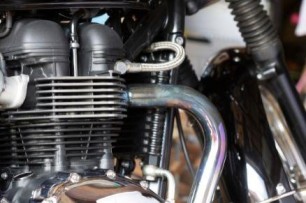
Let's understand why bikes do not have diesel engines
Diesel engines are commonly used in the automobile sector. Cars, trucks and other vehicles rely heavily on them. On the other hand, diesel-powered bikes are rarely seen. Have you ever wondered why? It's not like the industry hasn't seen diesel-powered motorcycles before. In India, only one diesel-powered bike has been introduced. But that is all.
If bikes can run on gas and petrol, why not diesel? With the petrol prices touching new highs every month, it only makes sense to have bikes with a diesel engine, right?
Although the idea is not bizarre, it isn't easy to execute. Keep reading to know why manufacturers do not use diesel engines in bikes. We have mentioned five reasons that will help you understand better.
1. Compression ratio:
The compression ratio of a diesel engine is 24:1, which is higher than a petrol engine's compression ratio of 11:1. The diesel engine must be bigger and heavier to accommodate such a high compression ratio. As a result, it is heavier than a gasoline engine, making it unsuitable for a small vehicle such as a motorbike.
The diesel-powered engine creates greater vibration and noise than the petrol-powered engine due to the higher compression ratio. A bike will not be able to sustain such high vibrations and noise levels.
2. Heating issues:
As compared to petrol engines, diesel-powered engines generate more heat. When diesel burns, it creates a lot of heat, harming the cylinder walls and other engine components like pistons and valves.
To lower the heat, manufacturers will need a larger surface area and a more effective cooling system which is inconvenient. On the other hand, petrol engines produce less energy per gallon. As a result, they stay significantly cooler and are less prone to harm the engine.
3. Price and Size:
The addition of a turbo compressor to push extra air into the cylinder increases the expense and size of a diesel engine. Moreover, injector technology is utilised to pump fuel into the combustion chamber, which is more costly than petrol engine spark plug technology.
A diesel engine is much larger than a petrol engine, and it requires a lot of force to start, making it unsuitable for motorcycles.
4. Greater torque but low speed:
Diesel engines generate greater torque. However, they have lower revolutions per minute (RPM) when compared to a petrol engine. Diesel isn't regarded as an ideal fuel since bikers' high-performance bikes demand greater RPMs.
5. Not so eco-friendly:
The amount of carbon dioxide produced by a diesel engine is around 13% more per gallon than a petrol-powered engine. Its usage is harmful to the environment, observing the average number of motorcycles used nationwide. This figure can be a significant threat to India's climate.
There you have it, all the key reasons why manufacturers won't produce diesel-powered bikes. Even if we look from a biker's perspective, no biker would want a bulky bike with more cons than pros. Although if the technology evolves in the future, we might have a diesel engine revolution. Until then, stick to your petrol-powered bike and insure it with the best two wheeler insurance in India. You can browse multiple options and choose one with the best premium and benefits.
Click HERE to buy the best two wheeler insurance in India.
Disclaimer: The information provided above is for illustrative purposes only. To get more details, please refer to policy wordings and prospectus before purchasing a policy.
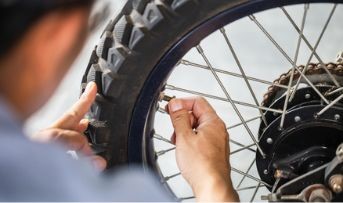
Here are some bike puncture probabilities every rider must be aware of
While bikes are the most commonly preferred mode of personal transport used in all-terrain conditions, easy to manoeuvre, and convenient, their safety is often ignored. The government's strict move to mandate bike insurance makes it evident that the safety and protection of the rider are essential and can’t be compromised.
Besides bike insurance, you can also ensure safety through regular maintenance and preventive measures to avoid mishaps. Punctures are one such risk that you may encounter at any time. They can be frustrating but are unavoidable. Here are some factors riders should be aware of that could lead to a tyre puncture.
1. Old tyres:
As consumables, tyres must be replaced every 5 years or 30,000 to 40,000 kms, based on the riding style and road terrain. If you notice little surface rips, a large tear that may expose the tube, cracks, or other symptoms of wear down, the tyre has to be changed. Since they are your primary point of contact with the road, having new tyres will reduce the probability of having a puncture and improve the overall feel of your vehicle.
2. Sidewall cracks:
The lack of use of the vehicle, the environment, or parking the two-wheeler in direct sunlight can all cause tyre sidewall cracks. They might seem insignificant, but they can cause catastrophic air leaks over time.
3. Pinch flats:
Pinch flats can occur because the tube is forced against the wheel rim and either tear or explode on pumping. The incident occurs due to the hasty insertion of the tube and carelessness. Always partially inflate the tube before fitting it to prevent this from happening.
4. Increased tread wear:
Tyres include grooves known as treads for better traction and grip on the ground. The impression deteriorates due to use, making it difficult to manoeuvre the bike by decreasing traction and lengthening the time taken to brake. A tyre wear indicator is typically an arrow sign that shows the extent of wear and the point at which you should change your bike's tyres.
5. Ignoring tyre inspection:
Small, sharp objects pierce the rubber of the inner tube to cause a puncture. If the item remains lodged in the tyre unnoticed for a long period, it can cause the new inner tube to be punctured. Have a proper tyre inspection before replacing your tube to avoid such issues.
6. Wheel damage or bending:
The alloy wheel or steel wheel may break or bend from the area around the tyre bead if you ride over a large, deep pothole, collide with another vehicle, or have an accident. This may result in an air leak due to a puncture.
7. Improper tyre pressure:
Under-inflated tyres will bend in response to the slightest bump or obstruction, making them vulnerable to pinch flats when the tube can become wedged between the rim and the tyre. You risk hitting a pothole or other impediments with more force if you have too much pressure in your tyre, making it challenging to bend against any object and keep it rigid. Your weight, the breadth of your tyres, and the weather will all affect the proper tyre pressure.
8. Unusual deterioration pattern:
The tyre may show signs of wear and tear. It can be on the shoulder or in the middle of the tyre. Mechanical problems, such as worn-out shock absorbers or a problem with wheel alignment, are to blame. It's essential to replace the tyre if it shows evidence of abnormal wear and tear.
9. Valve stem damage:
The valve stem, located on the inner circle of both tube-type and tubeless tyres, is where you fill the tyres with air. The ability of the tyre to retain air decreases if that valve stem is damaged, whether by corrosion, blockage, or breaking.
Punctures are a constant worry, especially considering bikes' lack of sophisticated safety features. While you cannot prevent punctures, you can keep a look for signs of a possible puncture. We also recommend riders consider purchasing comprehensive bike insurance. This will shield you, your bike, and others from finances worries if your bike suffers severe damage.
Click HERE to purchase the best bike insurance to secure your assets and finances.
Disclaimer: The information provided above is for illustrative purposes only. To get more details, please refer to policy wordings and prospectus before purchasing a policy.
How to improve the fuel efficiency of your car
No matter how much we stress about the rising fuel prices, there isn't much we can do about them. Then how do we ensure we use our vehicle efficiently and stay stress-free about the condition of our car? Moreover, how do we compensate for the fuel prices we pay?
Do you know regular maintenance of your vehicle can save you up to thirty per cent of fuel consumption? And yet, a lot of car owners slack off on taking care of their vehicles. Some don't go for regular servicing, and others use cheap spare parts and end up damaging their car.
This blog is your guide on improving the fuel efficiency of your car. We will discuss various ways to attain maximum efficiency without widening the hole in your pocket created by the increasing petrol and diesel prices.
1. Avoid leaving the vehicle idle:
Leaving your vehicle in an idle state at traffic signals consumes almost a gallon of fuel and increases your carbon footprint by releasing unnecessary carbon dioxide into the air. Instead of leaving your car in an idle state, restart as per your necessity. This saves a lot of fuel and minimises carbon dioxide emissions into the atmosphere.
2. Warm-up:
Slowly and effectively heating your car's engine is a better choice than revving it. Unnecessary pressure will decrease the efficiency of your engine, and it will consume more fuel for power generation. After starting your vehicle, wait for thirty seconds to allow the engine to warm up properly at its own pace.
3. Say no to heavy braking:
Reduce the use of throttle and avoid applying unnecessary heavy brakes. This saves your vehicle from the possibility of wear and tear and decreases fuel wastage by almost thirty per cent, thus improving your car's fuel efficiency.
4. Don't rev your car:
Revving your engine causes wastage of fuel. It flushes down all the oil from the cylinder walls. The absence of oil could worsen the next time you start up your car. This will put pressure on the engine and result in excessive fuel consumption.
5. Multiple errands:
Planning your trip according to your errands can efficiently help you utilise the fuel. You can combine and run multiple errands and reduce the number of trips.
6. Alignment:
Check the alignment of the chassis parts and suspension. If the wheels are bent, or if there are broken springs, the drivetrain drag of your car will increase, resulting in increased fuel consumption. Defective parts and misalignment can also put your safety in danger and amplify the risks of accidents.
That's a wrap on how to improve your car's fuel efficiency. Using these tips, you can ensure maximum and optimum utilisation of the petrol and diesel you put in your vehicle. While fuel efficiency is an essential aspect of owning a car, ensuring your car's security is equally important. Invest in car insurance and protect your vehicle from any unfortunate incidents. To purchase insurance, explore the market, and browse through multiple deals to ensure that you get the best car insurance price in India.
Click HERE to know more about how you can get the best car insurance price in India.
Disclaimer: The information provided above is for illustrative purposes only. To get more details, please refer to policy wordings and prospectus before purchasing a policy.
Experience the thrill of powerbocking
In the hustle and bustle of today’s modern world, youngsters are always looking for an adrenaline rush. This rush has made extreme sports increasingly popular in this day and age. Due to India’s wide geographical variety, many of these sports are offered in different corners. From exploring the mesmerising aquatic life and corals in Andaman to parasailing in Goa, these sports can push you physically and psychologically out of your comfort zone.
However, checking the coverage offered by your personal accident insurance policy before engaging in such sports is always recommended. This ensures that your insurer provides compensation in case of accidents while participating in adventure sports.
One such extreme sport that is getting increasingly popular among young Indians is powerbocking. This blog will introduce you to powerbocking and the thrill you’ll crave once you indulge in it!
What is powerbocking?
Powerbocking is an extreme sport where players wear jumping stilts and jump to great heights. Jumping stilts are specialised leg attachments containing springs to hoist the person into the air. Jump stilts are very exciting! They enhance your ability to do tricks and flips and help you take greater strides, which makes you run faster. These stilts are called powerbocks after the creator, Alexander Bock, a German inventor who first named them powerskip.
It is a popular sport in urban cities, and finding a surface on which you can go powerbocking is essential. Balance being one of the critical factors affecting this sport, it should not be done on grass or dirt, as the boots have a small surface area on the ground, which may lead to injury. Thus, jumping stilts should ideally be used on asphalt or cement. Since this can result in injury due to the hard nature of the surface, you should be equipped with a personal accident insurance policy that covers such accidents and injuries for your physical and financial safety.
While they may seem unfamiliar in Indian settings, they were recently used in an Indian sporting event. Different interesting videos on social media have always been creating a buzz regarding this sporting activity. With time, this event is expected to observe growth in India too.
● Benefits of powerbocking:
Powerbocking makes you feel superhuman without the same risks as other extreme sports. They are most suitable for people who want to feel like bionic humans from the future without any of the associated perils. It is an exciting offbeat adventure sport that one should surely try.
● Risks associated:
Despite being a reasonably harmless sport where the most significant injury is usually a knee scrape, some people have suffered severe injuries while seeking the thrill of jumping in these devices. For such misadventures, it is always advisable to take an extreme sports insurance policy or a personal accident insurance policy covering medical costs for such injuries.
● Powerbocking competitions:
When it comes to any sport, the main thrill of it is the competition. They bring out the competitiveness of the best players in the world and are incredibly engaging to see. As this is a niche adventure sport, there are fewer worldwide competitions, and the most famous ones are in France. The Riser Winter Cup, held each year in Lille, France is one of the most sought-after competitions for powerbockers.
Have you ever watched videos of Kangaroos jumping and wished you could jump that high or take such great strides? Then powerbocking is the perfect sport for you. Just make sure to take the proper precautions before undertaking this sport. And the first step to your security begins with purchasing personal accident insurance policy.
Click HERE to know more about personal accident insurance policy.
Disclaimer: The information provided above is for illustrative purposes only. To get more details, please refer to policy wordings and prospectus before purchasing a policy.
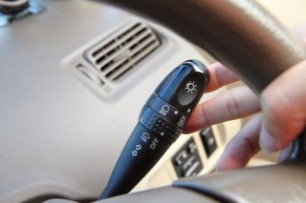
Car Indicators: A comprehensive guide to know more about them
Cars have multiple indicators, all with specific functionalities. These indicators play a significant role in keeping you and your car safe, especially while driving. They exhibit deceleration, assist in showing the vehicle's change in direction and make the car's functionalities accessible. They help avoid collisions with other vehicles, thus protecting you from accidents and damages.
We need to understand car indicators in a better way. Let us discuss car indicators structurally, functionally, and common mistakes that can endanger you.
1. The structure of indicators:
Whether attached at the side, front, or rear of your vehicle, the car indicators on the exterior provide information to other people on the road via signals, thus maintaining a safe distance with other cars and pedestrians. These indicators are responsible for ensuring safety on the road.
Usually, a car's signal light consists of three parts assembled together-bulb holder, housing, and cover lens.
• The housing consists of moulded reflectors.
• The bulb holder places one or more light sources relative to the optical system of the light.
• The cover lens is in charge of the light distribution through patterned structures.
2. The functioning of indicators:
The rear light consists of several functions which work on the same brightness level during the day, fog, or night. But thanks to the Adaptive Signal System, the signal lights in the rear combination lamp can adapt to the weather conditions individually. The light intensity can be varied according to the weather and the visibility conditions.
More LEDs light up with more significant displays. Different braking signals meet their requirements in other ways, such as increased brightness or flash frequency, ensuring convenience.
3. Handling the indicators:
Pulse Width Modulation (PWM) controls the light sources in many vehicles. It has many advantages, one of which is using the same bulbs for different functions. This also increases the service life of the bulbs.
Note: The manufacturer's information and specifications should be strictly complied with while replacing the bulbs in the signal lights. An incorrect bulb replacement can create an issue regarding the light intensity.
4. The faults:
A faulty indicator signal light can be snuffed out before it becomes dangerous. Without a signal, or failing to use your turn signal while turning or changing lanes can cause confusion between you and the other vehicles. It can further lead to severe accidental circumstances.
Improper use of high beams or glare can cause poor visibility of the vehicles coming in your direction, resulting in collisions leading to severe damages. Avoid driving without headlights at night and use high beams only when there is light traffic or absolutely no cars on the road.
Now that we have discussed car indicators in detail, a wise option would be to understand how unprecedented circumstances can endanger your car's safety and efficiency. To further protect your vehicle, you can research multiple insurance options that provide all possible features required by you. And once you finalise, buy motor insurance online to avoid all the outdoors hassle and add value to your valuable possession.
Click HERE to know more about how you can buy motor insurance online
Disclaimer: The information provided above is for illustrative purposes only. To get more details, please refer to policy wordings and prospectus before purchasing a policy.
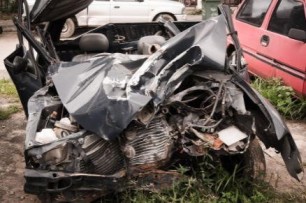
Know more about the total loss car insurance claim process
Car insurance might include many technical languages that can be difficult to grasp or make sense of. One such concept that might perplex people is "total loss." If you are involved in an unfortunate event where your vehicle sustains significant damage, this is referred to as ‘Total Loss’ in insurance jargon.
This is a tragic situation, and you must follow particular procedures to submit an insurance claim. In case of a total loss, the cost of restoring and repairing your car exceeds 75% of the insured declared value (IDV). Let us learn more about this term, what it means, and some other areas of motor insurance linked to it.
Total loss in car insurance:
When the calculated cost of repairing a damaged vehicle exceeds the car's actual cash worth, the automobile is considered a "total loss." Such a claim differs from other small claims since it requires more work. When an automobile is deemed a total loss by its insurance company, it is referred to as a totalled car.
Total loss can be caused by two means:
• Car getting stolen
• Car getting wrecked beyond repair in an accident
Furthermore, a constructive total loss occurs when the anticipated cost to repair or replace the insured vehicle exceeds its real market worth. Constructive total loss is so severe that it is cheaper and wiser to purchase a new car instead. This is mainly because there is little likelihood of returning the vehicle to its previous condition.
What to do if you suffer a total loss?
You have the option of selling the remaining pieces of your wrecked vehicle to a scrap dealer. Some components are recyclable, while others are not. The scrap trader will separate these pieces and recycle them for other purposes.
The next important step is to cancel your RC certificate at your closest RTO office. It is your responsibility to comply within a 14-day grace time to submit a notification to the RTO office. When you cancel your registration, you provide a guarantee that the same registration will not go to anyone else.
The next move would be to submit a Total Loss claim. When you submit a claim, the insurance provider is only obligated to pay the IDV. If you already have the ‘Return to Invoice add-on’ on your coverage, the motor insurance provider is obligated to pay the entire amount of the car invoice. This add-on allows you to acquire the total value of the vehicle rather than just the insured declared value.
For those who are newly purchasing car insurance, do not sleep on the Return to Invoice add-on. This is something that will ultimately work in your favour. Things are always uncertain when you're on the road, so be responsible and do not travel without car insurance. Take serious responsibility for protecting your possessions and make wise investments in security that will reap you good benefits at the hour of need. Watch out for your car insurance renewal dates and always renew them beforehand.
To get a car insurance renewal, click HERE .
Disclaimer: The information provided above is for illustrative purposes only. To get more details, please refer to policy wordings and prospectus before purchasing a policy.

The best tips to ride a two-wheeler with an attached sidecar
Riding a two-wheeler with an attached sidecar is a rarity these days. However, this combination is a classic. Besides giving your two-wheeler a quirky look, attaching a sidecar increases efficiency and enhances the functionalities of your vehicle. But a two-wheeler with an attached sidecar comes with its own challenges.
Adding a sidecar makes your vehicle transition from a two-wheeler to a three-wheeler. So, it would be best to adapt to the dynamics and difficulties of riding a three-wheeler to prevent road accidents and ensure safety.
Let’s discuss the best tips to ride a two-wheeler with an attached sidecar to help you overcome the obstacles you might face:
1. Although it is challenging to drive in a straight path as the wheels are fitted in three odd planes, keep a firm grip on the handlebars and put the required effort to ride in a straight line. You will need to constantly pull the handlebars and manoeuvre them accordingly to avoid any collisions on the road.
2. A bike with an attached sidecar moves differently when turned. In case of a left turn, permit the wheel on the rear end to spin slower than the sidecar wheel as you release the throttle. This will help you control the vehicle better.
In case of a right turn, allow the wheel on the rear end to spin faster than the sidecar’s wheel as you open the throttle. All in all, modulating the throttle will help you achieve better control of your two-wheeler.
3. Your sidecar has brakes. To use the front brake, you need to use the right-hand lever on your bike. If the sidecar has brakes on the rear end, you can use the right foot lever. To stop your motorcycle, you need to apply both brakes. In case of an emergency, apply the front brake.
4. Many sidecars have the provision of a steering wheel and an option to switch to the two-wheel-drive model. But make sure that you only use the two-wheel-drive function in emergencies (for example, if your motorcycle is stuck on a loose or slippery surface). Engaging the two-wheel-drive on a firm surface causes both sidecar’s and bike’s wheels to spin at the same speed, thus creating a risk of disbalancing the vehicle while making a turn.
5. Practice makes you perfect. The same applies when you learn the dynamics of riding a two-wheeler with an attached sidecar. Practising regularly in a safe environment with and without a pillion rider will help you learn efficiently. Take things at your own pace, don’t rush, and see the positive outcomes.
Sidecars ensure convenience and even allow families to spend quality time together. Now that we’ve shared the best tips to ride a two-wheeler with an attached sidecar, it is a wise thought to think about how to keep your two-wheeler safe on the roads. Along with taking good care of your bike, purchasing a bike insurance is your solution to safeguard your bike from unprecedented damages.
Click HERE to know more about bike insurance.
Disclaimer: The information provided above is for illustrative purposes only. To get more details, please refer to policy wordings and prospectus before purchasing a policy.

Six practical gifts for any parent they would love
Parenting is tough, but buying an ideal gift for your parents might be even more challenging. What would you gift the people who gave you everything? Is there even a perfect gift for parents? The finest presents are ones that celebrate their hard work and provide them with a much-needed break from daily life. These gift choices are guaranteed to be a success.
Even a tiny present may be a polite way to express your love and gratitude towards them. Owing to internet purchasing, your options are almost limitless. However, this may lead to some significant stress while decision-making.
We are here for your help as we have curated a list of the most fantastic presents for parents.
1. Packing cube set of 6:
This is a packaging set that contains six pieces. Cubes of four different sized bags, one for footwear, and one zippered bag to separate dirty clothes. This could be the perfect gift for people who like to travel and explore around. It is incredibly organised and easy to carry along.
2. The latest Fitbit:
A fitness watch is an intelligent fitness tracking device that also serves as a watch. It keeps track of your daily routine, steps, burned calories, hourly activity, heart rate, and more. This gift could inspire your parents to start working out and look after their health.
3. A vacation:
One of the best gifts for anyone is a little vacation to cherish priceless moments. A trip that takes away all their stress and worries. Some alone time with nature is what a parent needs after looking after everybody in the family. So, go ahead and book a lovely trip to a beautiful destination.
4. Neck and Back massager:
Growing up, you may have been a pain in the neck (literally!). This is your chance to make up for it by giving your parents an electric neck and back massager. Despite the age, one could always have the benefits of massages whenever they want.
5. Gardening kit for organic kitchen herbs:
A one-of-a-kind gift for people who love to cook with fresh home-grown ingredients. Gardening takes up a lot of your time, but the outcome is worth every second you invest. This is also an excellent hobby for retired parents.
6. Health insurance:
Health insurance is the most valuable gift you can give your parents. They never prioritise themselves, so you have to do it for them. All you have to do is look for the best health insurance in India for parents and purchase it to secure their health and ensure their happiness.
There's no doubt that the most important people in your life deserve nothing but the finest, no matter what the occasion. Nonetheless, when it's time to find the right present for them, it may be tough to think of something as unique as them.
That's where our list comes in. Picking gifts for parents will always leave us perplexed for a while. However, something practical and functional is an excellent choice. We hope this list guides you in choosing the perfect gift for your parents.
Click HERE To get the best health insurance in India for parents, click
Disclaimer: The information provided above is for illustrative purposes only. To get more details, please refer to policy wordings and prospectus before purchasing a policy.

Learn how to slow down your bike after an unexpected brake failure
We can rave about the look and mileage of our bike's engine, but, at the end of the day, it all comes down to how efficient it is on the road. Driving in a country like India, where the roads and the path walks have no clear distinction, we might encounter various instances where we have to dodge a huge pothole or the kids playing on the street. So, having an efficient brake system is vital to ensure the safety of yourself and others.
The properties, characteristics, and behaviour of brakes do not always remain the same. These can be influenced by temperature, operating habits, operating durations, and effects of interconnected parts, sometimes leading to brake failure.
In situations where you come across a brake failure, being prompt on your toes will help you avoid any accidents.
1. Maintain your calm:
It's common knowledge that maintaining your composure under pressure helps you navigate any problem. The same is applicable for the time that you are on the road. If possible, taking your bike to a less busy road should be the first step to avoid crashing into people or vehicles.
2. Do not turn off the engine:
Your first instinct could be to turn off the engine and let the bike stop, but this can be extremely dangerous. You need to control the situation to avoid traffic crashing into you. So having a constant acceleration in this situation can prevent a crash.
3. Stick to the road and not the sides:
Without the brakes, your bike will be difficult to manoeuvre. Sticking to the sides might present you with uneven roads. Instead, wait for the bike to slow down before pulling over to the side of the road. Only under hefty traffic conditions should you consider going to the side of the road while your bike is still retaining speed.
4. Use your gears:
Surprisingly, gears can assist you in slowing down your bike in a situation where brakes aren't responding. You need to be alert and immediately start lowering your bike's gears. This will create a mechanical resistance from the engine opposing the motion, causing the bike to slow down. Using this method can help you control the bike and prevent the situation from escalating. Once your bike slows down, you can pull it over to a safe place and then shut the engine.
5. Use your horn:
Many times, we come across people relentlessly honking their horns in traffic jams. While that might sound annoying in most cases, do not shy away from alerting people on the road. Since they are not aware of your situation, it is best to attract attention and to be careful.
These are some things that you can focus on if your brakes fail. Road safety is paramount whether you are driving or a pedestrian. Be alert while handling the bars, focus on the road, and resist overspeeding.
Regular check-ups and servicing ensure both you and your bike are covered. Having bike insurance can add value to your experiences. So, consider getting bike insurance online to protect you against damages, third-party legal liability cover, and 24/7 assistance for emergencies.
Click HERE to buy bike insurance online.
Disclaimer: The information provided above is for illustrative purposes only. To get more details, please refer to policy wordings and prospectus before purchasing a policy.

Six best ways to avoid backaches during car journeys
Planning impromptu road trips is always a great way to take some time off and have fun. These days, people like to travel with ease and comfort, so road journeys have become the ideal mode of travel during vacations. However, continuous driving can become uncomfortable and cause various back troubles like backaches, stiffness, numbness, discomfort, nausea, etc.
In this blog, we will discuss the six best ways to avoid backaches during car journeys so you can enjoy your trip to the full extent.
1. Comfort:
Make sure that you are comfortable from the beginning of your trip. Do not keep purses, watches, etc., in your back pocket as it might disturb the alignment of your spine, resulting in discomfort or backache. If you are driving, sit closer to the steering wheel instead of bending or messing up your posture to reach it.
2. Alignment:
Keeping your back aligned to the seat provides comfort while driving. You can add comfortable gear and equipment to help you maintain your back alignment. Roll up a towel and keep it between your back and the seat to maintain the curve of your posture.
3. Smooth rides:
Replace any worn tyres or parts that can cause jerks on the road. Make sure that your ride is as smooth and comfortable as possible. You can use a car seat cushion to help with your sciatica pain.
4. Breaks:
Road journeys require you to sit in the same positions for a longer duration of time which can cause numbness in your legs and back. To avoid the risk of backaches, make sure that you take breaks in the regular intervals of your trip and get out of your car to stretch your whole body. Move around a bit to ensure there is no stiffness.
5. Cold pack:
If you have pre-existing backache issues, it would be good to bring a cold pack for the journey. Backaches can trigger inflammation. Applying cold packs helps reduce inflammation and calm sore and numb tissues. To sustain the temperature of your cold pack, you can carry a cooler in your car and keep reusable ice packs in it.
6. Warmers:
Some people have found that seat warmers help relax the muscles by warming up the lower back. You can use reusable heating pads in place of a pillow that provides lumbar support, heat wraps that last for longer durations, etc., for a comfortable road trip experience without the risk of severe backache.
To avoid backaches, you must take good care of your posture during road journeys. Excessive strain on your body, especially the back, due to continuous driving for hours can affect your physical wellbeing. Follow the above tips to make driving comfortable and less exhausting.
Consider buying car insurance to avoid hefty expenses in case of any mishaps. Reliable car insurance with an additional feature of Personal injury protection (PIP) will cover all the expenses, including garage costs, medical bills and provides financial security under all circumstances.
Click HERE to know more about car insurance.
Disclaimer: The information provided above is for illustrative purposes only. To get more details, please refer to policy wordings and prospectus before purchasing a policy.
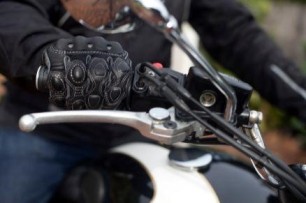
Learn how to control your bike on slippery roads or slopes
While riding a bike, it is necessary to know when to apply the rear or the front brakes. Randomly using both or either of them could lead to an accident.
Factors like maintaining your balance while driving or taking turns hold significant importance. Many people know how to ride a bike, but not everyone may be sure about controlling the bike in severe circumstances on the road. All you need is a little practice with a set of instructions to follow, and you're safe to go.
For now, we'll focus on how you can control your bike on slippery roads. This is because not everyone knows how to manage their balance, maintain a stable speed, and apply brakes on wet or slippery roads.
1. Brake force:
While you're driving on any conditional road, it is necessary to know all the braking techniques beforehand. For example, if you're driving at 20-30 miles per hour, you can use the rear brake and apply the same. But, it would help if you pressed it gently without much pressure. Applying too much pressure may cause you to end up slipping on the road.
Slippery roads are unsafe for driving. No matter what speed you're driving at, you can apply both brakes at the same time but with the same amount of pressure. However, pressing either one with higher intensity than the other could be risky.
2. Tyre gripping:
This is not well-known among most bike riders, but it is as important as knowing the braking system. A tyre should have a good number of treads to provide you control over slippery roads. So always make sure to check the grip of the tyres.
If the tyre does not have enough grip and treads, there won't be a layer of protection from the water on the road. A smooth surface can make your tyre straight flat and drastically increase the chances of slipping. Do not forget to check for any punctures or cuts on the tyre before heading for your trip.
3. Speed limit:
Many accidents occur because of the driver's negligence towards the speed limits. Managing the overall balance and speed in a car is different from bikes. If you want to stop or slow down, apply either or both brakes with equal pressure. Never slow down instantly. Leave the throttle and apply the brakes only after that.
4. Chain of the bike:
When you're driving on a wet or slippery road, the life of the chain could easily get affected by junk or jamming. In addition, if the chain is not oiled regularly, it could get loose and come off the socket. Hence, ensure to oil the chain regularly.
Driving on slippery or uneven roads can be tricky, so having bike insurance to protect you in any situation is essential. In addition, bike insurance will guarantee financial assistance in case of any damage to your vehicle and help you rest assured. With the tips mentioned above, enjoy your ride in the rain! Drive safe!
Click HERE to buy ideal bike insurance.
Disclaimer: The information provided above is for illustrative purposes only. To get more details, please refer to policy wordings and prospectus before purchasing a policy.
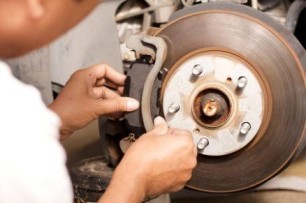
Here are a few ways to identify worn-out brake pads and fix them
If you own a car, you have to check on different parts that might require maintenance and replacement from time to time. You cannot be careless; otherwise, it might risk your and your family's safety and cause damage to your vehicle. In addition, it might restrict your dependency on it until the issues get fixed. Therefore, you need to stay ahead of these problems and watch for future repair and upkeep indications.
This article will discuss a few ways to identify worn-out brake pads and how to fix them. Now, worn-out brake pads are a thing you can miss out on while driving your car. But, first, you need to understand why you need to change your brake pads and how often you should change them.
Brake pads are made from various materials, ranging from metallic to composite to ceramic. However, irrespective of the material they're made of, you are supposed to replace them occasionally. Therefore, making sure that your car stays operational is very important, and changing worn-out brake pads is a part of accomplishing that. In addition, replacing your brake pads helps you in minimising your vehicle maintenance costs.
Now let's discuss WHY you need to change your car's brake pads:
1. Brake pads don't last the lifetime of your car and need to be changed at regular intervals.
2. They lose their efficiency every time you drive your car. So, the more you drive your vehicle, the more worn out the brake pads will be.
3. If you use your vehicle occasionally, the brake pads will still need replacement later than those who use their car frequently.
4. The car's ability to stop effectively reduces with worn-out brake pads. As a result, the overall effectiveness of the braking system also decreases.
5. The diminishing ability of your car to stop due to worn-out brake pads might lead to severe accidents, endanger the lives of the passengers, and cause severe damage to the vehicle.
HOW to identify if it's time to replace your car's brake pads:
1. It is helpful to have a brake pad sensor and "alert" light in your car. The light turns on, giving a notification that your brake pads need replacement.
2. Screeching or squealing noises while driving or applying the brakes indicate worn-out brakes.
3. Replace the brake pads if you notice that the car brakes are shaking. You will also realise that more effort is required to stop the car, and the braking is no longer smooth.
4. There is a grinding noise upon hitting the pedal.
5. During an oil change, when your car mechanic informs you about wearing and tearing of brake pads.
6. If they have reached their limit of service. Brake pads come with a stipulated period to work to their best performance. Eventually, they deteriorate in quality due to constant friction and wear and tear.
Now that we have discussed a few ways to identify worn-out brake pads, it would be wise to invest in car insurance to claim proper maintenance and various expenditures in unprecedented circumstances. You can explore all available insurance options and buy online car insurance that suits you best for your car.
Click HERE to know more about online car insurance.
Disclaimer: The information provided above is for illustrative purposes only. To get more details, please refer to policy wordings and prospectus before purchasing a policy.

Plan your perfect workcation at these top five serene destinations of India
Two years ago, the pandemic took over our lives like a storm. People were locked inside their homes for months on end. And as soon as the restrictions were lifted, we saw an increased number of people looking for ways to unwind. Having been cooped up inside their rooms for a long time, people started looking for alternate work locations. This became a growing trend amongst the working group. Studies suggested that taking workcations positively reflected the employees' morale and increased productivity.
The term workcation is a combination of two concepts; work and vacation. We saw people flooding their social media with pictures of them working from beautiful mountains or beaches in the background. If you have been wondering where to go for your next workcation, this article is just for you. We have brought a list of a few places you can go to enjoy your work.
1. Pondicherry:
If you are looking for an ideal beach location, Pondicherry is the place for you. It hosts various big and small cafes with a soothing ambience. Make use of the free Wi-Fi in the cafes for your work as you indulge in the delicious treats offered. Spend time in various eateries in the mornings and unwind by the beach for spectacular sunsets in the evenings.
2. Kasauli:
Any Ruskin Bond fan will know why Kasauli is on this list. This beautiful hill station in Himachal Pradesh boasts picturesque views of snow-clad mountains and lush forests. Kasauli, to date, holds memories of British history in its architecture. The churches offer a peaceful environment, much like the rest of the city, where you can sit with a warm cup of coffee and work your way through a stress-free day.
3. Munnar:
For a tea lover, there's no better way to work than with the aroma of tea in the air. Munnar hosts a variety of tea museums and stalls where you can enjoy the different kinds of tea that the town has to offer. The misty hills, the fast-flowing streams and tiny little cottages are equivalent to paintings. Enjoy your tea with some traditional Kerala banana fritters as you clock off for the day.
4. Udaipur:
The Venice of the east has an array of lakes with the beautiful Aravali hills skirting it. Work in the midst of royalty as you explore the various breathtaking palaces that Udaipur hosts. Characterised by a rich history, Udaipur is a must on your list if you are a history enthusiast. It has something for everyone, varying from grand palaces to tiny cafes, monotony is out of the question for any traveller.
5. Goa:
This is a no brainer for anyone wanting to take a vacation. If you are a party animal, there are many options in North Goa. Work in the mornings while enjoying the sounds of the beach and join the crowd for the party in the evening. However, if you prefer peace and calm, South Goa is the place for you.
These are a few places you can choose from for your next workcation. Keep in mind that the pandemic is not entirely over. So wear masks and carry sanitisers at all times. With such unpredictable times, it is a wise choice to buy insurance policy online. Invest in an insurance policy to ensure your travel plans are intact, and in case of an unforeseen expense, you stay is covered.
Click HERE to buy insurance policy online.
Disclaimer: The information provided above is for illustrative purposes only. To get more details, please refer to policy wordings and prospectus before purchasing a policy.
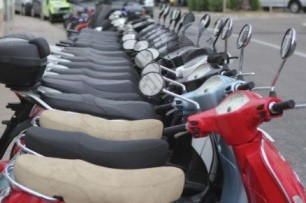
Five best tips for picking the right two-wheeler to satisfy your needs
Imagine you are already running late for an important meeting and get stuck in traffic. It sounds dreadful. With increasing traffic situations, two-wheelers are the most convenient way to reach your destination. In addition, they are easier to maintain and much more affordable.
Two-wheelers are your asset, and investing in one means choosing the best for your needs without ripping your pockets. So, here's a checklist that will make the decision easier when you buy a two-wheeler.
1. Understand the purpose of your two-wheeler:
Understanding the purpose of your two-wheeler is very important. How much will you use it? What will your daily travel be like? Are you going to use it for office work, personal travel, long rides, etc.?
Based on your purpose, you can select the right two-wheeler. For example, if you are taking it for family use, you might consider taking a vehicle that's convenient for every member of the house. Similarly, if you are going to use it for office or personal use, a bike can come in handy.
2. Mileage:
This is no surprise that petrol prices are becoming sky-high. Every two-wheeler comes with extra mileage, and you don't want to invest in one that shakes up your finances with the increasing expense of petrol every month.
Depending on how much you can spend on fuel every month, look for a vehicle that gives good mileage. When you search online, you can get details about the vehicle's mileage and decide accordingly. For example, a sports bike will have less mileage than a scooter.
3. What is your budget:
Budget is one of the top factors to consider when buying a two-wheeler. First, understand your monthly income, consider your expenses, then look at how much you're willing to spend on the two-wheeler.
If you are looking forward to paying for your two-wheeler in monthly installments, consider determining the EMIs you will have to pay. If they are too much, you need to develop an effective saving plan.
4. Service and maintenance:
No two-wheeler works properly without good maintenance. However, when you visit the store, ask about the after-service that you will get. Mainly, most companies offer first three services. Understand how much you have to spend monthly on the vehicle's maintenance. It will always help if you go with popular two-wheeler brands whose spare parts are affordable and readily available.
5. Features:
Every person has different expectations from their two-wheeler. Some may look for a good design, while others lean more towards comfort. Additionally, if you have back issues, you may want to consider that driving the two-wheeler does not hurt your back. List all the features you are expecting and consider the above points before selecting the best two-wheeler for you.
The tips mentioned above will help you determine if the two-wheeler is perfect for you or not. After deciding, ensure that you buy bike insurance online to protect your vehicle if things take a wrong turn and put a less financial strain on you. Your dream two-wheeler is just a few steps away. Go ahead and confidently pick the one that suits your needs!
Click HERE to buy bike insurance online.
Disclaimer: The information provided above is for illustrative purposes only. To get more details, please refer to policy wordings and prospectus before purchasing a policy.

Plan a perfect summer vacation to these top island tourist places of India
From ice-capped mountains in the north to beautiful peninsulas in the south, India promises several travel experiences for everyone. What astonishes the travellers is the diverse local culture, cuisine, and lifestyle that you can enjoy in every part of India. The country comprises various big and small islands with rich cultural backing, and today we will look into a few of these to help you plan your next summer vacation. We bring the top 05 best islands to visit in India, which you can add to your travel bucket list.
1. Diu island:
Possibly one of the most beautiful islands on the list, Diu Island consists of beaches and heritage that are sure to enchant anyone who visits here. From forts to caves to museums, Diu offers so much to explore.
The Diu fort reveals some of the forgotten Portuguese histories with eye-catching stonework structures. After exploring the city throughout the day, a visit to Chakratirth beach is a must. With a stunning sunset and a backdrop of local food stalls, this is the perfect place for you to unwind.
2. Havelock islands:
One of the most talked-about islands, Havelock hosts tourists throughout the year. The largest island in Andaman, it's famous for its blue water, picturesque views, and adventurous water sports. It is an easy competition to foreign beaches and will give you a lifetime of memories.
3. Lakshadweep islands:
The smallest group of islands with a population of as few as 60,000 residents, Lakshadweep is where you would want to go to stay away from the tourist crowd. Spending time on the island will help you closely see the local life in an island town. Since the beautiful beaches are the island's main attraction, this is your go-to destination if all you want is to hear the waves crashing and seagulls hooting.
4. Munroe islands:
Munroe island in Kerala is a cluster of eight islands that promises an impeccable view of narrow canals connecting a network of backwaters. Munroe islands was once an unexplored territory, and only now has it started opening to tourist exploration. Munroe has beautiful rustic architectural relics that have stood the test of time. It still holds the old culture and lifestyle of the place intact. You can enjoy a wide variety of home-cooked meals while enjoying homestay and interacting closely with the locals.
5. St. Mary's islands:
A collection of 4 small islands, this place is famous for its unique rock formation similar to Ireland's. A serene island, close to the coast of Udupi, it has significance in science as well. It is believed that these unique rock formations were caused due to subvolcanic activities in Africa.
These are a few of India's many beautiful island tourist destinations, which magnetically attract people from all over India. Remember that these places are set away from the mainland; hence ensure to look into safe and comfortable travel options. Carry first aid, emergency medicines, and snacks for the commute. Insure your travel plans with general insurance for greater financial safety. You can buy general insurance online and safeguard yourself against any unprecedented expense you might incur during your trip.
Click HERE to know more about how to buy general insurance online.
Disclaimer: The information provided above is for illustrative purposes only. To get more details, please refer to policy wordings and prospectus before purchasing a policy.
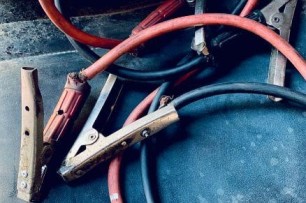
Effective ways to jump-start your two-wheeler
Imagine you have an urgent meeting in five minutes, and your two-wheeler refuses to start! In such times our mind completely freezes and fails to think of any solution.
Your previous knowledge of jump-starting your bike can come in handy in a situation like this. In this blog, we will list down some of the effective ways to jump-start your two-wheeler in any case.
1. Check battery charge:
The first and foremost thing you need to do is check the charge of your two-wheeler's battery. If the backlight and the headlight are glowing brightly, the battery is okay. If not, you need to take care of it immediately because it prevents you from starting the bike or scooter. If your two-wheeler is not starting at all, it's time to resort to one of the following methods.
2. Use another bike:
Ask someone to lend their bike to jump-start your two-wheeler. First, make sure that both the vehicles are on neutral and off. Next, connect the battery terminals of both the bikes with the help of jumper cables. After connecting them, start the other motorcycle and start yours. With no extra effort whatsoever, your two-wheeler will start. After that, take off the jumper cables and keep them somewhere safe and easily accessible.
3. With the help of a portable jump starter:
Keeping a portable jump starter at home is usually advisable, especially when your bike is a few years old. This method is easy and also the quickest one:
• Check that your bike, as well as the jump starter, are in off position.
• Connect the attached cables of the jump starter to your bike and switch it on.
• Try to start your bike.
Generally, it doesn't take more than a second or two for the bike to start, but still, if it fails to start, give it a minute or two. In addition, always keep your jump starter charged.
4. Using outside stimulus:
One of the traditional ways to jump-start your bike is to apply an outside stimulus. The most used way is giving it a push from behind. All you need to do is ask your friend, neighbour, or passer-by to push your bike while sitting on it. Remember to keep your bike in second gear to ensure safety.
The other way is to find an empty stretch of road (it's always better if the road is downhill) and try to push your bike down it. Once your bike gains a needed amount of momentum, it should start. However, always remember that the downhill is not very steep and doesn't have sharp turns or traffic. These are precautions to take to avoid an accident.
It is difficult to ignore the fact that all these options can cause harm to your bike too. Incidents are unpredictable. Therefore, to avoid unexpected and unfortunate events, it is better to have bike insurance to save you from the fear of extra expenses. Ideal bike insurance can protect your pockets from the extensive costs involved in servicing and repairing your bike.
Click HERE to know more about different deals on bike insurance plans.
Disclaimer: The information provided above is for illustrative purposes only. To get more details, please refer to policy wordings and prospectus before purchasing a policy.
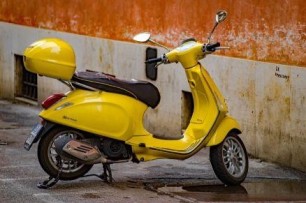
The merits and demerits of combi brake system in two-wheelers
The braking system in any bike is the most important mechanism. A Japanese auto giant has been granted a patent for their combination braking system (CBS) for motorbikes. The combi brake system (CBS) simultaneously applies the front and rear wheel brakes with a single lever.
According to the Ministry of Road Transport and Highways’ new requirements, all two-wheelers sold post-April 2019 with an engine capacity exceeding 125cc must be fitted with Anti-lock Braking System, while models with an engine capacity of 125cc or less must be equipped with a combi-braking system (CBS).
In this post, we're discussing CBS, including its merits and demerits. Read ahead if you wish to know about this remarkable technology.
CBS vs Traditional Braking System:
The most effective braking approach is to use both the rear and front brakes simultaneously. However, most bikers either don't possess the skills for it or simply lack patience. Even if a rider manages to apply both brakes simultaneously with less competence, the chances are that they won't be applying proportional force to both brakes.
In most circumstances, this results in unstable and dangerous braking. The Combi Brake System with equaliser minimises stopping distance. It also enhances braking stability compared to traditional braking so that you may ride with the assurance of effective brakes.
Merits of CBS:
1. Braking distance minimisation: It helps to minimise accidents caused due to unexpected braking by reducing braking distance compared to standard brakes.
2. Safer option: It is better and safer than the standard brake system. CBS aids in maintaining the bike's balance during braking and avoiding the risks of accidents.
3. Suitable for wet surfaces: CBS delivers greater performance and secure braking in slippery and bumpy road conditions.
4. Availability: Combi Brake System's price is relatively modest, and it's simple to use on standard motorcycles. In contrast to the Anti-lock braking system, which only works with disc brakes, the CBS system works with both disc/drum and drum/drum braking combinations.
Demerits of CBS:
The Combi Brake system is not ideal for high-performance two-wheelers. It also impairs the handling of motorcycle riders who perform stunts on the bike, putting them in dangerous positions when confronted with abrupt and intense events. That is why Indian law has only made it mandatory for bikes whose engine capacity is lower than 125cc.
So far, more than 10 million people ride bikes with CBS. While CBS may have some disadvantages, they are mainly concerned with high-performance two-wheelers. In moderate engine capacity bikes, the pros outweigh the cons. While the Indian government makes it mandatory to have CBS in bikes below 125cc engine capacity, it is also required to have two-wheeler insurance according to the Indian Vehicle Act.
Renew or buy the best 2 wheeler insurance online available in India. Several insurance companies are offering exciting offers for online transactions. So, purchasing 2 wheeler insurance online has become more popular, especially post-pandemic. You need to be wise and choose a policy that will be the best for your bike.
Click HERE to purchase 2 wheeler insurance online.
Disclaimer: The information provided above is for illustrative purposes only. To get more details, please refer to policy wordings and prospectus before purchasing a policy.
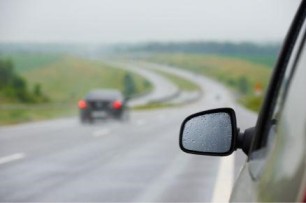
The best summer driving tips for long-distance drivers
With the summer approaching, we are all excited to get out and soak up the sunlight. Road trips during the summertime are at the top of everyone's bucket list. You can enjoy a long drive to sandy beaches and resorts or a journey to cooler, remote hill stations.
While we all love long road trips, they can quickly get exhausting when you're stuck in the same spot for hours on end. The landscape might be worth every bit of your patience, but driving for several kilometres at a stretch can be mentally and physically bothersome.
You may invest in motor insurance India to secure your vehicle's health but caring for your health while on a lengthy midsummer journey is equally needed. Following these tips while driving long distances can make your journey more comfortable, safe, and fruitful!
1. Plan ahead:
Planning your road trip is essential so that you manage to follow the itinerary and reach your destination on time. As you know, you're going to be driving for long hours at a stretch, so you must make sure to pack all the necessary items to carry.
Keep track of your routes and highways, petrol pumps or gas stations on your way, restaurants or motels for refreshments, and the amount of food and water you require during the drive.
2. Prepare your vehicle:
Whether you are taking a car or a van, ensure the vehicle's condition and fitness are thoroughly checked before setting off on your journey. Check if your car fits for the long drive and the fuel tank is full to its capacity before leaving. Also, check the air pressure in the tyres and examine all other technical requirements.
Ensure that you carry all necessary car documents like your car's registration certificate, motor insurance India documents, driver's license, and PUC certificate.
3. Stay hydrated and eat well:
Dehydration and an empty stomach can disturb you immensely while on the road. Dehydration for long hours can cause blurry vision and muscle cramps that are incredibly dangerous while driving. The sweltering heat can get to you and cause dizziness if you haven't eaten.
Make sure to drink enough water and consume plenty of liquids during your journey. Eat a healthy meal before taking off and eat energy-giving, light foods whenever you make stops during the trip.
4. Take enough breaks:
Driving may be stress-relieving for some individuals but sitting behind the wheel for long hours can physically strain the body. You must make regular stops along the journey and get out of the driver's seat. Stretch your arms and legs and relieve any tension in your neck and back. Inculcating this habit can make the long journey much more comfortable.
5. Keep essentials handy:
While food, water, and car documents are the most vital essentials to carry, remember to pack other travel essentials like sunglasses, caps, sunblock, a torch, and a scarf or sweater. Carry emergency hardware to fix your car if any damage is caused on the road. Keeping a first aid kit is essential as you never know when you might need it.
Long road trips under the sun are what summer dreams are made of, but they can quickly become challenging. You must not forget to secure your health and safety in all the fun. Following these tips can relieve long-distance drivers from the issues they may face on the road. Prioritising the security of your vehicle is equally important. So invest in an ideal motor insurance India policy to protect you from unexpected losses and put less pressure on your pockets in case of physical damages to your car.
Click HERE to know more about motor insurance India.
Disclaimer: The information provided above is for illustrative purposes only. To get more details, please refer to policy wordings and prospectus before purchasing a policy.
Complete guide to buy a short-term car insurance policy
Did you know that you can insure your car for a short period? Such as a few days or weeks. You must purchase short-term car insurance, often known as 'temporary car insurance.' Although it may seem strange, temporary car insurance is available, and people are already buying it.
Furthermore, short-term car insurance begins as soon as you pay for it. Some people may find that a short-term insurance policy is not ideal if they are unsure about their driving requirements. Let's take a closer look at a short-term car insurance policy in greater detail.
What exactly is short-term car insurance?
Short-term auto insurance can be valid for as little as a few hours or as long as some months, depending on the type of coverage you choose. It is possible to obtain short-term or temporary vehicle insurance coverage in some circumstances, such as when a person is not looking to purchase car insurance for more than a year.
How does short-term car insurance work?
Most Indian insurance policies fall into one of two categories: third-party liability and comprehensive insurance, with the latter being more commonly offered. In most cases, a standard automobile insurance term lasts one year. If one chooses to purchase comprehensive insurance, they will buy additional coverage through add-ons and benefit from other features. On the other hand, purchasing at least third-party insurance is mandated by law and gives the bare minimum of protection to the owner of the covered car in the event of an accident.
In situations where a person's need to drive a car is constrained by a specific time frame or a clear exit criterion, temporary car insurance may be necessary. Here, a person doesn't need to buy car insurance for a year because they don't drive a vehicle much. The time commitment could be anything from a few hours to a month or two at the most. Temporary auto insurance is uncommon in India, yet it is widespread.
Different types of short-term car insurance.
The coverage provided by short-term car insurance is minimal. It might be available in the following categories.
1. Rental car insurance:
Rental car insurance is the name given to the policy that protects a vehicle while it is being rented. Insurance policies for rentals typically include coverage for things like accidental damage and injury.
2. Gap insurance:
This insurance covers vehicles previously leased or financed through third-party financing. It provides gap insurance coverage in the event of a total loss, which is defined as damage that cannot be repaired. If the insurance provider compensates you for the fair market price of the vehicle, this policy will cover the difference.
3. Non-owners insurance:
Non-owners insurance is comparable to rental car insurance, although primarily available for private automobiles. People who borrow cars from family or friends are likely to buy non-owners insurance to protect themselves in the event of an accident.
Now that you've learned about short-term car insurance policies, you can make the most of a monthly car insurance plan to protect your vehicle. When you are only using a car for a limited time under the above three conditions, this is the most effective way of avoiding financial obligations. However, you should be prudent that not all car insurance companies offer this type of protection.
Click HERE to get more information about car insurance.
Disclaimer: The information provided above is for illustrative purposes only. To get more details, please refer to policy wordings and prospectus before purchasing a policy.
Hi there! 👋 Need help with a policy, claim, or renewal? Chat with us instantly on WhatsApp.
Start chat →