


General Insurance Blogs, Articles & Updates by - Magma Insurance
Have us call you
- RENEW YOUR POLICY
- BUY NEW POLICY

GENERAL INSURANCE BLOG

Here are few essential life lessons that bike trips can teach us
If you get to have a conversation with a motorhead, you'll probably hear them say that the joy of riding a motorbike comes second to none. A feast for the senses, riding is exhilarating and comforting to motorcyclists. It fosters joy, excitement, thrill, and pleasure. When you ride, you feel liberated, and there is always something new to discover and learn when you're on the roads.
Life throws a lot of experiences at you while on a motorbike trip. You can learn a lot about yourself and others while you are steering your way through the places and covering distances. Bike trips are much more than fun. Such trips can be a great way to connect to your deeper self and unravel fresh experiences and valuable lessons that may change your perspective towards life.
Here are a few life lessons that you can learn when you set out for a bike trip.
1. You’re a tiny but important part of this world:
As a motorcyclist, you share the road with fellow riders. It’s important to respect each vehicle on the road. So, consider yourself important as your discipline makes a significant contribution on the road.
2. Life is too short:
We all have witnessed reckless drivers—cutting into lanes without proper signals, speeding in single lanes, and whatnot. Viewing any mishap or accident is a terrible experience during your long riding trip, but you realize how suddenly things can change. It makes you more careful and appreciative of everything as they are here and now.
3. Focus on your goal:
While driving a car, drivers often engage in distracting activities like adjusting the AC knob and tuning to a radio station. But when you're riding, it's just you, your bike, and the road. There are no distractions, and you just concentrate on the road in front. Likewise, we must focus on what is essential in life. Concentrate on the future and don’t allow minor inconveniences to detract you from your ambitions in life.
4. You learn to let go your ego:
As we said, we've all seen our fair share of terrible drivers. Sometimes you are triggered and obliged to accept the situation because you cannot confront every other vehicle on the road. You learn to swallow your ego and remain patient to handle things maturely. Staying calm and tackling problems with patience is not less than any winning formula to live happily.
5. Practice makes an individual perfect:
No one is born perfect, but we can ace any talent with positive intent and dedicated practice. Every ride you take fills you with new experiences and learnings that you can ponder and do better on your next ride. Consistency and a positive mindset are vital to master your fears and weaknesses.
When you are riding, relax your soul and enjoy the present moment. There's plenty to experience even in the most unlikely locations. Hop on the motorbike and discover life like never before. Like life, the roads are uncertain; but something certain is ensuring safety. This is yet another lesson that bike trips teach us; to be responsible for your safety and possessions. So, be responsible and purchase bike insurance for the additional protection of your bike. You may surf through multiple bike insurance online and buy the one that assures value for money.
Click HERE to get bike insurance online.
Disclaimer: The information provided above is for illustrative purposes only. To get more details, please refer to policy wordings and prospectus before purchasing a policy.

Best home-workout equipment for you in 2021
People's concern over their health and fitness has increased since the outbreak of Covid-19. Due to the ongoing pandemic, we have all been practicing social distancing. It has become evident that we don't need a gym membership to keep ourselves fit. Instead, health from home has become just as popular as work from home.
There are multiple applications, websites, and tutorial videos available online to guide you through a proper workout regime. Whether you have registered for a virtual fitness class or have decided to go solo in your home gym, many types of equipment will help you maintain a healthy body and hopefully relieve your stress.
So, here are a few recommendations for home-workout equipment helpful to achieve your fitness goals.
1. TRX GO All-in-One Suspension Training:
This set is perfect for a full-body workout. It's lightweight, affordable, convenient, and portable. The seven-piece set includes full-body training tools for exercises at home, outdoor, or on the go. It should be a part of your house to feel like you have a private gym.
2. Yoga Mat:
A mat isn't just for yoga. It is helpful for bodyweight exercises like stretching and core work out since it makes them comfortable and easier to do. Mats are affordable, long-lasting, and require no maintenance. In addition, they have a good endurance ability to withstand pressure and give total comfort even while doing difficult yoga asanas.
3. Resistance Bands:
The main use of a resistance band is stretching and strength training. It can be used to work on every muscle group in your body. There are even more exercise options when it is fastened to a post or a door and helps you improve your posture while building muscles. Easy to use, it can be your on-the-go fitness aid.
4. Treadmill:
Walking is the most efficient exercise for any age group. But, many of us, with our busy schedules, have limited space and time for our daily physical activity. So that makes the treadmill a relatively easy piece of workout equipment to use.
5. Ankle Weights:
Ankle weights help you diversify your at-home workouts. They make your lower body workout more effective and are highly recommended if you aim to increase your speed.
Choose your at-home workout equipment based on these three criteria:
1. Cost - Figure out the amount you are willing to spend on your home gym and look for items that fit your budget.
2. Use - Determine your personal goals; if you intend to work out to lose weight, build a muscular body, or straight-up gain strength and maintain overall fitness. Then select gears that provide you functions related to your personal goals.
3. Space - If you live in a city apartment, sharing it with other flatmates, you may only have your bedroom for a home gym. So pick wisely, considering the actual storage space you have.
While choosing the best home workout equipment, remember to decide on a smart health insurance plan for you, too. Physical activity and a healthy lifestyle prevent diseases, whereas health insurance provides financial security against these diseases.
Start planning your home gym today, and once you start working out, be regular and never miss a day.
THINKING ABOUT THE PERFECT HEALTH INSURANCES FOR YOU? CLICK HERE TO KNOW MORE ABOUT THEM…
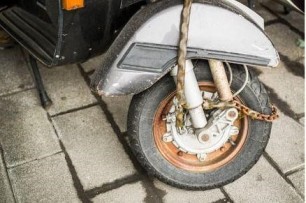
Important things to know while disposing off a two-wheeler
There is no denying that many outdated vehicles are still plying on Indian roads, causing massive pollution. Therefore, the Government of India has unveiled the Nation's new Vehicle Scrapping Policy. The main object of this updated policy is to get rid of old and unfit automobiles that produce pollution. The government aims to clean up the air, and the efforts are commendable.
If you have an outdated two-wheeler at home and are considering scrapping it, here are some things you should know prior.
1. Mandatory fitness examination:
The procedure of obtaining a fitness certificate would become significantly strict under the updated scrappage Policy. If your two-wheeler is more than 20 years old, you will have to take a fitness test for your vehicle.
Automobiles registered for business use are subject to the fitness standards once they go beyond the 15 years mark. Computerized workshops will be set up around the Nation. This will result in pinpoint accuracy and faster tests.
2. Compulsory end of life vehicle certification:
If your bike fails the fitness test, you will be required to get an ‘End of Life Vehicle certificate’. This is because used automobiles contain dangerous compounds such as lead-acid batteries, lubricating oil, coolant, braking fluid, and catalytic converters. If not disposed of properly, these compounds can contaminate the environment and risk human health and wildlife.
Benefits of scrapping your old bike:
If you're purchasing a new vehicle under the scrappage program, you will receive a 4 to 6% refund off the total price. In addition, state governments can recommend a road-tax credit of up to 25% for personal automobiles and up to 15% for commercial automobiles. In some cases, automobile manufacturers also offer a 5% discount to those who present the 'Scrapping Certificate,' and registration expenses will be waived when purchasing a new vehicle.
Additional pointers to know:
• The policy will not apply to vintage bikes.
• Hybrid and electric bikes are exempted.
• A bike that runs on alternative fuels like CNG is exempted.
When will the policy come into action?
The updated policy will come to force starting with large commercial automobiles, requiring mandatory fitness testing beginning April 1st, 2023. In a phased approach, all other vehicles will be subject to the fitness test starting June 1st, 2024.
Final Say:
The policy is set to come into action in the year 2022; the most crucial stage for the proposed program to succeed is to construct the necessary infrastructure across the nation immediately. As things stand, India has seven computerized fitness test facilities and two official scrappage sites. To meet the market demand, more such facilities are provisioned in coming years.
This policy will encourage the bike sale, benefit the environment, and a step towards a greener future. While benefiting from all the incentives when you dispose of your 2 wheeler, add an extra benefit of insurance to the bundle of happiness. Buy a 2 wheeler insurance online, customize your plan according to your needs, and include the add-ons that can help you when you plan to buy a new two-wheeler after disposing of the old one.
Click HERE to get 2 wheeler insurance online.
Disclaimer: The information provided above is for illustrative purposes only. To get more details, please refer to policy wordings and prospectus before purchasing a policy.

Know about these seven driving habits that might be damaging your car
We all want our cars to stay forever sparkling and perfect, and we do everything in our capacity to keep them brand-new. Still, we cause some damage to the vehicles. It doesn't matter if you are an experienced driver or a learner; we all sometimes make mistakes as a result of particular bad habits.
These incorrect driving habits lead to unnecessary wear and tear to the vehicles and spending more money on repairs in the garage. To avoid it, we have shared 07 driving habits that you might need to look into immediately.
1. Not slowing down at potholes and speed breakers:
At least one-third of the damage to your cars occurs due to not slowing down over potholes and bumpers. It is not practically possible to avoid potholes everywhere you drive, so the least you can do is slow down.
Not slowing down on potholes can cause buckled wheels, lumps in the tyres, and even cracked alloys. The same goes for speed breakers; if you slow down on a speed breaker, you can avoid severe damage to the underside of your car and the exhaust system.
2. Continuing to drive your car at a low fuel level:
People fill up the tank when it reaches the 1/4 mark. At the same time, others push their cars to their limits. If you're the second type, you may be causing damage to your vehicle. When your fuel tank is nearly empty, the car will draw petrol from the very bottom. This may appear harmless, but the base is usually where all the toxins settle and concentrate, and if there is a significant build-up of impurities, it may clog your filters which might enter the engine.
3. Overloading your car:
We all have a habit of leaving something behind in the car, thinking it does not make a big difference. But all this extra load brings strain on your car’s brakes and suspension. Therefore, think twice before loading unnecessary luggage in the trailer next time. Plus, you will also form a habit of keeping your car clutter-free.
4. Smoking in the car:
Smoke from the cigarette makes your car stink. But the problem does not stop there. Over time, the particles from the smoke will mix with the car's material, leading to bad odour and discolouration of surfaces. This becomes tough to get rid of and will eventually deplete the value of your vehicle.
5. Revving your engine too soon in cold weather:
Revving your engine too soon will damage the engine's parts which are not yet lubricated with engine oil. Therefore, allow the engine to warm up properly before revving.
6. Applying brakes too late:
If you are habitual of harshly applying breaks at the last moment, it creates strain on the brake and makes the discs and pads wear out fast. Instead, maintain a steady speed and oversee the obstacles to avoid sudden and harsh braking.
7. Resting your hands on the gear stick:
Keeping your hand on the gear stick can be bad for the transmission because the constant pressure will cause it to wear out much faster.
Take a note of these driving habits that you might be doing unknowingly and keep your car safe from unnecessary damages. Another bad habit that may affect your car’s safety is neglecting your car insurance renewal. It is important to keep your car insurance renewal up-to-date and follow the above tips to keep your car looking and running great.
Click HERE to know more about the car insurance plans.
Disclaimer: The information provided above is for illustrative purposes only. To get more details, please refer to policy wordings and prospectus before purchasing a policy.

Here are a few summer diseases you need to be careful of
With the summer months approaching, it's time to restock on our summer essentials, from sunscreens and deodorants to the quintessential cotton clothing. But having said that, it is imperative to remember that summer months also come with a plethora of diseases ranging anywhere from jaundice to heatstroke.
Due to increasing global warming, the temperature is constantly rising as high as fifty degrees Celsius. Summers can be extreme in certain parts of India, especially in the months of May and June.
In this article, we will take note of a few summer diseases that you need to be careful of and how to protect yourself from them.
1. Heatstroke:
Heatstroke has become common for people to feel extremely nauseous and experience severe headaches, cramps, and weakness. These are all symptoms indicative of heatstroke. Although these symptoms are often neglected and mistaken as lethargy, heatstroke can lead to coma and other severe health ailments.
Treating heatstroke focuses on cooling down the body by reducing the overall body temperature to keep it normal at all times. Maintaining the body temperature to ideal levels ensures a lesser risk of organ damage. Taking a cold bath will significantly help you in reducing your body temperature.
2. Jaundice:
Jaundice is another common summer disease that spreads through contaminated food and water consumption. The most common symptoms of jaundice are yellowing of the skin and the eyeball, loss of appetite, and dark-coloured urine.
If you notice the symptoms mentioned above, it is best to consult a doctor to get it checked immediately. Timely treatment is crucial to ensure optimal liver functioning and avoid any complications.
3. Food poisoning:
Food poisoning is an awful result of consuming contaminated, stale or toxic food and impure water. The symptoms include nausea, fever, cramps, weakness, and diarrhoea.
Mild cases of food poisoning can last up to three days and generally heal by themselves. However, to ensure faster recovery and regain strength, it is essential to stay hydrated. Drinking water and other liquids such as fresh fruit juices and tender coconut water help flush out the toxins in the body.
4. Sunburns:
The harsh sun is not healthy for humans. During the hot summer days, exposure to the sun for more extended periods can lead to redness in the skin, itchiness, or flaky skin. This can worsen, causing blisters and peeling off of the skin.
The best way to avoid sunburns is by using sunscreens and cotton clothing overalls. Sunscreen with SPF above 30 acts as a barrier between your skin and the UV rays in the atmosphere, whereas cotton clothes overalls are an excellent way to prevent sunlight from directly hitting the surface of your skin.
5. Chickenpox:
Red and small rashes all over the body and high temperature are symptoms of chickenpox. These red rashes are filled with fluids that eventually burst and spread throughout the body's surface. People with weak immune systems are susceptible to chickenpox. Chickenpox is highly contagious, and it spreads through droplets present in the environment of an infected person.
Chickenpox can last for up to 14 days, after which the symptoms die down slowly. Since the body tends to become extremely weak, it is advised to take ample amounts of rest to ensure a faster recovery.
These are a few common summer diseases that can take a toll on your happiness during vacation time. The summer is a favourite hosting ground amongst bacteria and viruses, being the most favourable weather condition for them to grow and spread. Proper hygiene and constant hydration are the simplest ways to keep these diseases at bay and spend your summertime peacefully enjoying with your loved ones.
If you feel dizzy or nauseous constantly, it is best to get yourself examined by a doctor who will be able to provide you with medicines or other remedies to combat the diseases. Do not forget to renew your health insurance to ensure that the tests and medicines do not burn a hole in your pocket and you are safeguarded against financial burdens.
Click HERE to know more about health insurance plans.
Disclaimer: The information provided above is for illustrative purposes only. To get more details, please refer to policy wordings and prospectus before purchasing a policy.

Let's understand how we can be caregivers for stroke patients
Have you ever been stuck in a health emergency due to a prolonged illness of someone in the family? If yes, you know how difficult it is to go through a tough time to wait for the total health recovery of the patient. It is also particularly challenging to take care of the patient on a daily basis. It requires a lot of willpower and patience to be a good caregiver to calm those in need.
You need to ensure that the patient follows a disciplined routine wherein he eats on time, gets good sleep, and takes medicines as prescribed. You also need to keep an eye on their symptoms, verify the reports and regularly monitor the patient’s condition.
Stroke patients are critical to handle. Their body becomes quite sensitive and vulnerable to any inconveniences. Hence, the caregivers of stroke patients need to take extra precautions to ensure that the patient stays mentally and physically healthy.
Wondering how you can take good care of stroke patients? This blog answers all your questions.
1. Exercise is the key:
It has been observed that most stroke patients face movement issues and find it difficult or incapable of moving their limbs. Their movement skills and capabilities get affected severely due to the stroke. As a caregiver, encourage stroke patients to indulge in exercises daily.
Design a quick workout routine for them and guide them to exercise in the right way to get the best results. This would help the patients regain their movement abilities and a speedy recovery.
2. Let them feel and reflect:
Instead of pushing the patient to be optimistic, it is essential to create a safe space for them. This space is an outlet for their emotions and a trusted source to avoid complete breakdowns. Having suffered through a traumatic experience and facing critical health issues is no joke.
The patients need to embrace their grief and express all their feelings without hesitation. An essential part of being a caregiver is to help the patient through their emotional process and help them get through all the challenges and hardships.
3. Encourage them to be independent:
Don’t create a help-seeking mindset in the patient. While they must have a safe space for letting out their emotions, it is also necessary that the patient is encouraged to help themselves instead of seeking support every time they need something.
As a caregiver, you must motivate your patient to feel independent. Doing things independently would give them a sense of achievement and motivation to carry out their work with more zeal and confidence.
4. Keep an eye on their condition:
A stroke is a severe ailment, and the treatment and recovery process involve a lot of heavy medications. Since the medicines help the body cope with certain major complications post-stroke, they are bound to have some alarming side effects.
As a caregiver, you need to educate yourself about all the medications, their probable side effects, and how they might affect the patients (which could also be due to pre-existing allergies and conditions). You need to inform the doctor about the same and observe the patient for any symptoms which might occur as side effects of the medicines.
A stroke can be a traumatic experience for the patient and his family. If not handled efficiently, strokes can turn out to be one of the worst nightmares. We discussed how intensive care could miraculously heal stroke patients, sometimes more than their treatments and medications.
Similarly, you need to take care of your health at all times as one cannot predict when such needs might arise, and you might find yourself in a difficult situation. To safeguard your and your family’s health, you must purchase the best health insurance in India that can offer the best coverage to the needs of your entire family.
Click HERE to know more about the benefits of health insurance in India.
Disclaimer: The information provided above is for illustrative purposes only. To get more details, please refer to policy wordings and prospectus before purchasing a policy.

Let's know about these incredible benefits of journaling you weren't aware of
How often do you feel frustrated and overwhelmed due to work pressure? Everyone deals with the chaos of life, but a little organisation does not hurt. Putting your thoughts in line can help you manage a significant chunk of your life without the intensity and pressure of things affecting you negatively.
Our previous generations faced a hard time and struggled a lot to keep all the fronts of life in order. But thankfully, the modern generation has taken up the concept of “self-love” and “self-care” seriously. And thanks to social media, people are now aware of why it is essential that you admire, love, and respect yourself in all facets of life. It helps boost your mental health and enables you to gain confidence to face all that life throws at you.
One of the most important aspects of organising your thoughts is “journaling.” Writing down your day and your reviews can give miraculous results. Penning down all that runs through your mind gives those abstract thoughts a proper structure. And now that you have a problem in hand, it becomes easier to find a solution. But there is more to journaling and its advantages. Let’s know about these incredible benefits of journaling you weren’t aware of.
1. Define your goals:
Jotting down your goals makes it real for your brain to grab the concept of accomplishing them. Your mind starts thinking about how you can achieve your goals. It further helps you to take a walk through all the possible processes you might have to go through to get the work done. It searches for resources and opportunities to help you attain your desired results.
2. Healing is a process:
Healing from traumatic experiences and emotional baggage is not accessible. But journaling can help you sort your feelings by giving them a form of a tangible problem statement. Once your brain sees your emotions on paper, it begins to put the pieces together to understand the actual issue. It gives you clarity compared to the clump of feelings with no beginning or endpoint.
3. Manage anxiety and stress:
Revisiting the most stressful occasions of your day by writing about them in detail gives you a certain sense of disentanglement and detachment. And once you detach yourself emotionally from the situation, you can see it from a rational point of view and analyse the whole scenario in pointers. This will help you improve your reactions and responses the next time you are stuck in similar situations.
4. Regaining confidence:
We all tend to lose confidence once in a while. Going through difficult situations creates insecurity, which takes time and effort to overcome. And at times, these insecurities quash your self-esteem to the point of no return. But journaling can help you escape this web of uncertainty.
You can write down all your accomplishments and how you managed to handle difficult situations on stressful occasions and never give up on yourself. These things act as a reminder of confidence and help you balance your emotions in the best way possible.
Other benefits of journaling include boosting mindfulness, improving your communication abilities and memory, providing a safe space as an outlet for emotions, etc.
In this blog, we saw how journaling could improve your mental health and help you keep your cool even in the most stressful situations. Similarly, it is essential to take care of your physical health too. Health emergencies usually come without warning. So, it is crucial to safeguard you and your family members in any unprecedented situations which can put your health at risk. You can explore your options and purchase health insurance that caters to your needs the best.
Click HERE to know more about health insurance and its benefits.
Disclaimer: The information provided above is for illustrative purposes only. To get more details, please refer to policy wordings and prospectus before purchasing a policy.

Here is the guide to planning the most exciting incentive trips for employees
The constant hustle of work-life can be overbearing and taxing for the employees. Planning an incentive trip is an effective way to appreciate your employees while also letting them know that you care for their health and wellbeing. But planning a trip for different people with a budget can be challenging. You have to keep their interests, choices, and health conditions in mind.
This article will look at some practical ways of planning incentive trips for your employees.
1. Understanding the budget:
The first checkbox to tick while organizing incentive tours is finalizing the budget. Having a clear picture of what you can do and where you can stay gives you an overview of planning the entire tour efficiently. You can find multiple hotel options with varying price points, thus making it easier for you to decide on factors such as food and living.
2. Understand what employees enjoy:
It can be a tedious task to attend to everyone’s needs. Hence, getting an idea of the likes and dislikes of others would help in making a balanced trip suitable for everyone. You can try conducting a survey for the employees. Choose viable tour options before handing out the survey forms so the employees can choose from the given options.
3. Duration of the trip:
Keeping in mind the budget and the number of people going on the trip, you must decide the duration of the trip. If you have a limited budget and plan to go to exotic destinations or expensive accommodations, consider limiting the number of days. However, if you are planning a trip to a place with a moderate hotel, you can extend the duration of the stay.
4. Choose a travel company:
Travel agencies are equipped with resources and know-how to plan all kinds of trips for you. Choosing a reliable travel agency can significantly reduce your time and stress. Before outsourcing the planning to a travel agency, verify their terms and conditions, cancellation policies, and, most importantly, their customer reviews. Good customer reviews ensure that you are entrusting the responsibilities to a genuine company.
Ask your travel agent for extra benefits or complimentary services as part of your package. Do not forget to sit down and have a detailed discussion on the itinerary and scope of various activities that the team can indulge in. Make sure that the accommodation has multiple recreational activities and food choices to suit the needs of everyone.
5. Do not go overboard with the planning:
Leave room for change and other opportunities. Give your employees the chance to make impromptu plans. This gives them a scope to bond with other employees and is also a great way to inculcate various team-building activities. Sometimes all that your employees need is a day’s rest. Leave sufficient time for people to unwind. Overdoing the activities and touring the place can be hectic and kill the retreat's entire purpose. Including a rest day in your travel itinerary is an excellent way to make it a relaxed tour.
Remember that planning a trip can be a huge responsibility and require a reasonable amount of time to reach a conclusive decision. Plan the trip well in advance to ensure no last-minute unavailability in bookings and accommodation.
While travelling with a big group, there are possibilities of missed flights, overbooked hotel situations, and other mismanagement of events. To skip these worries, look for general insurance plans to safeguard your employees against any extra expenses that you might incur during the trip. Dedicated research can tell you about all the good policies of general insurance India you can invest in.
Click HERE to know more about general insurance India.
Disclaimer: The information provided above is for illustrative purposes only. To get more details, please refer to policy wordings and prospectus before purchasing a policy.
Hi there! 👋 Need help with a policy, claim, or renewal? Chat with us instantly on WhatsApp.
Start chat →